SONABHY Set to Harness BOST’s Fuel Supply Chain

By Stanley Senya

Accra, March 30, GNA – In an effort to boost its fuel security, Burkina Faso’s National Hydrocarbons Company (SONABHY) plans to leverage the robust petroleum distribution network of Ghana’s Bulk Energy Storage and Transportation Company Limited (BOST).

The collaboration intends to simplify the transportation of petroleum goods from Ghana to Burkina Faso through BOST’s efficiently connected logistical infrastructure, which encompasses pipelines, waterways, large-scale trucks, and purposefully placed storage facilities.

During a recent top-tier gathering in Accra, both State-Owned Enterprises reiterated their dedication to strengthening collaboration, emphasizing the use of BOST’s facilities to achieve more efficient and economical fuel distribution.

A combined technical group will evaluate BOST’s operational capabilities to enhance the ease of petroleum trading and minimize disruptions in the supply chain.

BOST’s fuel distribution network relies on a multifaceted logistical approach designed to enhance both efficiency and dependability.

The key elements of BOST’s fuel distribution infrastructure encompass the Tema-Akosombo Petroleum Pipeline (TAPP), the Buipe-Bolgatanga Petroleum Product Pipeline (B2P3), as well as transportation via river using VLTC-operated barges along the Volta Lake.

Although the TAPP system streamlines the transportation of petroleum products between Tema and Akosombo, acting as an essential component in the logistics network, the B2P3 structure guarantees efficient fuel distribution from Ghana’s central region to the five northern zones and further into countries like Burkina Faso.

Moreover, the VLTC and BOST river barges offer an alternate means for fuel transportation from Akosombo to Buipe, thereby alleviating strain on road transport systems.

Once more, key fuel storage facilities like those at Accra Plains, Akosombo, Buipe, and Bolgatanga, managed by BOST, act as vital centers for both local and international commerce.

Mr. Afetsi Awoonor, the Managing Director of BOST, emphasized the company’s willingness to assist SONABHY in ensuring a consistent supply of petroleum products.

“The effective utilization of our pipelines, storage facilities, river barges, road transportation alliances, and the Blue Ocean terminal creates a more streamlined fuel distribution network, which benefits all involved,” he stated.

Mr. Wendpanga Aimé, the Managing Director of SONABHY, showed optimism about the collaboration, emphasizing its ability to stabilize fuel supplies and manage expenses effectively.

“Boasting a solid capital foundation of 20 billion CFA francs, SONABHY is poised to enter into extended trade pacts with BOST. This partnership is essential for maintaining a steady and economical provision of fuels for Burkina Faso,” he stated.

Apart from petroleum trades, Burkina Faso has sought higher levels of electricity imports from Ghana with the aim of boosting its industry and economy.

During the visit, Burkina Faso’s Energy Minister, Yacouba Zabré Gouba, headed a group that visited BOST’s Bolgatanga Depot and GRIDCo’s Navrongo substation to investigate potential enhancements in energy distribution networks.

The refreshed collaboration between BOST and SONABHY, initiated by President John Dramani Mahama along with his Burkinabe counterpart, boosts inter-country oil commerce. This alliance ensures that Ghana’s sophisticated petro-transport system aids in maintaining energy stability and improving trading effectiveness throughout West Africa.

GNA

GRB
Provided by SyndiGate Media Inc.
Syndigate.info
).

New VRA Chief Pledges Bold Moves to Secure Ghana’s Energy Future

By D.I. Laary, GNA

Koforidua, March 30, GNA – Mr. Edward Ekow Obeng-Kenzo, who was recently named as the new CEO of Volta River Authority (VRA), has pledged to address billing issues and steer the country’s primary electricity provider towards groundbreaking strategies to ensure Ghana’s energy security.

At the 2024 Biennial National Delegates Congress of the VRA Senior Staff Association (SSA) held in Koforidua, he assured them of his dedication to rejuvenating VRA and safeguarding Ghana’s energy security by supplying necessary resources, conducting training programs, and offering strategic leadership to maintain sustainability.

He emphasized the importance of combining personal efforts with group initiatives to address the significant issues confronting the country in the realm of energy production. He called upon every stakeholder to work together in discovering enduring answers aimed at strengthening Ghana’s energy security, dependability, and cost-effectiveness.

Discussing the topic “The Effect of Receivables Issues on the Functionality of VRA/NEDCo: A Pillar of Ghana’s Energy Stability,” Mr. Obeng-Kenzo highlighted the significance of consistent and dependable power supply for swift economic advancement and progress.

Our services affect various sectors of the economy, including manufacturing, education, healthcare, and security,” he remarked, emphasizing the extensive reach of VRA along with its affiliate, NEDCo.

The CEO pinpointed major reasons for VRA’s difficulties with accounts receivable, such as an inconsistent power supply, believed-to-be elevated production expenses, lags in invoicing, and unauthorized electrical hookups.

He encouraged employees to be innovative and proactive contributors. “As partners in excellent corporate governance, we must pledge to enhance our effectiveness and output while protecting the VRA brand established over many years.”

Mr. Obeng-Kenzo praised the resilience and commitment of the team, noting that their hard work has guided the organization through its 63-year journey.

He recognized the necessity of adapting to an evolving business environment where private energy firms are advancing, warning; “If we fail to step up to the challenge, we might get left behind.”

He detailed measures for enhancing debt recovery and boosting revenues, stressing teamwork, honesty, and commitment to VRA’s fundamental principles. “Everyone here must contribute to maintaining our fiscal well-being and achieving operational excellence.”

In spite of these difficulties, Mr. Obeng-Kenzo remained optimistic regarding VRA’s future, vowing to allocate resources, provide training, and offer strategic leadership to ensure its sustainability over the coming sixty years.

He encouraged the staff to coordinate their efforts toward achieving the primary objective of providing dependable and cost-effective power for both Ghanaian residents and enterprises.

As VRA gets closer to its 64th

th

anniversary, he also reaffirmed his belief in the collective power of patriotism and unity to drive the authority and the nation forward, saying: “Together, we can make VRA and Ghana great again.”

The 2024 Congress tackled major concerns stemming from the 2022 gathering. Attendees examined reports on how their leaders managed responsibilities. The discussions centered on the financial standing and outcomes of the Association during the second half of 2022 as well as throughout 2023 and into 2024.

This offered a detailed examination of the association’s advancements and regions where enhancements could still be made.

The congress was also an opportunity to brief members about the actions taken by the National Executive Committee following their election in March 2023, encompassing various initiatives and accomplishments through December 2024.

A key area of focus was examining the Association’s slogan, “Partners in Good Corporate Governance.”

Participants discovered creative methods to work alongside management in boosting VRA’s effectiveness and upgrading employee benefits to secure the organization’s continuous development and operational proficiency.

Mr. Theophilus Tetteh Ahia, who serves as the National Chairperson of VRA SSA, highlighted the essential function of the organization in maintaining and enhancing the activities of both VRA and its affiliate, NEDCo.

He highlighted several difficult problems, such as the modified cash waterfall process and significant distribution losses—a result of electricity theft—especially prevalent in the Tamale metropolitan area.

He observed that even though the Boards, management, and employees of VRA and NEDCo were striving towards their ambition of setting “an exemplary standard among African power providers,” they still encountered ongoing issues with operations and financial liquidity.

Mr. Ahia mentioned that VRA’s market share has decreased, falling from 63.8 percent in 2019 to 50.3 percent by March 24, 2025.

He went on to say that NEDCo has been struggling with both commercial and technical losses, these issues have adversely affected its financial health and ability to maintain adequate liquidity.

He stated that tackling these issues necessitated cooperation between management and the SSA to put into action strategic initiatives.

These include challenging the updated cash flow hierarchy, addressing anticompetitive practices within the electricity sector, transforming single-cycle facilities into combined-cycle ones, upgrading the T3 facility through repowering, and implementing technologies aimed at decreasing power distribution losses, with a focus on improvements in Tamale.

Mr. Ahia emphasized the significance of boosting employee motivation, strengthening oversight, increasing efficiency, and protecting the terms of employment for staff members.

Consequently, he advocated for selecting capable leadership and opposing the government’s efforts to enact certain energy-related legislation, including the “Ghana Hydro Authority,” “Ghana Thermal Authority,” and “Ghana Distribution Authority” bills.

He similarly called for an end to attempts at merging NEDCo with ECG through private sector involvement.

The 2024 SSA Congress brought together prominent figures from the electricity sector for a panel discussion aimed at pinpointing key obstacles and developing suggested resolutions.

Mr. Ahia showed optimism that these conversations will contribute to ensuring the longevity and sustainability of VRA and NEDCo, allowing them to take on a more impactful role in shaping Ghana’s energy landscape.

GNA

DL/KOA

Provided by Syndigate Media Inc. (
Syndigate.info
).

Alternergy Triumphs with Wind Project Victory in Albay

Alternergy Triumphs with Wind Project Victory in Albay

MANILA, Philippines – Listed company Alternergy Holdings Corp. has been awarded a contract for the development of a 150-megawatt (MW) onshore wind project in Albay province.

The Department of Energy (DOE) granted the contract via Alternergy’s wind sub-holding entity, Alternergy Wind Holdings Corp. (AWHC). The mentioned power corporation disclosed this information on Thursday.

The AWHC also received a Certificate of Authority (COA) permitting them to conduct exploration and evaluation of wind resources for the Albay Wind Power Project.


READ:
Alternergy seeks funding for its 500-MW target

AWHC President Knud Hedeager stated, ‘We at Alternergy are delighted to have received the DOE’s approval for developing an additional wind project in Luzon.’

“It (the COA issuance) aids developers right from the beginning, thus assisting in reducing project risks and improving the overall feasibility of projects,” he further stated.

The certification enables developers to obtain necessary permissions and clearances from governmental bodies and municipal authorities, allowing them to start working on their planned projects.

Alternergy mentioned that they have a three-year window to finish the pre-feasibility studies along with the permitting processes. The COA will transform into a 25-year wind energy services agreement once evidence shows that the project location holds commercial viability.

The proposed wind plant would encompass multiple municipalities in Albay over an area of 6,318 hectares. After taking part in the Albay Renewable Energy and Investment Summit held last September, AlternEnergy stated they came up with this wind initiative, capable of supporting a minimum of 150 MW of power output.

“This is a thrilling period for us because we are poised to finish building our Tanay and Alabat Wind Power Projects this year. Following these developments, Alternergy will proceed with initiating new wind project ventures,” stated Hedeager.

The Albay wind initiative represents the most recent venture for Alternergy, with plans to advance up to an additional 500 MW of wind, solar, and run-of-river hydro developments within the coming two years.

Alternergy manages a collection of project firms involved in various renewable energy initiatives, specifically including wind power, run-of-river hydroelectricity, solar farms, commercial rooftops, battery storage systems, and offshore wind ventures.

Currently, the corporation boasts 11 operational assets totaling an impressive 86 MW. They anticipate adding another 225 MW from four projects scheduled to be completed this year.

Fuel Prices Set to Soar Next Week in the Philippines

Fuel Prices Set to Soar Next Week in the Philippines

Drivers can expect to see an increase of around one peso per liter in the selling price of petroleum products over the next week, potentially marking two consecutive weeks of rising fuel charges.

According to global oil trade over the last four days, the projected increases per liter are as follows:

  • Gasoline – ₱0.85 to ₱1.35
  • Diesel – ₱0.75 to ₱1.25
  • Kerosene – ₱0.95 to ₱1.10

The Assistant Director of the Oil Industry Management Bureau at the Department of Energy, Rodela Romero, linked the expected increase in fuel prices to several global factors that influenced the sentiment in the petroleum markets.

  • Sanctions imposed by the US on Iran might take away one million barrels per day from worldwide supply.
  • Russia and Ukraine keep targeting energy facilities.
  • US warning of taxes on countries purchasing Venezuelan petroleum

Petrol companies declare their official pricing changes each Monday, effective from Tuesday onwards.

Starting Tuesday, March 25, local oil firms increased the cost per liter of gasoline by P1.10 along with raising diesel and kerosene rates by P0.40 each.

The recent price changes have resulted in this year’s cumulative adjustment for gasoline and diesel standing at an overall increase of P3.25 per liter. Meanwhile, kerosene has experienced a total year-to-date reduction of P0.30 per liter.

—VAL, GMA Integrated News

This article
Major increase in fuel prices anticipated next week
was originally published in
GMA News Online
.

Korean Firms Harness In-House Power as Electricity Costs Soar

Korean Firms Harness In-House Power as Electricity Costs Soar

The Korea Railroad Corporation (KORAIL) intends to construct a Combined Heat and Power (CHP) facility, often referred to as a cogeneration power plant, at its Goyang train yard by 2027 with the aim of cutting down on electricity expenses.

The government-owned railroad authority, utilizing electric power for its operation of KTX high-speed services as well as various local routes such as Lines 1, 3, and 4 within the greater Seoul region, has experienced a significant surge in their utility expenditures recently. In the previous fiscal year, they allocated approximately 580 billion Korean won ($400 million)—which constitutes about 8.7% of their total operational spending amounting to 6.64 trillion Korean won—towards energy consumption alone. This expense is anticipated to increase further by around an additional 60 billion Korean won during the current year.

South Korea has consistently maintained some of the lowest industrial electricity rates globally. Despite the state-owned Korea Electric Power Corporation (KEPCO) experiencing significant financial losses and accumulating debts because of the former President Moon Jae-in’s initiative to reduce reliance on nuclear power along with rising crude oil costs, the authorities have increased electricity tariffs just once. To avoid provoking substantial public backlash, particularly regarding residential electricity charges, the government opted to raise industrial electricity rates two times starting from May 2023.

Soaring electricity expenses are driving numerous businesses to seek out alternate options, ranging from constructing their own power stations to buying less expensive energy directly from the wholesale market, thus avoiding KEPCO.

KORAIL, which operates 98% of its trains using electric power, is one of the businesses heavily impacted by the increases in industrial electricity rates. Despite a reduction of 1.2% in overall train kilometers traveled over the last three years, the company has seen rising expenses for electricity.

During a media briefing on March 25, KORAIL CEO Han Moon-hee stated that increasing electrical expenses are exerting significant strain on the corporation’s finances. Additionally, he mentioned that the firm intends to develop an extensive system of internal power stations across the country as a strategy to cut down operational expenditures.

The nation’s top manufacturing companies, which have significant energy requirements—such as those involved in oil refinement, semiconductor production, and steel industries—are increasingly working towards building their own power facilities.

HD Hyundai Oilbank is constructing a 277-megawatt (MW) liquefied natural gas (LNG) power station close to its Seosan complex in South Chungcheong Province, scheduled for completion in 2027. Meanwhile, Hyundai Steel intends to develop a 499 MW LNG facility at their Dangjin site within the same region by 2028.

In 2023 and 2024, SK Hynix started operations for two liquefied natural gas (LNG) facilities with a total capacity of 585 MW in Cheongju and Icheon as a reaction to increasing electricity costs. Meanwhile, since 2021, Korea Zinc has been producing its own power using a 272.5 MW combined-cycle LNG facility located at its Onsan smelting site.

Currently facing an unparalleled slump, the petrochemical industry is seeking alternate power sources beyond those provided by KEPCO. SK Advanced, which operates as part of SK Gas within this sector, has submitted an application to KPX with intentions to buy electricity directly from the wholesale market for approximately 30 won per kilowatt-hour (kWh). This represents a significant saving compared to KEPCO’s present industrial charge of 185.5 won per kWh.

The direct purchasing system, launched in 2003, enables customers to acquire electricity directly from the wholesale market without going through KEPCO. This option remained mostly unused due to consistently low prices set by KEPCO for an extended period. However, following KEPCO’s decision to raise industrial electricity charges to 185.5 won per kWh last October, businesses are considering this rarely used mechanism again after more than two decades of dormancy.

The Korea Enterprise Federation (KEF) observed that although household electricity prices have climbed by 40.4 won per kilowatt-hour over the last three years, industrial tariffs have gone up by 80 won. “Rising energy expenses pose a significant risk to manufacturing output and business investments,” stated the KEF in an announcement made on March 25th. According to a recent poll conducted by the Korea Chamber of Commerce and Industry, approximately 40 percent of South Korean producers are contemplating shifting towards different means for their power needs.

The Ministry of Trade, Industry, and Energy (MOTIE) plans to approve a new regulation on March 28 that will outline the process for direct electricity procurement. Upon completion, this framework is anticipated to gain wider acceptance amongst businesses.

Revamp Ghana’s Natural Resource Contracts for Maximum Benefits — IEA

Revamp Ghana’s Natural Resource Contracts for Maximum Benefits — IEA

By Francis Ntow

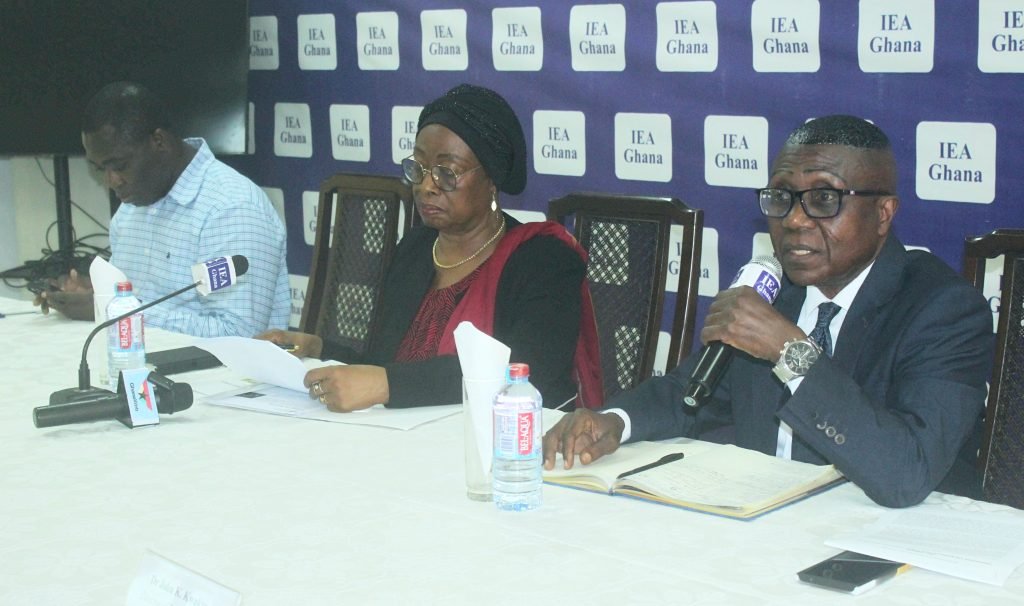
Accra, March 24, GNA – The Institute of Economic Affairs (IEA) has urged the government to promptly reassess all agreements related to Ghana’s natural resources with the aim of maximizing the nation’s benefits from their extraction.

She stated that the evaluation must ensure the nation achieves a minimum return of 60 percent from its natural assets, valued at more than 10 trillion, to aid in the country’s economic shift and reduce its debt load.

Former Chief Justice and IEA Fellow, Justice Sophia Akuffo, addressed this topic during a press conference in Accra on Monday, focusing on “Optimizing the Benefits from Ghana’s Natural Resources.”

She expressed worries about the exploitation of Ghana’s natural resources over several years, due to concession leases that granted sole control to international companies. These entities retained an unfairly large share of the goods and paid minimal sums as royalties and taxes.

The natural resources encompass gold, diamonds, bauxite, iron ore, petroleum, natural gas, cocoa, and timber.

She requested the government to take cues from the United Kingdom (UK), Australia, Qatar, Tanzania, Botswana, Angola, and Eritrea, who examined their mining legislation and agreements to secure up to 50 percent for their national interests.

For instance, in Angola, the Petroleum Income Tax operates under a Production Sharing Agreement with a tax rate of 50% for taxable income. However, operations conducted through different contractual arrangements like consortium agreements face a higher tax rate of 65.75%, according to Justice Akuffo.

The ex-Chief Justice mentioned the UK as an example, where they had a separate corporate tax rate of 30 percent, an additional charge of 10 percent, and a levy of 38 percent on the extraction and production of oil and natural gas.

Likewise, according to Article 41 of Eritrea’s Mining Law Proclamation, the government was permitted to hold an equity stake of up to 40 percent in total, which includes a mandatory participatory interest of 10 percent in any mining venture.

“The moment has arrived for Ghana to terminate its Guggisberg-style agreements that favor international corporations and instead embrace contemporary optimal methods, ensuring that a greater portion of the resource revenue benefits the nation rather than solely foreign mining enterprises,” she stated.

She requested the establishment of a five-person panel consisting of seasoned Ghanaian individuals to examine and suggest revisions to every law and contract related to natural resources. This was aimed at maximizing the advantages these resources could bring to the nation.

The former Chief Justice suggested that Ghana should fully embrace domestically-owned production lines or, at minimum, establish joint ventures between Ghanaians and foreigners in the natural resources sector, which would involve cost-sharing and profit distribution.

Dr. John Kwakye, the Director of Research at IEA, remarked, “Although our nation boasts abundant wealth beneath the soil, it appears impoverished above ground.” He further stated that leaders have not sufficiently leveraged the country’s natural resources to foster national progress.

“More than 10 trillion dollars worth of natural resources could potentially be harnessed if appropriate systems are in place… If you’re unprepared, keep them underground until the necessary expertise and funding become available,” he stated.

Should it require street protests to prompt the government into favoring Ghanaian interests in natural resource agreements, the IAE will be at the forefront.

Dr. Kwabena Nyarko Otoo, the Deputy Secretary General of the Trades Union Congress (TUC), has called upon the government to boldly reassess all laws and agreements to ensure they benefit the nation.

He committed TUC to ongoing collaboration with the IEA and other partners in developing policies aimed at ensuring appropriate changes in foreign ownership and control of Ghana’s natural resources.

GNA

ABD

Provided by Syndigate Media Inc. (
Syndigate.info
).