by admin | Sep 15, 2025 | buses, business, local news, public transportation, transportation
Sri Lanka, August 27 – The Sri Lanka Transport Board (SLTB) along with local bus companies have started implementing a unified schedule for intercity travel.
The National Transport Commission (NTC) introduced this integrated system starting at the Bastian Mawatha Private Bus Stand in Colombo to enhance service efficiency, minimize passenger wait times, and prevent overlapping routes.
The updated timetable will run along major routes such as Colombo to Chilaw, Puttalam, Anuradhapura, and Jaffna. At first, buses will follow a shared schedule between Jaffna and Colombo, Mannar and Colombo, and Talaimannar and Colombo using the Puttalam route, which serves as a primary link into Colombo.
Buses will begin operating at a particular hour and arrive at their destinations as scheduled, stated Transport and Highways Deputy Minister Dr. Prasanna Gunasena.
The Assistant Minister stated that every SLTB and private bus traveling via the Puttalam route will be tracked with GPS systems, as officials will be stationed to oversee when these vehicles are expected to arrive at particular destinations.
He mentioned that most public transportation buses across the nation are anticipated to follow a single schedule by December 31, 2026, with adjustments planned for the shared schedule based on passenger needs moving forward. Deputy Minister Dr. Prasanna Gunasena added that during this stage, surveillance and information gathering will occur at locations including Katunayake, Thoppuwa, Madampe, Palaviya, Puttalam, Saliyawewa, Anuradhapura New Bus Station, Medawachchiya, and Vavuniya. Measures have been implemented to equip all privately operated buses traveling on the Puttalam route with GPS systems. This move follows repeated reports of bus incidents along the same path.
by admin | Aug 23, 2025 | business, government, infrastructure, public transportation, transportation
In July 2024, the Federal Capital Territory (FCT) Administration, under the leadership of Nyesom Wike, initiated the building of three contemporary bus stations, marking an inaugural effort for the nation’s capital.
The proposal detailed three terminals for the initial stage: one located in the Kugbo region, another in the Mabushi neighborhood, and the last in the Central Business Area.
Although the Kugbo and Mabushi terminals were finished within a year and became operational in June, the terminal located in the Central Business District faced delays because of site-related problems and is now expected to be completed by the end of the year.
Nevertheless, locals have started voicing worries. Following the completion and inauguration of the two multimillion-naira terminals by President Bola Ahmed Tinubu in June, they have stayed closed and not been utilized, with no bus or taxi services running.
As stated by the minister, the terminals were designed to improve the security of travelers and passengers, along with offering leisure amenities such as an integrated movie theater.
Wike highlighted that the terminals will combine and enhance FCT’s transport network.
“Although we have kept expanding our road network, unless we connect it with different bus stations, we will not reach our objectives. Our aim is to combine and enhance our transportation system. This will eliminate those so-called one-time offenses that constantly occur,” stated the minister.
He stated that the main objective of the initiative was to improve safety by decreasing the presence of unauthorized vehicles on the roads.
“We are working to remove the ‘single-opportunity’ risk where travelers are exposed to threats from unfamiliar drivers. Thanks to this terminal, passengers will be aware of both the drivers and the vehicles they’re entering, enhancing the safety of their trips,” he said.
Wike also tackled the problem of traffic jams and uncontrolled parking, issues that have persisted in the city for years, stating, “These facilities will offer a secure and structured area for cars to be parked, helping ease traffic on the streets.”
Expressing regret over the lack of this kind of facilities previously, he stated, “It is sad that a city like Abuja has never possessed a bus station. However, we appreciate God as our wishes have now come true.”
The FCT Authority stated that the terminals will be open around the clock, providing travelers with a secure and pleasant area for waiting. Our reporter, who has been following the project’s progress, notes that the terminals feature facilities like dining areas, washrooms, and recreational spaces.
Each of the two appointed terminals includes completely climate-controlled zones where travelers can relax with ease. These spaces also have an integrated movie system and internet connectivity. Moreover, there are specific spots designated for collecting tickets and checking out.
Nevertheless, although they possess remarkable characteristics, locals worry that even several months following their installation, the terminals still stand vacant and their transport issues persist.
What use are stations without bus services? – Locals
The bus stations in Abuja were constructed to enhance city mobility, yet several have been unused since they were finished.
Over a month since the inauguration, locals are expressing worries regarding the lack of functioning bus services. Without established routes, timetables, or personnel, several people are doubting the value of these stations.
A tour of the Kugbo and Mabushi terminals reveals that although the structures are contemporary and solidly constructed, they remain mostly vacant.
These stations, supported by taxpayer funds, have turned into tranquil areas without evidence of real transportation operations.
Inhabitants claim that these structures function more as symbols rather than effective answers to Abuja’s increasing transportation demands.
“It’s insufficient just to cut ribbons; we require buses on the streets. We need financial support for those with limited income. We also need qualified personnel, accurate schedules, and up-to-date information. If you claim to be advancing the city, make sure residents can experience it,” said Mr. Tunde Balogun, a businessman from Wuse.
People who commute every day from suburban areas into the central part of the city are experiencing stress.
Aisha Lawal, a government employee residing in Gwarimpa stated, “These kiosks are merely present—appearing nice yet vacant. There are no buses, no movement, no purpose. What exactly are we commemorating?”
Andrew Chukwuma, a transport operator traveling between Berger and Jabi, shared comparable concerns, stating, “The authorities are constructing terminal facilities, yet where are the buses? We’ve noticed the Kugbo and Mabushi terminals remain closed since they were opened in June. They claim these places are meant for the general population, but there’s absolutely nothing available for us. Travelers endure hardships, and we operators lack an effective structure to rely on.”
People living in regions like Kubwa, Kuje, Lugbe, Karu, and Nyanya still face extended waiting periods, crowded transport, and fluctuating costs.
Blessing Oche, a public official traveling from Lugbe, stated, “I spend hours waiting but still get crammed into packed buses. With no other options available, operators demand exorbitant fares. Simply constructing terminal facilities isn’t sufficient; the government needs to supply proper bus services as well.”
Travelers have also expressed worries regarding security.
An unnamed bank employee recounted a recent experience with a group of thieves, saying, “They stole everything — my phone, computer, and backpack. This is why we require a secure, state-backed transportation system.”
Madam Halima Hashir, who travels from Karu-Nyanya every day, mentioned that her transportation costs amount to N5,500 per day.
“What is my salary?” every day, as she passes the Kugbo terminal, which remains closed. “These terminals aren’t benefiting anyone; they’re just vacant structures while we face difficulties,” she expressed sorrowfully.
Due to the lack of an operational transportation network, numerous locals have no choice but to rely on unsafe and unofficial alternatives.
Outdated buses, delivery motorcycles, and various personal vehicles now dominate the streets, leading to hazardous commuting situations.
Mr. Ejike Hygenus, a former teacher from Kuje, remembered a more favorable period: “In the time of El-Rufai, we had well-maintained and lengthy buses commonly known as El-Rufai buses connecting the outskirts with the city center. They were affordable, dependable, and secure. These days, such services no longer exist—only structures labeled as stations,” he mentioned.
Specialists share their perspectives on future directions
Professionals discuss potential paths ahead
Experts provide insights into next steps
Authorities comment on possible trajectories
Experts offer opinions on what lies ahead
Scholars outline ways to proceed
Experts analyze upcoming strategies
Experts suggest approaches for moving forward
Experts present views on subsequent actions
Experts contribute ideas about the course of action
Former general manager of the Abuja Urban Mass Transit, Mr. Najeeb Mahmoud Abdul Salam, stated that the present circumstances require immediate changes.
He highlighted the importance of collaboration between the public and private sectors, support from donors, better regulatory frameworks, and a renewed focus on strategic planning within the national transportation policy.
He further advocated for improved monitoring and control of the terminals to guarantee secure and efficient service provision.
A public policy specialist, Dr. Adetokunbo Margaret, cautioned that infrastructure not utilized properly could result in a lost opportunity for investment.
What is required at this moment is not additional terminals, but buses traveling on the streets, well-defined pathways, skilled operators, and an effective oversight framework.
She recommended that the private sector could manage it, but the government needed to establish and implement the regulations.
A mobility advisor, Mrs. Ifeoma Onuche, emphasized the importance of preparation and teamwork, stating, “These stations shouldn’t merely serve as symbolic initiatives. Where is the cooperation with private transportation providers? What is the transportation plan that dictates how these facilities should function?”
Numerous locals still experience everyday challenges on the roadways. Merchants, pupils, and employees encounter high costs, inconsistent transit options, and increasing security issues.
Trader Chukwuemeka Eze from Nyanya market stated plainly: “It’s similar to constructing hospitals without medical staff. What we require are buses today, not next year.”
Abdullahi Yusuf, who lives in Bwari stated, “With fuel costs still elevated and ride-hailing options being costly for many locals, unofficial transportation networks have stepped in to fill the void—but this comes with significant issues. Vehicles often break down, there are unsafe conditions, and incidents of regular harassment are common during commutes.”
Citizens are demanding swift action, such as the rapid introduction of bus services on heavily used routes, involvement of the private sector in managing terminals, implementation of electronic payment methods for fares, and stricter oversight. They believe that transport should be regarded as an essential community service, rather than merely a symbolic gesture.
As per Mathew Ijaodola, a local from Kubwa, without tangible actions being implemented, Abuja’s stations might stay well-constructed yet underutilized facilities, with the city’s inhabitants still trapped, awaiting not only bus services but also an effective transportation network.
Official from FCTA explains cause of postponement
A representative from the FCT Transport Secretariat, who requested not to be named, cited the procedure of granting terminal operations to private companies as the reason for the delay.
An official stated that the government had chosen for the terminals to be managed by a private organization instead of the transportation department.
He mentioned that the administration was in the midst of hiring a company to manage the terminals and pledged that once the procedure is finished, locals would begin to experience the effects.
The official had earlier stated that the terminals would not be managed by the FCT Transport Secretariat.
“We will entrust it to private companies that will manage it effectively,” the minister stated during the inauguration in June.
Supplied by SyndiGate Media Inc. (
Syndigate.info
).
by admin | Aug 11, 2025 | public transportation, tourists, transportation, Travel, vietnam
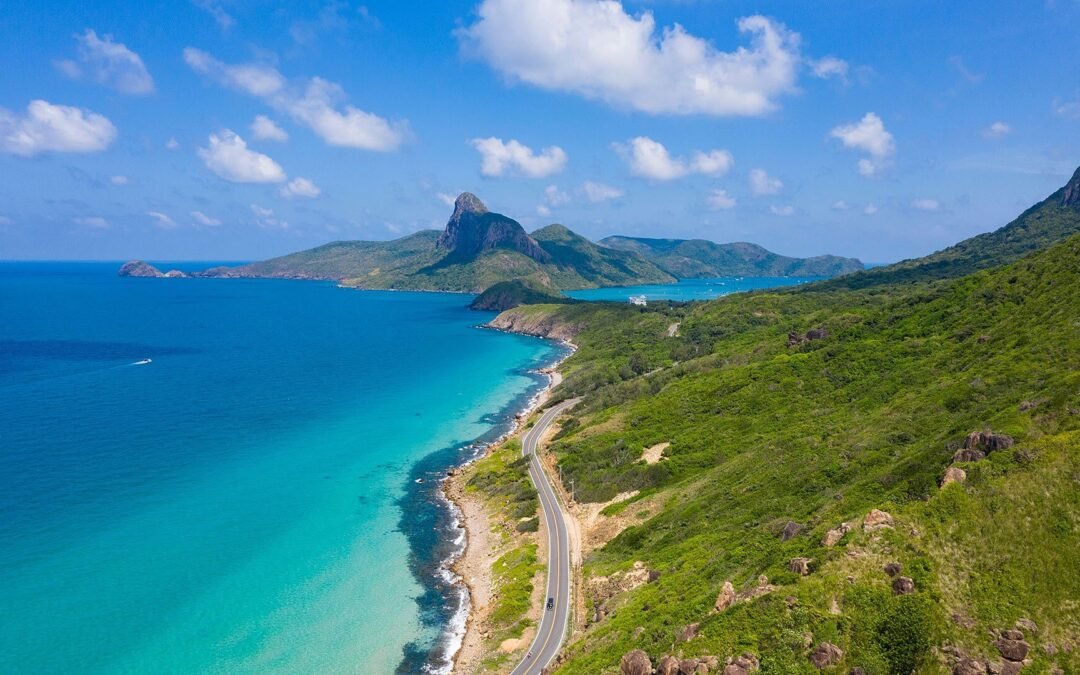
For the first time ever, Vietnam’s tourism island of Con Dao is launching public bus services, which will operate entirely on electricity.
Renowned for its untouched natural beauty and peaceful appeal, the island is introducing six electric bus lines linking the airport, marketplace, sightseeing spots, and living neighborhoods. This initiative forms part of an extended effort to ease road overcrowding, lower pollution levels, and encourage eco-friendly travel as more tourists arrive each year.
Every route will operate 40-seater electric buses at 15-minute intervals, spanning almost 72 kilometers throughout the island. These services will connect the downtown area with the airport, Ben Dam Port, as well as the northern and southern coastlines. One of the routes will cater to major tourist attractions, hotels, and nearby lodgings. This represents the initial introduction of a public transport network in Con Dao, marking an important step in its growth.
As stated by Pham Vuong Bao, vice director of the Ho Chi Minh City Public Transportation Management Center, rising population numbers and higher tourism levels have put stress on local facilities. Limited public transport choices mean electric buses can alleviate road congestion and support a plan for eco-friendly, advanced transportation.
A greener future
The updated bus network forms only a portion of Con Dao’s initiative toward sustainable development. Officials additionally seek to promote the transition of locals from traditional motorcycles fueled by petrol to eco-friendly electric models. Beginning in 2026, individuals purchasing e-bikes will benefit from reduced charges related to registration and license plate processing. Residents with limited income will qualify for substantial monetary assistance, along with access to affordable loan options designed to ease the expense of acquiring such vehicles.
This initiative is part of an overarching plan aimed at transforming Con Dao and Can Gio into areas with minimal emissions as per Ho Chi Minh City’s extended environmental approach. The overall funding for this project is projected at VND2.158 trillion (US$82.3 million), where public resources account for almost one-third, and the remaining portion comes from private sector contributions. Approximately VND590 billion will be allocated toward facilitating the shift to electric motorcycles.
The island is also set to link up with the national power network in September, an initiative expected to provide more stable electrical supply and support the growth of renewable energy options like roof-mounted solar panels and ocean-based wind farms.
Previously, Con Dao belonged to Ba Ria–Vung Tau Province. Following a nationwide administrative reform beginning in July, when Ba Ria-Vung Tau was combined with Binh Duong and integrated into Ho Chi Minh City, it transitioned into a specialized administrative area within the newly formed city.
The group of islands covers almost 76 square kilometers and consists of 16 islands, with Con Son being the biggest. With increasing tourism, facilities like transport, accommodation, and restaurants have rapidly developed, contributing to the island’s growing reputation as one of Vietnam’s emerging tourist spots.
At present, Con Dao has approximately 8,500 vehicles, mostly powered by petrol or diesel. However, authorities aim for all motorcycles on the island to transition to electricity by 2030, with all public and taxi services utilizing renewable energy sources. Public transportation is expected to cover every resident of the area. The ultimate objective is to boost public transit ridership to 80%, thereby enhancing both accessibility and sustainability on Con Dao.
by admin | Apr 3, 2025 | public transportation, railroads, railway systems, train travel, trains
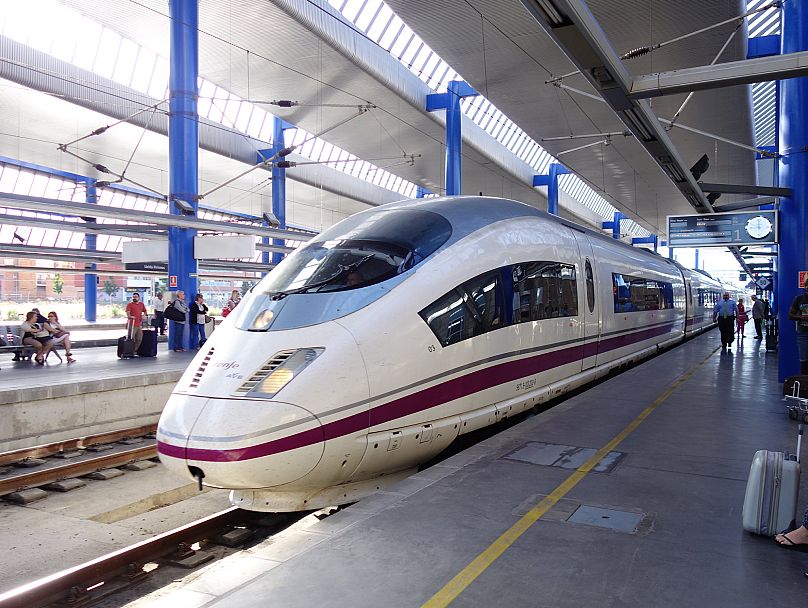
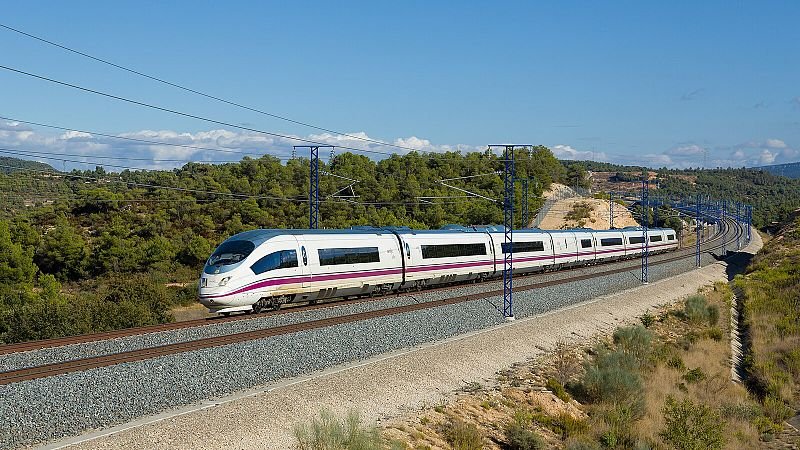
Interrail and Eurail pass holders celebrate, since they can now bypass the lines and book their seats on long- and medium-haul RENFE trains via the internet.
Rail Europe
A European train booking platform has extended its services to encompass trains run by Spain’s national railroad company, thereby removing a significant obstacle that has frustrated rail pass holders for many years.
The inclusion of RENFE’s passholder rates on our platform is a significant development for travelers looking to easily discover Spain,” states Jürgen Witte, Chief Product and Technology Officer at Rail Europe. “This improvement allows Interrail and Eurail Global Pass owners to effortlessly traverse their top-notch railway network.
Using the new service, pass holders can quickly determine whether they need to reserve seats for their trip and find out the related expenses.
From there, they can create their own
reservation
Online, eliminating the necessity for time-draining in-person reservations where issues with Spanish language proficiency can arise.
What’s the issue with reserving RENFE seats using a rail pass?
While many
Interrail
And while Eurail trains don’t necessitate seat reservations, the Spanish high-speed trains—the Alta Velocidad Española (AVE)—do require them.
Although Interrail purports to allow bookings on some AVE trains via its self-service system, users report extensive issues in getting the platform to work. Some trains available on Interrail/Eurail are not bookable via the self-service system at all.
Earlier, the sole possibility for securing a seat reservation without purchasing a ticket through RENFE was unavailable.
high-speed train
The intention was to contact the company. Afterward, the traveler needed to visit a RENFE station to collect and pay for the reservation within 72 hours of making the booking, which frequently proved inconvenient.
“In Spain, nearly all trains, excluding solely suburban services, necessitate a reservation, and RENFE’s official site does not provide options for passholders,” clarifies railway travel specialist Mark Smith, the person behind the website.
The Gentleman inSeat 61
.
Moreover, Spanish trains have been known to depart with full bookings, hence it’s best to make reservations in advance. This posed a significant problem when utilizing an Interrail or Eurail pass.
Spain
.”
Smith cautions that during peak travel times, specifically on Fridays and Saturdays in the summertime, lines can become extremely lengthy. At key stations in Madrid and Barcelona, travelers might have to wait up to one or two hours for service.
The intricacy has led to bewilderment and exasperation for many travelers. In a post on the Eurail forum, someone commented, “I won’t go out of my way to head to Spain. Instead, I’ll scrap the part of the trip involving Spain and remain in France.”
How to make seat reservations through RENFE
To secure a spot on a RENFE high-speed AVE train, just go to the
Rail Europe website
.
Below the journey planner, click ‘add rail pass’ and choose the type and class of your pass. Afterward, proceed with your journey search; however, instead of regular ticket prices, you will view the reservation fees applicable for passholders.
Smith notes that the
Rail Europe
The system automatically suggests a secondary class seating option in the search results. Users with premier tickets must individually adjust the fare filter if they wish to book a first-class seat.
Other alternatives for securing seats on RENFE with a pass involve utilizing Dutch travel agency HappyRail. This option has been effective in reserving spots on AVE services; however, they do charge a 3.5 percent service fee.
Interrail
Eurail reservation services became accessible starting in 2023; however, their effectiveness has been inconsistent. According to Smith, these reservations can be made for either first or second-class travel, though premium service remains unavailable. The ‘premium’ option grants Passholders entry into Sala Club lounges along with meals accompanied by wine on AVE and Euromed train journeys.
Smith has frequently suggested using Rail Europe as a reservation platform for those with Interrail and Eurail passes because it offers a wider selection of seats, additional advantages for holders of first-class tickets, and does not charge any booking fees.
This represents significant progress,” states Smith, “so if you can’t secure your reservation with one system, consider using the alternative.
Where can one journey using RENFE?
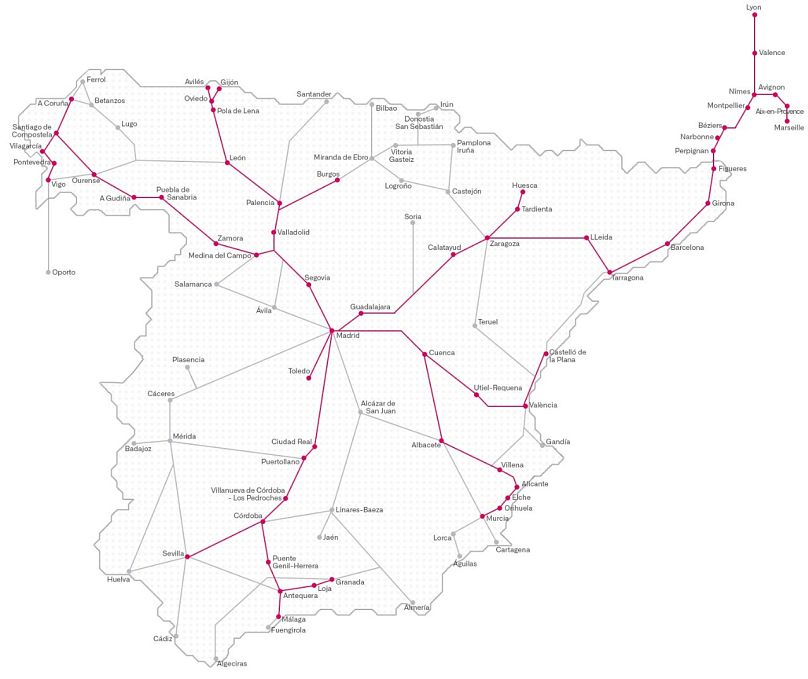
RENFE manages an extensive route network throughout Spain, featuring both its high-speed AVE services and long-distance Larga Distancia trains. As shown on the map below, the purple lines represent AVE routes, while the grey lines indicate the slower long-distance services.
long-distance routes
.
In addition to traveling within Spain, RENFE also links to various international locations. These include Oporto in Portugal and multiple destinations elsewhere.
France
.
Starting from April 23rd, RENFE will introduce a new direct train service connecting Seville and Barcelona, eliminating the need for a layover in Madrid and simplifying travel between these two major destinations.
During its journey, it makes stops in Córdoba, Puertollano, Ciudad Real, Madrid, Zaragoza, Lleida, and Tarragona, and
Girona
, making them equally appealing places to visit. The high-speed service cuts down the journey time to roughly six hours, thereby offering a far more convenient way to travel between southern and northeastern regions of Spain.
by admin | Mar 24, 2025 | buses, business, infrastructure, public transportation, transportation
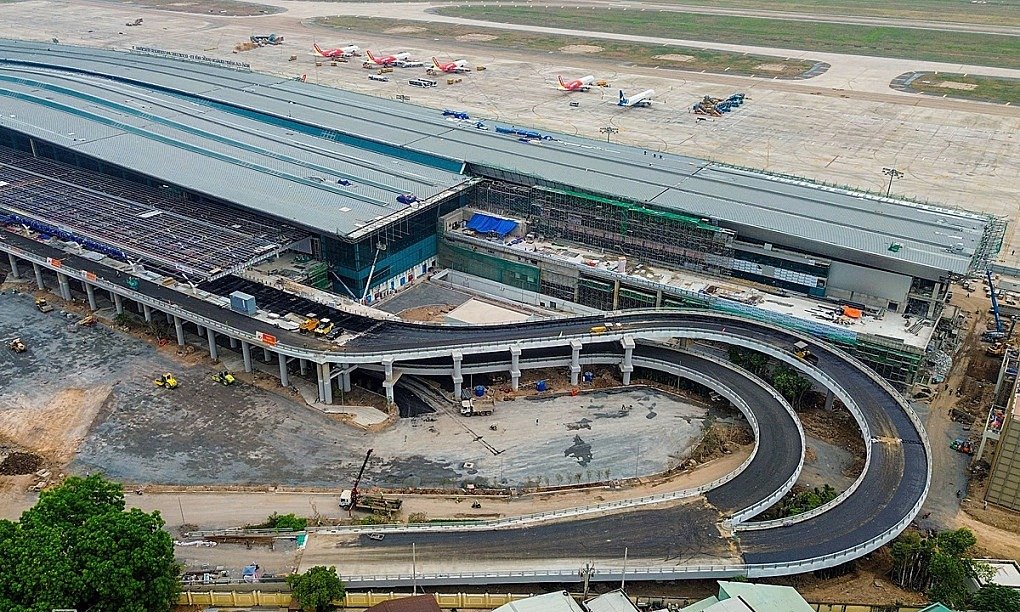
The Transportation Department of Ho Chi Minh City has suggested setting up bus stops within the new domestic terminal T3 at Tan Son Nhat International Airport and plans to create 20 bus routes for passenger convenience.
In a recent submission to the Ministry of Construction, ACV, and Tan Son Nhat International Airport, the department stated that with the introduction of Terminal T3 in May, which will become functional then, the overall passenger capacity at the airport is set to increase to 50 million annually.
The department has suggested that the airport allocate particular areas in front of the new terminal for buses picking up and dropping off passengers. Additionally, they have sought authorization from the Ministry of Construction to run approximately 20 bus routes that will transport passengers directly to Terminal T3.
Based on the present timetable, Terminal T3 will handle domestic flights for Vietnam Airlines and Vietjet Air. Meanwhile, other domestic airlines such as Vasco, Bamboo Airways, Vietravel Airlines, and Pacific Airlines will keep using Terminal T1.
In conjunction with the urban bus network expansion, Tan Son Nhat Airport is introducing a shuttle service designed to move travelers between the current terminals and the recently finished T3 facility.
Terminal T3 will be capable of handling up to 20 million passengers each year, which would make it the biggest domestic terminal in Vietnam. Financed by ACV, this approximately VND11 trillion (USD$445 million) initiative commenced construction towards the end of 2022, with significant work on the main passenger area beginning in August 2023.
The terminal will be opened two months earlier than originally planned.
To enhance accessibility to Terminal T3, a 4-kilometer-long Tran Quoc Hoan–Cong Hoa link road will be opened as well. The purpose of this new route is to strengthen connections among vital urban infrastructures and alleviate traffic jams in the densely populated Tan Son Nhat region—one of HCMC’s most intricate traffic bottlenecks.