by admin | Apr 3, 2025 | donald trump, international economics, international trade, politics, politics and government
On Wednesday, US President Donald Trump sparked what could become a devastating trade conflict by imposing broad 10 percent tariffs on goods imported globally and stringent extra duties on major trading allies.
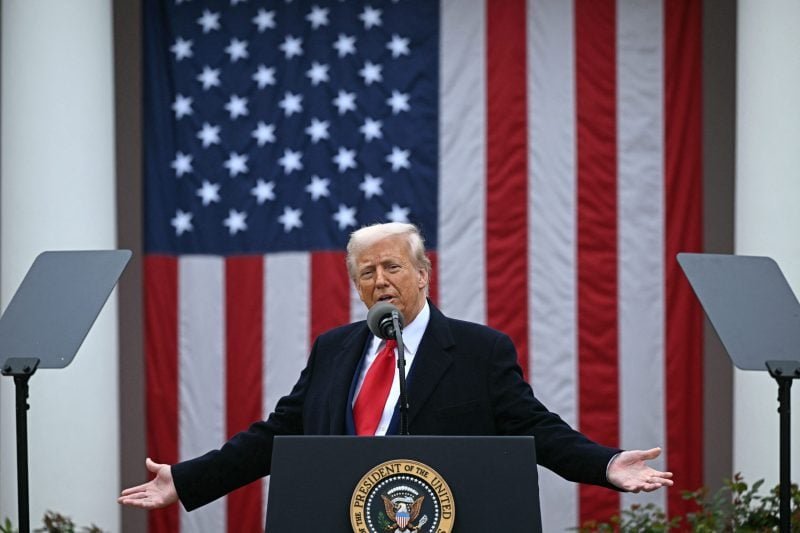
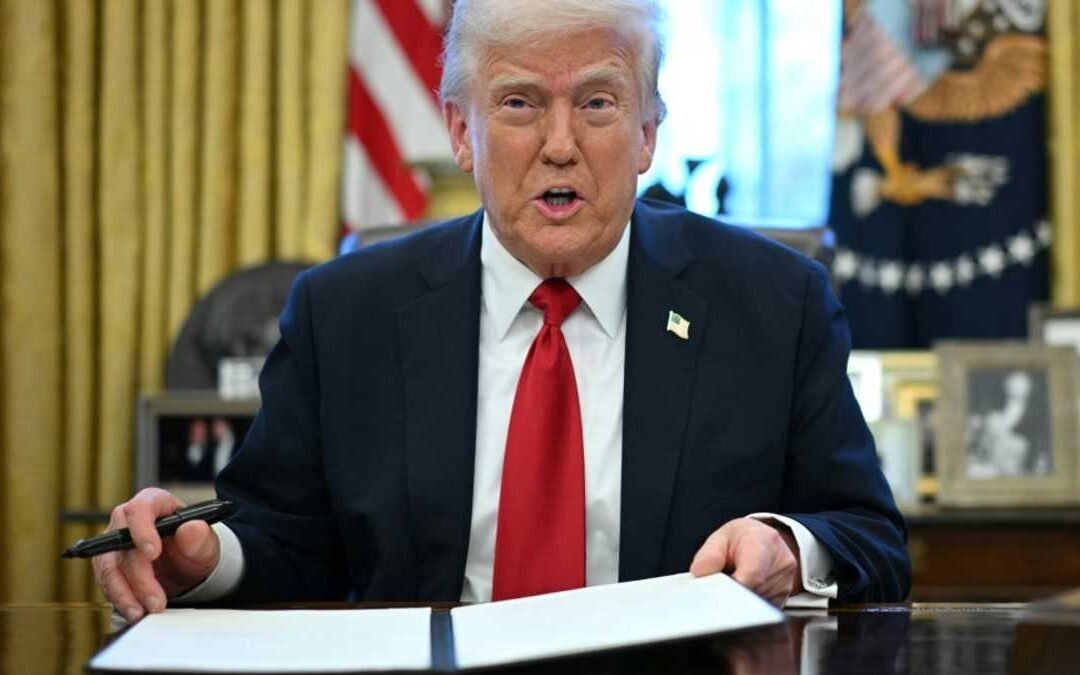
Standing before the American flags in the White House Rose Garden, Trump announced stringent tariffs on both China and the European Union, referring to the day as “Liberation Day.”
Trump’s tariffs sparked instant outrage, with the United States’ ally Australia denouncing them as “unjustified” and Italy deeming them “incorrect,” while several nations have pledged countermeasures.
“For many years, our nation has faced theft, destruction, exploitation, and plunder at the hands of countries close and distant, regardless of whether they were allies or adversaries,” Trump stated.
When Trump delivered his statement, Wall Street was not yet open for business; however, the S&P index had dropped by 1.5 percent during extended trading hours. Meanwhile, the value of the dollar decreased by one percent relative to the euro while he spoke, though it later rebounded.
Trump directed his harshest criticisms at countries he accused of mistreating the U.S., imposing tariffs such as 34% on products from geopolitical competitor China, 20% on imports from the European Union, and 24% on those from Japan.
However, the 78-year-old Republican — who displayed a chart listing the highest tariffs — mentioned that he was being “quite lenient” and thus was only applying half the rate that the “biggest culprits” imposed on American goods.
– ‘Rebuild American Prosperity’ –
As for the others, Trump stated he would enforce a “minimum” tariff of 10 percent, which would also apply to another major ally, Britain.
A crowd consisting of cabinet members along with employees wearing hard hats from sectors such as steel, oil, and gas loudly applauded and cheered as Trump stated that the tariffs would “reestablish America’s wealth.”
This marks the Liberation Day,” Trump stated, emphasizing that it will “go down in history as the moment when American manufacturing was rejuvenated.
The broad-based auto tariffs of 25 percent that were declared by Trump earlier this week are set to be implemented at 12:01 am (0401 GMT) on Thursday.
Canada and Mexico are exempt from the new tariffs because Trump has previously implemented duties on these two U.S. neighbors due to his claim that they have failed to stop the illegal flow of the drug fentanyl.
Trump had hinted at this action for several weeks, asserting that tariffs would prevent other nations from exploiting the United States and foster a new economic “Golden Era.”
However, numerous specialists caution that these tariffs could lead to an economic downturn domestically as they result in higher costs for American consumers, and may also spark a detrimental trade conflict internationally.
US Treasury Secretary Scott Bessent cautioned countries against implementing retaliatory measures, stating on Fox News: “Should you choose to retaliate, it will lead to further escalation.”
The global community has been anticipating Trump’s announcement with great tension, and his imposed tariffs have affected nations across the planet.
A number of regions heavily affected were in Asia, with percentages such as 49% for Cambodia, 47% for Vietnam, and 44% for Myanmar, under military rule and recently struck by a catastrophic earthquake.
The country with the highest rate of 50 percent was Lesotho — the Southern African nation that Trump recently referred to as a place “no one has ever heard of.”
– ‘Totally unwarranted’ –
The tariffs will also reinforce fears that Trump is backing even further away from US allies towards a new order based on a vision of American supremacy.
On Thursday, Australian Prime Minister Anthony Albanese stated that the tariffs were “completely unjustified” and would alter how people view the U.S.-Australia relationship.
Italian Prime Minister Giorgia Meloni, who has aligned closely with former U.S. President Donald Trump, criticized the tariffs imposed on the European Union as “incorrect.” However, she affirmed her commitment to collaborate with Washington towards reaching an agreement.
Britain emerged largely unscathed following a diplomatic effort that saw Prime Minister Keir Starmer visiting the White House bearing an invitation from King Charles III for a state visit.
However, it continues to be dedicated to finalizing a trade agreement that could “alleviate” the 10 percent tariff it currently bears, according to business minister Jonathan Reynolds.
Trump has had a long love affair with tariffs, insisting in the face of experts that they are a cure-all for America’s trade imbalances and economic ills.
The wealthy entrepreneur claims that these taxes will lead to a “renaissance” of America’s depleted manufacturing sector, and he asserts that businesses can circumvent these duties by relocating to the U.S.
The post
Trump ignites trade conflict with extensive worldwide tariff measures
appeared first on
SANGGRALOKAEnglish – Morocco News
.
by admin | Apr 1, 2025 | economic policy, economics, international economics, politics, politics of mexico

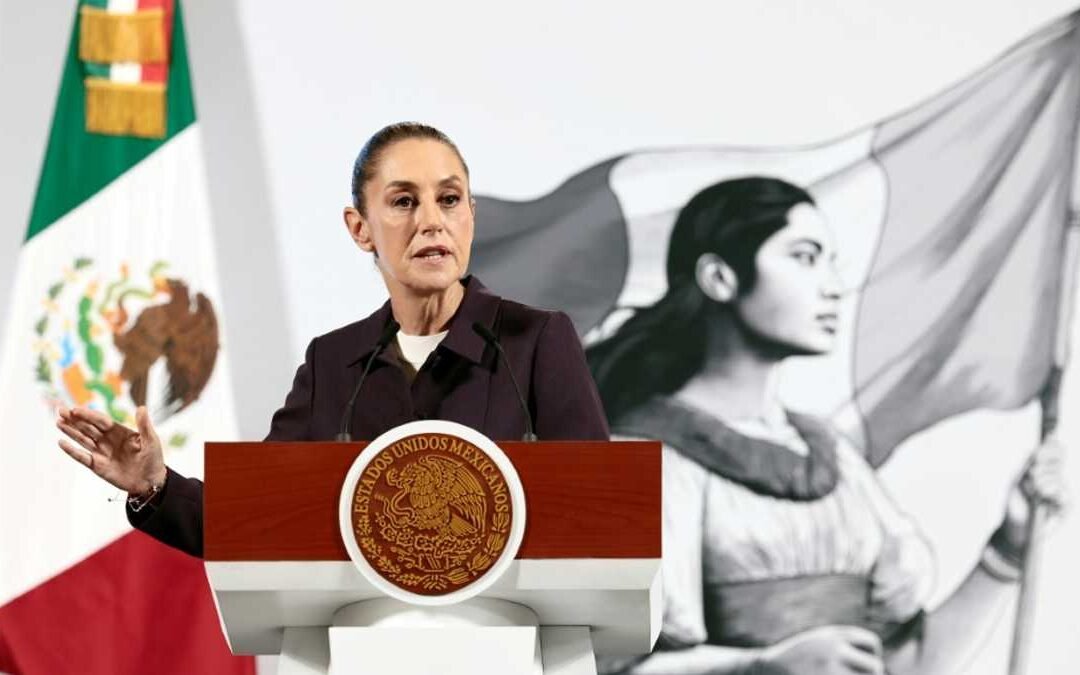
The Mexican president, Claudia Sheinbaum, stated on Tuesday that Mexico will not adopt a retaliatory stance as the nation prepares for fresh U.S. import duties set to take effect later this week.
The head of the largest trade ally to the United States addressed the media ahead of President Donald Trump’s anticipated declaration of “reciprocal” tariffs, which would include 25 percent duties on imported automobiles and automotive components.
Mexico has previously committed to a “holistic response” to Trump’s tariffs, maintaining a approach that emphasizes negotiation as a priority.
However, Sheinbaum stated on Tuesday, “We do not subscribe to the concept of tit-for-tat, as it invariably results in a negative outcome.”
She emphasized that “naturally, actions are implemented (in Mexico) since actions are also carried out elsewhere, yet ongoing communication remains essential.”
Trump has said he will unveil a raft of so-called “reciprocal tariffs” Wednesday, on what he has dubbed America’s “Liberation Day.”
He insists the duties are necessary to combat trade imbalances with other countries.
Mexico’s economy is seen as highly susceptible to Trump’s tariffs because of its strong trading ties with the United States.
This South American country hosts numerous automobile assembly facilities owned by international firms such as Ford, General Motors, BMW, Volkswagen, and Toyota.
Over 80 percent of Mexico’s exports are destined for the United States, which includes approximately three million vehicles annually.
Sheinbaum stated that her administration would await the specifics of Trump’s announcement on Wednesday before formulating an appropriate response.
She stated during her daily press briefing, ‘We are uncertain, as no nation globally has precise knowledge of what will be unveiled on April 2.’
Regarding immigration issues, Sheinbaum emphasized that although this presented another area of disagreement with America, her administration was ready to “work together” with the U.S., yet not be “subordinated” to its approach.
“The president answers to one authority only, and that is the people of Mexico,” she said.
Last Friday, Sheinbaum received a visit from U.S. Homeland Security Secretary Kristi Noem, who mentioned that she presented President Biden with a list of requirements aimed at reducing immigration. This included requests for enhanced oversight of Mexico’s border with Guatemala.
Guatemala is a transit country for many migrants trying to reach the United States from South America.
by admin | Apr 1, 2025 | europe, european union, international economics, international relations, politics
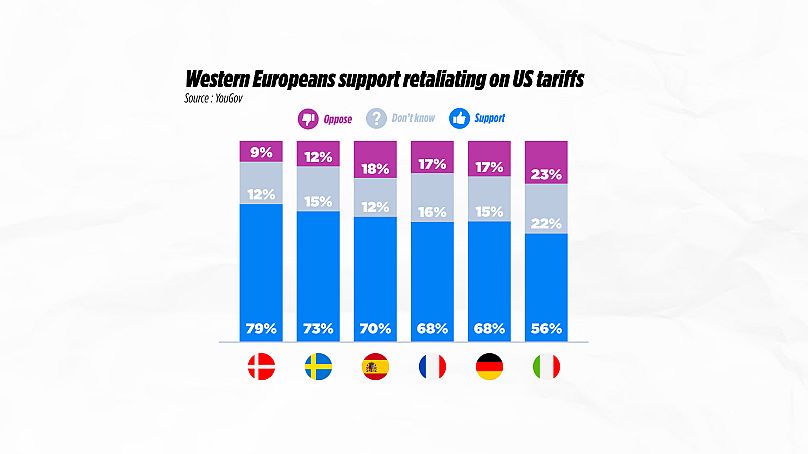
As Washington gets ready to implement additional trade actions involving reciprocal tariffs on April 2nd, a significant number of European Union citizens from countries such as Denmark, France, Germany, Italy, Spain, and Sweden favor enacting countermeasures against goods imported from the United States, reveals a YouGov poll released on Tuesday.
Over sixty-nine percent of residents in these six significant European Union countries expressed their support for such retaliatory measures, with Danish participants exhibiting the highest level of approval at seventy-nine percent. In contrast, Italian respondents showed the lowest level of endorsement, with only fifty-nine percent supporting the countermeasures.
The findings underscore growing dissatisfaction among Europeans regarding U.S. trade policies, with residents expecting considerable financial implications for their respective nations.
The Germans, who rely heavily on their robust car manufacturing industry, anticipate significant repercussions from the proposed 25% U.S. tariffs on vehicles. The survey indicates that 75% think these tariffs will exert considerable influence on their country’s economy, including 31% who predict “a substantial” effect specifically.
The research revealed that 70% of the French population holds negative views regarding the effect of US tariffs on EU products within their nation’s economic landscape. France stands out as an exceptionally susceptible party, notably following former President Donald Trump’s threat to enforce 200% duties on wine and spirits imports. This action has raised worries amongst French manufacturers and traders, who anticipate significant damage to what is arguably one of France’s signature sectors.
The survey revealed that precisely 70% of Italians believe US tariffs on European Union products will significantly affect their economy, even though they showed less backing for retaliatory actions.
The European Commission
announced
A variety of retaliatory measures were implemented against a spectrum of American products following the implementation of U.S. tariffs on steel and aluminum.
Italian Prime Minister Giorgia Meloni called for prudence in Europe’s reaction to U.S. tariffs. “Certainly, there are discrepancies regarding these duties, yet because of this, I believe we ought not to react hastily but rather through careful consideration,” she stated at a gathering with opposition members of parliament on March 29th.
Europeans also expressed disagreement with U.S. President Donald Trump’s claim that the European Union mistreats the United States regarding car tariffs and a trade surplus, as 40% to 67% believe that the EU has maintained fairness in its trading relationship with Washington.
Last week, Washington imposed 25% tariffs on car imports, prompting Brussels to pledge retaliation.
“calibrated”
Countermeasures will be implemented once the tariffs come into effect on Wednesday, following which the complete extent of US reciprocal duties – whose specifics are still unclear – will be revealed.
In this research, a survey was conducted among 7,300 residents from six different European nations.

by admin | Mar 28, 2025 | business, customs, economics, international economics, international trade
New Delhi [India], March 28 (ANI):
Finance Minister
Nirmala Sitharaman
On Thursday, they stated that the continuous process of streamlining
customs duties
And removing the 6 percent equalization levy, which started in 2023, is unrelated to any worldwide occurrences and will proceed as planned.
Sitharaman stated that reducing custom duties is a component of India’s larger aim to reinforce its position as a leading manufacturing center and enhance capabilities in batteries and advanced chemical processes.
In response to a discussion about the Finance Bill 2025 in the Rajya Sabha, Sitharaman stated, “Budget by budget, we continue to decrease tariffs with the aim of supporting India’s ambition to become a leading manufacturing center. This also aids in developing capabilities for battery production and advanced chemical processes. It is part of our ongoing efforts.”
“I’ve noticed several members mention, ‘Oh, the
tariff
conflict has begun, thus as a reaction to the
tariff
Announcements made by President Trump, this initiative has been underway since 2023. We’ve continued to make steady progress each year. New products are continually introduced with consideration for both Atmanirbhar Bharat and the needs of Viksit Bharat, along with streamlining custom duties and easing compliance procedures,” stated Sitharaman.
“Therefore, this is a continuous process. It is not related to the current worldwide circumstances but is something that will persist into the future,” she noted.
India lowered customs tariffs on numerous goods and abolished them.
equalisation levy
of 6 per cent
From the Oval Office, the president made a substantial policy announcement
Donald Trump
has announced a 25 percent
tariff
On every vehicle brought into the U.S., a step he referred to as “highly thrilling” for local production.
The
tariff
Starting on April 2, this regulation will affect almost fifty percent of all vehicles sold in the United States, encompassing even those from domestic brands manufactured abroad. This comprehensive policy seeks to encourage automotive companies to build additional manufacturing plants inside U.S. territory.
Industry insiders caution that the
tariff
This outcome might have extensive repercussions. Autos Drive America, an advocacy body for global automobile producers active in the U.S., voiced significant reservations regarding the possible aftermath.
“The
tariff
As a result, this could increase the cost of manufacturing cars,” the statement read, “which might lead to higher prices for customers, decreased variety in options available, and possible upheavals in employment sectors.
The statement has the potential to heighten trade disputes with major car-producing countries such as those in Europe, Japan, and South Korea. These nations ship significant volumes of automobiles to the U.S. market and could perceive this move unfavorably.
tariff
As a direct challenge to their car manufacturing sectors.
Economists predict the
tariff
This could raise vehicle costs by thousands of dollars, putting additional pressure on consumers who are already struggling with ongoing inflation. Such action would mark a significant intrusion into the auto industry, possibly altering worldwide car production tactics.
President Trump stayed optimistic regarding the policy, saying, “Anyone with operations in the United States will benefit from this.”
As the automotive sector and international markets adjust to this major policy shift, other companies, particularly those based in India, are preparing for even larger transformations.
Earlier, US President
Donald Trump
targeted India’s auto import
tariff
As stated during his address to Congress, he said, “We face auto tariffs imposed by India.”
tariff
“exceeding 100%,” he declared, adding that a retaliatory tariff would be implemented on April 2. He stated that the US has suffered unfair treatment at the hands of almost every nation globally for many years and pledged not to allow this to continue. (ANI)
Provided by Syndigate Media Inc. (
Syndigate.info
).
by admin | Mar 27, 2025 | automotive industry, cars, commerce, international economics, international trade

On Thursday, major global powers condemned U.S. President Donald Trump’s significant tariffs imposed on imported cars and auto components, threatening countermeasures as trade disputes escalate and potential price increases loom ahead.
Germany, a major car exporter, called for strong action from the European Union, whereas Japan stated it will “examine every possible option.”
On Thursday, Canadian Prime Minister Mark Carney stated that the traditional partnership characterized by strong economic, defense, and military connections with Washington has ended. He also mentioned anticipating conversations with Trump within the coming days.
The 25 percent tariffs imposed by the U.S., set to begin on April 3 at 12:01 am (0401 GMT), will affect imported automobiles, light trucks, and car components.
Specialists caution about increased expenses for vehicles, with the Italian automotive company Ferrari announcing price hikes of up to 10 percent on numerous models sold in the U.S., effective next week.
The global stock market experienced a significant downturn, with major car manufacturers such as Toyota, Hyundai, and Mercedes leading the decline. On Wall Street, General Motors’ stocks dropped sharply, followed by declines in both Ford and Stellantis shares.
The French Finance Minister Eric Lombard stated that the sole solution for the European Union is to “impose higher duties on goods coming from America as a countermeasure.”
Carney, who previously described the tariffs as a “direct assault” on his nation, stated that he organized a gathering to explore various trade possibilities. Meanwhile, Mexico’s Economy Minister Marcelo Ebrard mentioned that he aimed to secure “special consideration” for his country.
Trump intensified his warnings overnight, stating on social media that Canada and the EU might encounter “much higher” tariffs if they collaborated “to inflict economic damage upon the USA.”
Price surge
According to JPMorgan analysts, the tariffs imposed on vehicles and components might lead to an uptick in average car prices ranging from $4,000 to $5,300.
Approximately 82 percent of Ford’s U.S. sales come from vehicles made domestically, compared to Stellantis with 71 percent and General Motors with 53 percent.

The American Automotive Policy Council, which represents the major three car manufacturers, cautioned that tariffs should be imposed in a manner that “does not increase costs for customers” and maintains the sector’s competitive edge.
Brian Kingston, the president of the Canadian Vehicle Manufacturers’ Association, stated that these measures would result in increased expenses for both manufacturers and consumers, along with “an industry that is less competitive.”
Although Trump utilized emergency economic measures for previous tariffs, his automobile duties expanded upon an investigation concluded in 2019.
‘Cheaters’
Approximately fifty percent of vehicles purchased in the United States are domestically produced. When it comes to imported cars, roughly half originate from Mexico and Canada, while Japan, South Korea, and Germany remain key exporters as well.
The White House suggests that for American-manufactured vehicles, the typical domestic content probably hovers around 40 percent.
On Wednesday, top trade advisor Peter Navarro criticized “foreign trade cheats,” accusing them of transforming America’s manufacturing industry into a “low-wage assembly line for imported components.”
He targeted Germany and Japan for keeping the production of more valuable components within their own borders.
After reassuming the presidency in January, Trump has levied tariffs on goods imported from key trade allies such as Canada, Mexico, and China, along with a 25 percent tax on steel and aluminum products.
The newest tariffs build upon those previously imposed on vehicles.
However, the White House also noted that cars coming into the United States as part of the US-Mexico-Canada Agreement (USMCA) could be eligible for a reduced tariff based on the percentage of American-made components they contain.
USMCA-compatible automotive components will stay exempt from tariffs as authorities set up a method to address their non-US origin materials.
The Mexican President, Claudia Sheinbaum, stated that imposing tariffs went against the North American trade agreement. However, she mentioned that Mexico would hold off on taking action until early April.
‘Devastating impact’

Ambiguity surrounding Trump’s trade strategies and concerns that these might prompt an economic decline have unsettled financial markets, coinciding with a drop in consumer confidence.
Trump has supported tariffs as a means to increase governmental income and rejuvenate American manufacturing.
Aiming at imported vehicles might put pressure on relationships with Washington’s partners, though.
“Wendy Cutler, who serves as the vice president at the Asia Society Policy Institute and previously worked as a US trade negotiator, stated that levying 25 percent duties on imported vehicles would severely affect numerous key trading allies of ours,” she explained.
In addition to cars, Trump is mulling over specific industry tariffs, which could include those on medicines, chips, and wood.
He has pledged a “Freedom Day” for April 2nd, during which he plans to introduce proportional tariffs aimed at various trade counterparts, designed to counteract what are considered unjust practices.
by admin | Mar 25, 2025 | business, commerce, government regulations, international economics, international trade
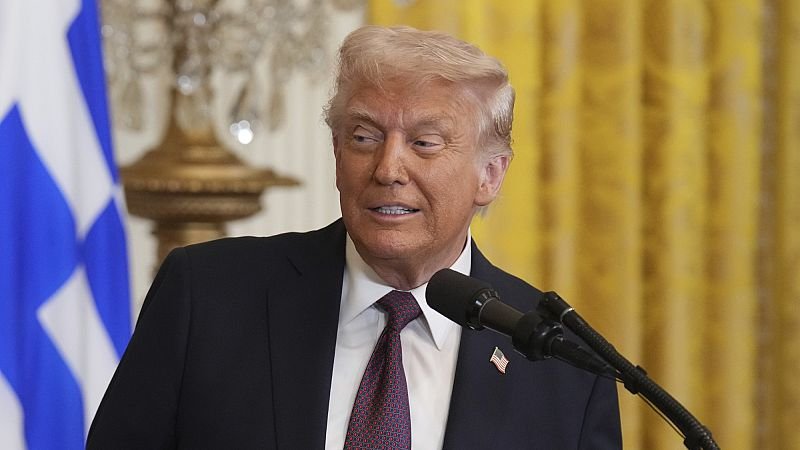
US President Donald Trump stated on Monday that he will be announcing auto tariffs within the next few days, possibly including exceptions for specific nations regarding mutual trade levies. Additionally, he suggested that tariff decisions on items such as vehicles, timber, semiconductor chips, and medicines will be made shortly.
Last month, Trump declared his intention to enforce 25% duties on imported automobiles, medications, and semiconductors starting from 2nd April. Additionally, he issued an executive directive to scrutinize trade dealings with plans for implementing extensive retaliatory tariffs anticipated to commence on the mentioned date. Following this announcement, he provided a temporary reprieve of thirty days regarding car taxes within the framework of the United States-Mexico-Canada Agreement (USMCA), effective since 3rd March.
His remarks intensified the bewilderment surrounding the continuously inconsistent tariff policies, prompting other countries to hasten discussions with the White House aiming for exceptions. “I might grant many countries some leeway,” stated Trump.
U.S. stock markets experience a strong recovery as Tesla jumps 13%.
Trump’s remarks on potential tariff exemptions came at a time when investors were seeking bargains in the US stock markets after a four-week selloff. Dip-buys in big tech stocks buoyed Wall Street, with the Nasdaq jumping more than 2% on Monday. All the Magnificent Seven stocks finished higher, with Tesla leading gains, surging 12%. However, the electric vehicle maker’s shares are still down 31% year-to-date, as CEO Elon Musk’s political intervention continues to spark backlash.
The US dollar experienced a recovery for the fourth successive trading session after the previous week’s Federal Open Market Committee (FOMC) gathering. Chairman of the Federal Reserve, Jerome Powell, minimized the effect of President Trump’s tariffs on the economy, stating that the upward push on inflation would likely be “temporary.” The anticipation of a less stringent approach from Trump regarding tariffs coupled with the Fed’s support has aided in boosting both US stock markets and the value of the dollar.
European shares and the euro decline
By contrast, the rally in the US stock markets may have caused profit-taking moments in European equities, with both the Euro Stoxx 600 index and the DAX declining for the third consecutive trading day. Notably, the record-setting rally in Germany’s stock markets lost steam after the European Union leaders failed to secure a €5 billion Ukraine funding package last week. Europe’s defence sector retreated sharply, leading to broad losses.
Furthermore, Trump’s tariff threats could result in countermeasures from the EU, scheduled to be implemented next month. On March 12th, the European Commission declared that they plan to impose tariffs on $30 billion worth of U.S. products starting in April. This escalation in the trade conflict might spark additional sell-offs within the local markets.
The euro continued to lose strength against the dollar for the fourth consecutive day, with the EUR/USD pairing dropping below 1.08 during Tuesday’s trading in Asia—the lowest level since early March. This downturn was fueled by differing trends in government bond yields between the U.S. and Europe. Specifically, the U.S. 10-year Treasury yield surged by 8 basis points amid enhanced optimism about economic expansion, whereas Germany’s equivalent yield increased just slightly by 1 basis point.