by admin | Aug 19, 2025 | automotive industry, car companies, cars, electric cars, singapore
Chinese electric vehicle brand Nio plans to debut in Singapore in the first quarter of 2026, marking its first market in the Southeast Asia region.
The automaker announced in a press statement released on Monday that it will introduce its small electric hatchback called Firefly.
The car allows conventional electric vehicle charging, but it also enables swapping the battery with a completely charged unit within three minutes at Nio’s facilities.
For the first time, this launch will include a right-hand drive variant of the Firefly.
The Straits Times
reported.
Nio previously stated intentions to manufacture vehicles with right-hand drive alongside those with left-hand drive for regions including the U.K. and Southeast Asia. Distribution will be handled by the multi-brand automotive company Wearnes Automotive in Singapore.
Established in 2014, Nio made its debut on the New York Stock Exchange in 2018 and subsequently expanded to the Singapore and Hong Kong stock markets in 2022, as reported.
The Business Times
.
Nio is known for its battery swap technology, which is currently not permitted for passenger EVs in Singapore, though the system has been approved for motorcycles and is being tested on heavy vehicles.
The company and its local distributor Wearnes said they “will evaluate” introducing the technology in the city-state, but offered no specifics on when or how it might be implemented.
The arrival of Nio came after several other Chinese electric vehicle manufacturers, such as JMEV earlier this month and Avatr at the end of July, according to reports.
AsiaOne
.
Another Chinese electric vehicle manufacturer, BYD,
currently leads Singapore’s passenger car market
representing almost 20% of new sign-ups during the first six months of this year.
Toyota from Japan and the German premium brand BMW come next with market shares of 14.4% and 11.1%, respectively.

by admin | Mar 25, 2025 | asia, indonesia, singapore, Travel, vietnam
According to a report by VisaGuide.World, an online resource offering free visa-related information globally, Thailand, Malaysia, and the Philippines have been included among the top 40 nations most suitable for digital nomads.
In the rankings, Thailand secured the 31st spot, succeeded by Malaysia at position 32 and the Philippines at 36. The evaluation considered various aspects including internet speed, taxation rules, duration of tax exemptions, income prerequisites for visa applications, cost of living, quality of healthcare services, and tourist attraction levels.
Thailand is lauded for its rapid internet connectivity.
quality of healthcare service
And tourism popularity; meanwhile, Malaysia and the Philippines received high scores due to their affordable cost of living.
Last year, Thailand initiated the
Destination Thailand Visa
This enables digital nomads to remain for as long as 180 days and remains effective for five years. To apply, one must pay a fee of 10,000 baht (approximately US$283). Additionally, candidates need to demonstrate a minimum financial capability of 500,000 baht.
In October 2022, Malaysia launched a digital nomad visa initiative aimed at luring remote workers globally.
For eligibility, applicants must have an annual income of at least $24,000.
The digital nomad visa for the Philippines was launched in June 2023.
“Lum Kamishi, a project manager at VisaGuide.World, noted that digital nomads favor locations with pleasant climates and warm welcomes, particularly those frequented by many travelers,” he stated.
Spain topped the list as the premier destination for digital nomads, closely trailed by the UAE and Montenegro.

by admin | Mar 24, 2025 | climate, climate change, singapore, sustainability, temperature
In 2024, Singapore experienced an annual average temperature of 28.4 degrees Celsius, marking it as the hottest year ever recorded, equally matched with both 2019 and 2016, as reported by the country’s National Environment Agency.
The annual report issued by the agency on March 23 stated that each month of 2024 experienced temperatures that matched or exceeded their respective historical averages. Throughout the year, numerous temperature records were surpassed, including peak daily lows recorded in February and peak daily highs documented in December.
The past ten years from 2015 to 2024 marked the nation’s hottest decade ever recorded, with an average of 28.11 degrees Celsius. This figure was 0.05 degrees Celsius higher than the previous decade spanning 2014 to 2023, making it the fourth successive year that Singapore broke its own decadal mean temperature record.
The report highlighted that although climate change led to higher temperatures, climate variability in 2024 was also a significant factor.
The El Niño phenomenon that emerged in 2023 and concluded in the second quarter of 2024 probably played a role in the elevated temperatures observed in 2024. This includes the period of Singapore’s hottest months (March – May). That particular stretch ranked as the third warmest such season ever recorded, following closely behind 1998 and 2016—years characterized by intense El Niño conditions as well.
It has been observed that Singapore’s annual temperature pattern in 2024 mirrored the recent global trends as reported by the World Meteorological Organization. Consequently, 2024 was marked as the hottest year documented worldwide since 1850.

by admin | Mar 13, 2025 | business, commerce, money, news, singapore
With Chinese tourists returning to Southeast Asia, WeChat Pay has formed an alliance with Singapore’s premier resort island.
Tencent Holdings
‘Weixin Pay, a prominent digital payments service in China, is extending its reach into Southeast Asia to leverage the increase in mainland travelers following Covid-19. The firm aims to broaden its horizons due to the underwhelming performance within its home market.’
“In recent years, we’ve gathered substantial input from Southeast Asian merchants who expressed their desire for assistance in attracting more Chinese travelers. This led us to prioritize ensuring these local businesses receive improved support,” stated Etienne Ng, the regional director for Southeast Asia at Weixin Pay, during an interview earlier this week.
WeChat Pay and Alipay, the leading mobile payment service providers in China, serve millions of domestic users. While traveling internationally, many people opt for these well-known payment applications. The Tencent-managed platform is branded as WeChat Pay for international customers.
Are you curious about the most significant issues and global trends? Find out here.
SCMP Knowledge
Our latest platform features handpicked content including explainers, FAQs, analyses, and infographics, all provided by our esteemed team of experts.
Alipay already caters to Chinese travelers in places such as Singapore and Malaysia. It operates under Ant Group, a financial technology subsidiary of Alibaba Group Holding, the owner of this publication. WeChat Pay, which arrived in Singapore in 2018, now encompasses more than 100,000 local businesses within its network, ranging from the Lau Pa Sat food court to bike-sharing company Anywheel.
Weixin Pay, linked to the domestic version of Tencent’s super app
WeChat
On Tuesday, they declared a strategic collaboration with Singapore’s Sentosa Development Corporation and CapitaLand Group. This alliance seeks to incorporate various services from the bustling tourist destination onto WeChat’s local platform, catering to the increasing influx of Chinese visitors.
Singapore saw an influx of Chinese travelers in 2024, with the city-state hosting 3.08 million visitors from China, marking a 130 percent rise compared to the prior year, as reported by the Singapore Tourism Board. Despite this surge, visitor numbers remain lower than pre-pandemic figures, indicating room for additional expansion moving forward.
In collaboration with Sentosa Development Corporation, they launched the Weixin mini-program called “Sentosa Discovery Guide.” This tool was specifically created to improve the visitation experience for Chinese tourists through a Mandarin-supported platform. According to Ng, this initiative helps tackle significant staffing issues related to the lack of employees who can speak Chinese.
Launched officially on Tuesday, this mini-program offers functionalities including AI-driven trip planning, live tour guiding, and same-day ticket reservations for top destinations such as Universal Studios Singapore. Tourists can use their yuan through WeChat Pay for transactions, thus avoiding the hassle of exchanging currencies.
One of Singapore’s biggest property firms, CapitaLand, provides special tourism benefits through their mini-program.
“The agreement represents a positive beginning as it demonstrates the dedication and enthusiasm from our partners and merchants across Southeast Asia,” according to Ng.
This partnership underscores Weixin Pay’s continuing strategy shift towards catering primarily to Chinese travelers instead of local users in Southeast Asia. Back in August, Tencent discontinued WeChat Pay Malaysia, its six-year-old e-wallet service aimed at domestic customers, announcing that it will concentrate on “cross-border transactions denominated in renminbi.”
According to the Singapore Tourism Board, Alipay experienced a 56 percent rise in expenditures made by Chinese travelers in Singapore over the recent Lunar New Year season compared to the previous year. Meanwhile, WeChat Pay noted that Singapore, Malaysia, and Thailand were among the top five overseas locations frequented by its users during the festive period.
“The information is highly significant as it serves as proof of the groundwork we’ve established in this area during the past several years,” Ng stated.
More Articles from SCMP
Rulings demonstrate the autonomy and fairness of Hong Kong’s judiciary.
US House Republicans plan to propose legislation aimed at preventing Chinese citizens from obtaining student or research visas.
Even with trade tensions, China and the US maintain communication channels on ‘matters of mutual interest.’
A senior official from the Chinese port city of Tianjin has been put under investigation as part of a corruption inquiry.
The article initially appeared on the South ChinaMorning Post (www.scmp.com), which is the premier source for news coverage of China andAsia.
Copyright © 2025. South China Morning Post Publishers Ltd. All rights reserved.
by admin | Jan 13, 2025 | asia, passports and international travel, politics, singapore, world
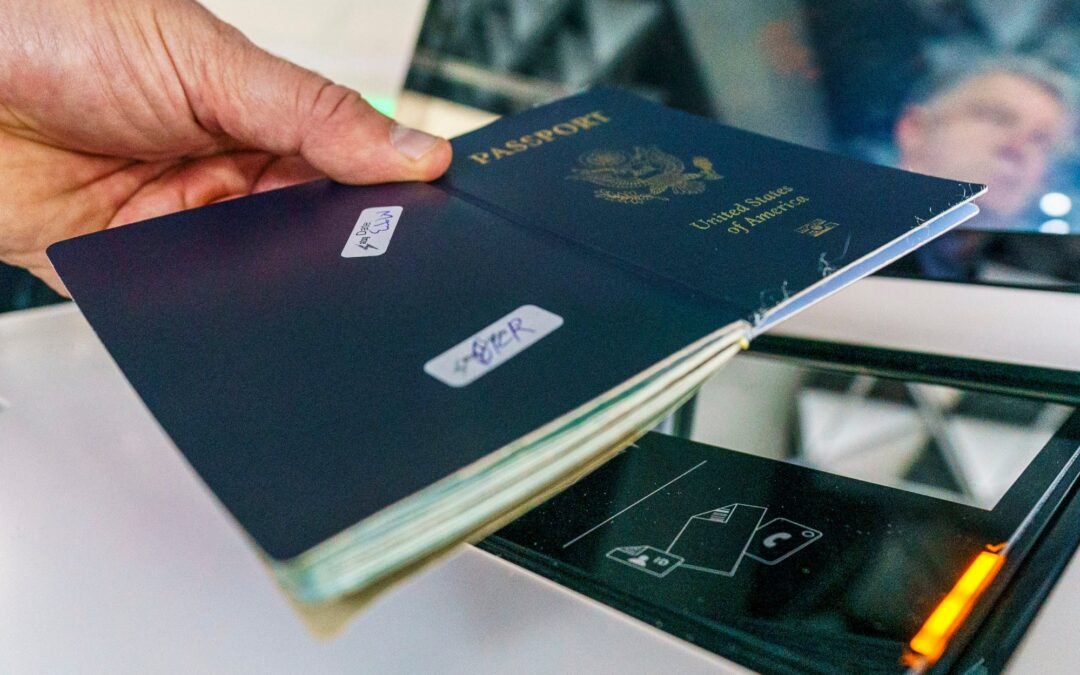
This year, American passport holders can enter 186 countries and territories without a visa. For Singapore it’s 195
A
United States
According to the 2025 Henley Passport Index, which was first released 19 years ago, passports have become less valuable than they once were.
Based on the number of visa-free travel options available across 227 different destinations, this ranking includes 199 passports. The U.S. passport now holds the ninth position, having dropped from first place since 2014.
This year, it enables U.S. travelers to visit 186 countries and territories worldwide without needing a visa. The list does not include several locations as follows:
Nigeria
,
India
and
Russia
.
Are you curious about the most significant issues and global trends? Find out here with
SCMP Knowledge
Our latest platform features handpicked content including explainers, FAQs, analyses, and infographics, all provided by our esteemed team of experts.
Based on information supplied by the International Air Transport Association and refined with additional internal research and public online sources, London-based consultancy firm Henley & Partners compiled the list.
Singapore
for the second consecutive year, it stands as the globe’s strongest passport. This status grants entry to 195 different locations worldwide.
In second place stood the Japanese passport, boasting a visa-free travel score of 193. Sharing the third position were six nations:
Finland
,
France
,
Germany
,
Italy
,
South Korea
, and
Spain
.
The
United Arab Emirates
It was the sole Middle Eastern nation to secure a spot within the top 10. Since 2010, it has climbed a total of 55 positions in the ranking.
A powerful passport offers greater liberty when traveling, as it often eliminates the requirement to obtain a visa beforehand.
Nepal
,
Somalia
,
Pakistan
,
Yemen
,
Iraq
,
Syria
and
Afghanistan
placed last in the index. In comparison, a Singaporean passport grants visa-free entry to 195 nations and territories, whereas an Afghan passport only provides visa-free travel to 26 countries.
The article was initially published by
Business Insider
More Articles from SCMP
China pledges comprehensive actions on trade and foreign direct investment as part of new moves to jumpstart the economy.
The Sprint Cup is scheduled for Lucky Sweynesse’s comeback as Keagan de Melo makes his breakthrough.
CES 2025: Leading Chinese Companies Display Advanced AI Robots, Electric Vehicles, and Smart Glasses
Chinese researchers aspire for breakthroughs with cutting-edge laser technology, aiming to unlock pathways to novel findings.
The article initially appeared on the South ChinaMorning Post (www.scmp.com), which is the premier source for news coverage of China andAsia.
Copyright © 2025. South China Morning Post Publishers Ltd. All rights reserved.