by admin | Apr 2, 2025 | government, international relations, politics, technology, united nations
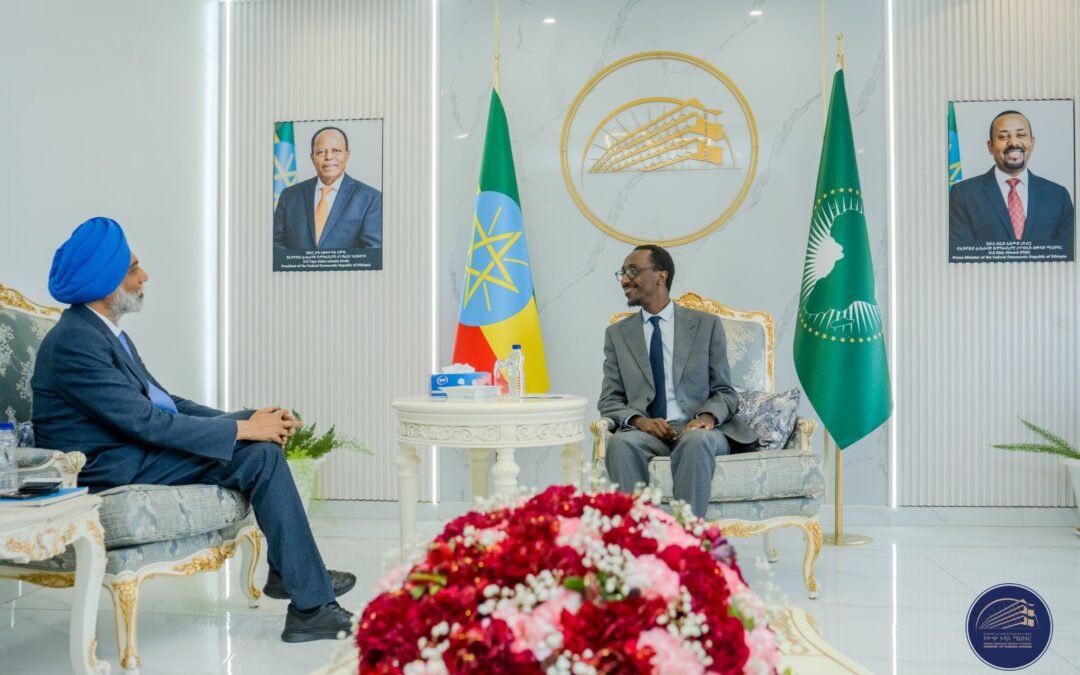
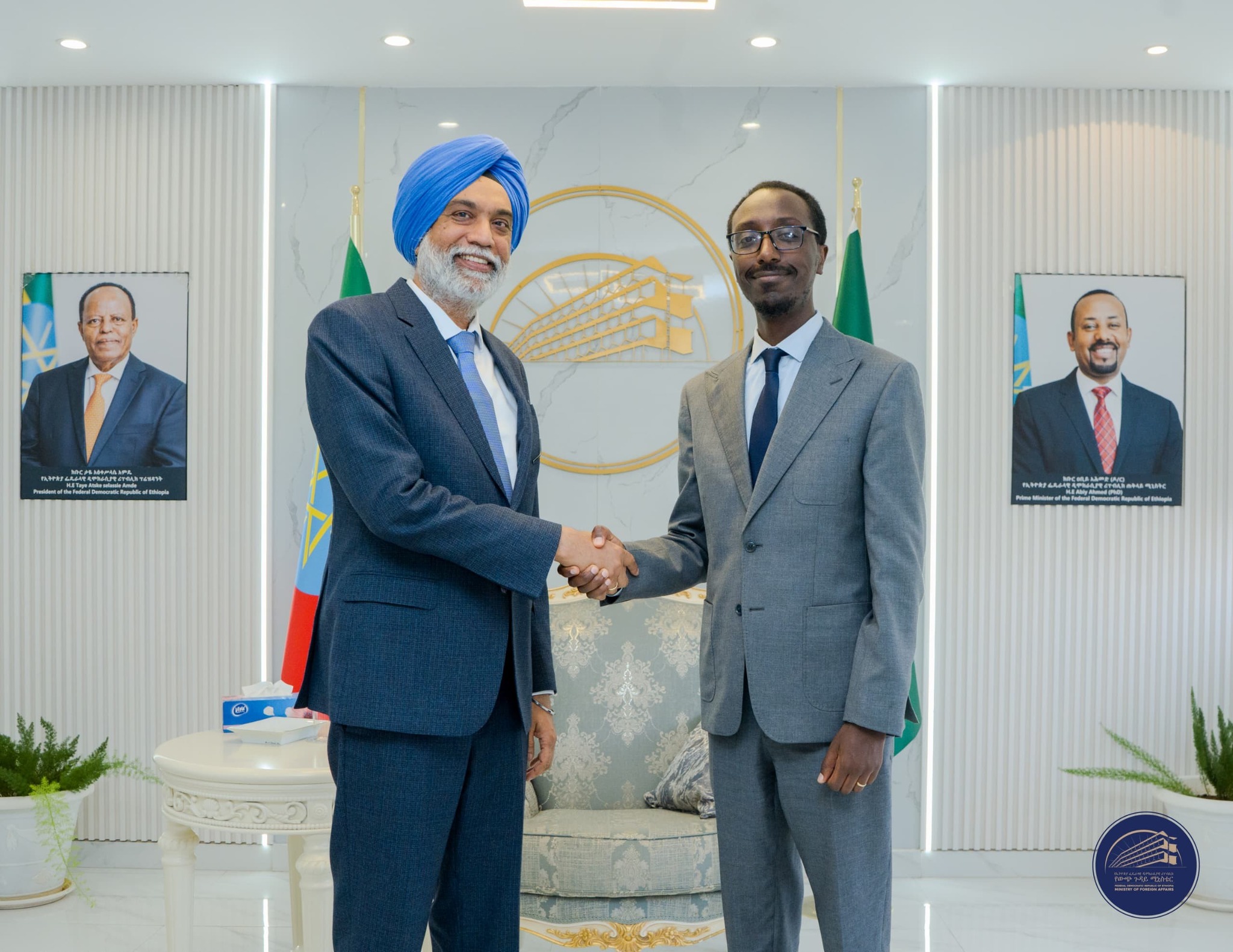
On April 1, 2025, Minister of Foreign Affairs Gedion Timothewos welcomed United Nations Under-Secretary-General and Special Envoy for Digital and Emerging Technologies Amandeep Singh Gill to his office in Addis Ababa.
(Addis Ababa, April 1, 2025 — ENA)
During this event, Gill urged for Ethiopia’s inclusion in the new UN initiative focused on digitalization and artificial intelligence (AI), emphasizing the importance of its proactive participation.
The recently launched UN initiative focusing on digital and emerging technologies aims to create an enhanced regulatory structure for AI and strengthen capabilities in this area.
The Foreign Minister Gedion pointed out that Prime Minister Abiy Ahmed has already begun establishing entities like the Ethiopian Artificial Intelligence Institute to stress the significance of digitization for the country’s progress.
The Minister further stated that Ethiopia is dedicated to playing an active role as a crucial member of the recently initiated program.
Provided by SyndiGate Media Inc.
Syndigate.info
).
by admin | Mar 25, 2025 | international relations, military, politics, united nations, world
New York
[
US
], March 25 (ANI):
India
has advocated for consensus-based reforms in
UN peacekeeping
, emphasizing the importance of improved financing, advanced technology, and a larger role for
troop-contributing countries
As reported in an official press release,
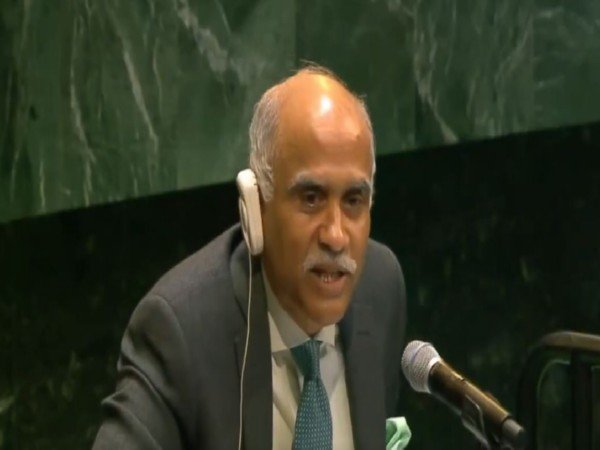
Speaking at a UN Security Council discussion about adjusting peacekeeping missions to modern challenges,
India
Ambassador Parvathaneni Harish, who serves as India’s Permanent Representative to the United Nations, delineated
India
His plan to update peacekeeping strategies in light of evolving dangers includes addressing the involvement of non-state entities, such as armed factions, terrorist organizations, and international criminal syndicates. Additionally, technological progress has introduced fresh hurdles like misinformation, disinformation, malicious propaganda, contemporary weaponry—such as unmanned aerial vehicles and improvised explosive devices—which represent some of the many novel obstacles confronting peacekeepers nowadays.
He emphasized that reforms should be based on a consensus, involving more actively the countries contributing troops. He stated, “Adjusting peace operations to fit new circumstances is impossible without including those who are on the ground—the countries supplying troops and police—in every phase of the mandate development process.”
Harish cautioned that inadequate funding jeopardizes the efficacy of peacekeeping operations. He emphasized that addressing contemporary threats to peacekeeping requires sufficient financial support and resources aligned with their mandates. The present ambiguity regarding funding and the disparity between available resources and assigned tasks is untenable, unsettling, and unsatisfactory—especially concerning nations from the Global South, which provide the majority of personnel for these efforts.
He further advocated for closing down unnecessary missions that no longer have an operational function. “It’s crucial to streamline peacekeeping operations to ensure effective use of resources. Missions that persist solely due to political reasons rather than practical necessity waste vital funds needed for critical peacekeeping efforts, thereby damaging the United Nations’ reputation.”
India
It reaffirmed its dedication to the Women, Peace and Security (WPS) and Youth, Peace and Security (YPS) initiatives. “We firmly back the WPS and YPS agenda along with increased involvement of the PBC with IFIs to secure funding for peacebuilding efforts.”
Highlighting the importance of women in peacekeeping efforts, Harish emphasized
India
‘ contributions. “Adjusting peacekeeping missions to meet current challenges includes strengthening the essential part played by female peacekeepers, both in terms of quantity and quality. I am delighted to report that earlier this year, in February, we saw progress in this area.”
India
organized the inaugural Conference for Women Peacekeepers from the Global South, assembling delegates from 35 nations contributing troops and police to discuss this crucial topic. The debate has shifted; it’s no longer about whether women are capable of participating in peacekeeping efforts. Instead, the focus is on whether peacekeeping operations can effectively operate without including women.
He emphasized the critical nature of safeguarding peacekeepers’ safety. “Engaging in peacekeeping inherently involves some level of danger. The well-being and protection of peacekeepers should be our top priority. Given today’s intricate conflicts and unconventional dangers, it is essential that we provide sufficient safeguards for those who put their lives on the line for peace. Additionally, it is crucial that individuals responsible for harming peacekeepers face legal consequences.”
Harish promoted incorporating cutting-edge technology into peacekeeping endeavors. He argued that integrating sophisticated monitoring systems, communication devices, and analytical software could enhance understanding of situations and expedite responses during such operations.
India
is prepared to contribute its knowledge as a technological facilitator in this area.”
Concerning the enduring viability of peacekeeping efforts, he stated, “While we discuss modifying peace operations to align with contemporary challenges, it’s crucial to recognize that these missions can’t continue indefinitely. They must develop feasible withdrawal blueprints and exit tactics designed to maintain lasting peace.”
Harish emphasized that peacekeeping efforts require complementary political resolutions. He stated, “It is crucial not to view peacekeeping as the exclusive answer to resolving disputes; true and lasting peace necessitates integrated approaches where political strategies work alongside these missions.” Such cohesive plans can materialize solely through unified action within the UN Security Council. Therefore, he underscored the critical importance of restructuring it.
UNSC
In both sections to ensure it better reflects and represents contemporary geopolitical realities.”
Wrapping up his statement, Harish restated
India
‘s long-standing commitment to
UN peacekeeping
. ”
India
A country strongly dedicated to the ideals of multilateralism and world peace has consistently supported the United Nations in its peacekeeping efforts. To this day, it has contributed approximately 300,000 troops who have participated in over 50 missions.
He likewise honored the fallen peacekeepers. “We honor over 4,000 UN peacekeeping personnel, which includes 182
India
In personnel who have made the supreme sacrifice in the service of peace, we aim to complete the Memorial Wall at the earliest date possible in their honor.”
Harish closed by reaffirming
India
‘s commitment to reforming
UN peacekeeping
As we gaze ahead into the future,
India
reiterates its steadfast dedication to
UN peacekeeping
Moreover, it reaffirms its ongoing commitment to the United Nations as it works toward global peace and security. The proposed reforms emphasize the necessity for a more equitable, comprehensive, and efficient strategy in this endeavor.
UN peacekeeping
For an age marked by scarce resources, geopolitical instability, and turmoil.” (ANI)
Provided by Syndigate Media Inc. (
Syndigate.info
).

by admin | Mar 24, 2025 | foreign policy, morocco, news, politics, united nations
On Monday in Rabat, Minister of Foreign Affairs, African Cooperation, and Moroccan Expatriates Nasser Bourita held a meeting with the UN Secretary-General’s Special Representative for the Moroccan Sahara, Staffan de Mistura. This encounter took place during the envoy’s ongoing regional visit.
The visit precedes informal discussions set to take place at the UN Security Council in mid-April 2025, as stated in a press release from the Ministry of Foreign Affairs, African Cooperation, and Moroccan Expatriates.
Omar Hilale, who serves as Morocco’s Ambassador andPermanent Representative to the United Nations,was present atthe meeting.
In these discussions, the Moroccan representatives emphasized the global push initiated by King Mohammed VI concerning Morocco’s sovereignty over the Sahara region and the country’s autonomy proposal. The Monarch addressed the United Nations on November 6, 2024—the 49th commemoration of the Green March—urging them to “take their duty and clearly distinguish between the genuine, rightful world embodied by Morocco within its Sahara territory and an outdated world detached from current realities and advancements.”
The Moroccan delegation likewise expressed their country’s backing for the endeavors of the UN Secretary-General and his Personal Envoy in achieving a long-lasting, practical, realistic, and political resolution, solely grounded on the Moroccan Autonomy Initiative, all within the bounds of Morocco’s sovereignty and territorial integrity.
The post
Morocco’s Foreign Minister held discussions in Rabat with the UN Secretary-General’s Personal Envoy for Western Sahara.
appeared first on
LIFEHACKEnglish – Morocco News
.

by admin | Mar 24, 2025 | africa, international aid, international news, united nations, world
The United Nations’ leading AIDS official warned on Monday that the abrupt cessation of U.S. foreign aid could cause the world to revert to the most devastating periods of the global AIDS epidemic, with millions facing death as a result.
Historically, the United States has led as the largest provider of humanitarian aid globally. However, after President Donald Trump returned to the White House about two months ago, he significantly reduced international assistance, causing widespread disruption within the global humanitarian sector.
The UNAIDS Executive Director, Winnie Byanyima, warned that failure to reinstate U.S. funding or secure contributions from other sources could result in “an additional… six-point-three million AIDS-related fatalities” within just four years, marking a tenfold rise in mortality rates during this period.
“You’re discussing the potential loss of progress achieved over the past 25 years. This is quite concerning,” she stated to journalists in Geneva.
“It is understandable for the U.S. to aim at gradually decreasing its financial contributions, however, the abrupt termination of essential aid is causing severe consequences,” she stated.
The reductions from the U.S. imply that currently, 27 nations across Africa and Asia are facing staffing shortages, diagnostic services and treatments are being disrupted, and disease monitoring systems are deteriorating.
– Risk of global AIDS rebound
Beyond the upcoming four-year period, If assistance funding isn’t reinstated, “we anticipate the resurgence of the AIDS epidemic… on a global scale,” Byanyima warned. This escalation would particularly affect regions such as Eastern Europe and Latin America.
We’ll witness its return, and we’ll see people pass away just as we observed in the ’90s and the 2000s.
She praised American leadership in the battle against AIDS as “one of the most humanitarian efforts in global health.”
She pointed out the US anti-HIV program known as PEPFAR, renowned as one of global health’s greatest successes for saving approximately 26 million lives throughout its twenty-year span.
Now, owing to American innovations, the world stands “on the brink of another revolution in preventive treatments,” Byanyima stated, highlighting a novel medication known as lenacapavir, which was created by the U.S. pharmaceutical company Gilead.
Studies have shown the medication to be 100% effective, and Byanyima mentioned that trials are ongoing with the aim of administering it as a yearly single dose, making it much more affordable for lower-income nations.
That is similar to a flu vaccine,” she stated. “If implemented aggressively…we could reduce new infections nearly to zero. We might witness the end of AIDS.
Byanyima reached out to the “bargain-making” President Trump personally, emphasizing that reviving the worldwide HIV response would be “a tremendous bargain”: lenacapavir has the potential to “generate profits for Gilead, foster good job opportunities for Americans, and save lives.”
She proposed that once PEPFAR resumes operations, UNAIDS can collaborate with the United States and other contributors to assist low-income nations in achieving autonomy in their battle against HIV.
The post
The AIDS epidemic poses a renewed global threat due to halted U.S. funding, warns the United Nations.
appeared first on
LIFEHACKEnglish – Morocco News
.
by admin | Mar 24, 2025 | environmentalism, government, politics, society, united nations
A UN representative has called upon Thailand’s authorities, business sectors, and local populations to collaborate in order to secure the nation’s sustainable development for the future.
During a media event, Kanni Wignaraja, who serves as the Regional Director for Asia and the Pacific at the UNDP, stated that these sectors of society should work together to guarantee inclusiveness.
She likewise offered her perspectives on Thailand’s advancement towards meeting the Sustainable Development Goals (SDGs). She highlighted that the nation still encounters difficulties in attaining certain objectives, particularly those concerning biodiversity conservation and enhancing the welfare of particular communities.
Last month, Ms. Wignaraja visited Thailand to take part in the Asia-Pacific Forum on Sustainable Development 2025, which took place from February 25th to 28th at the United Nations Conference Centre in Bangkok.
While visiting, she also had meetings with multiple ministers, business delegates, and members of the local community.
She mentioned that Thailand, along with numerous other nations in the Asia-Pacific area, encounters difficulties concerning Sustainable Development Goals (SDGs) linked to climate action, biodiversity preservation, and gender equality. She highlighted that women and girls are particularly impacted by environmental deterioration and contamination.
As she explained, when we address the interconnected challenges of climate change and natural disasters alongside the consequences of environmental degradation, waste management issues, and contamination, women and girls frequently face the most severe repercussions throughout all stages of life.
These challenges appear as problems related to education, employment, and fair compensation, impacting women and girls across all stages of their lives.
She emphasized that every sector should participate in a joint endeavor to promote inclusive development, with special attention to how environmental issues affect women and girls.
Ms. Wignaraja similarly urged Thailand to utilize its abundant biodiversity via strategies such as sustainability-linked finance. This would guarantee that investments focus on both environmental preservation and societal well-being, including areas like educational initiatives, social safety nets, and support for marginalized communities such as girls, women, and seniors.
“When working with policies related to financing, it’s crucial to examine how sustainable finance connects. Essentially, you leverage your natural resources and identify the sustainability indicators. The expense of obtaining loans for these natural assets must be factored in too. This applies regardless of whether you’re an individual household, a small business, or even at a national scale,” she explained.
She emphasized the significance of cooperation between the government and the private sector to bring about lasting transformation. She highlighted that major corporations should particularly assume accountability for their ecological footprint and play a role in restoring Thailand’s natural resources.
“Larger corporations bear significant responsibility to avoid causing damage to our planet and depleting natural resources, as well as to restore and enhance the environmental wealth that Thailand possesses,” stated Ms. Wignaraja. She further urged financial institutions and small business owners to participate in these collaborative initiatives.
She stated that government policies should focus on improving citizens’ daily lives and addressing their requirements. Adopting this strategy guarantees that progress is both fair and enduring.
While visiting Thailand, Ms. Wignaraja went to Phetchaburi where she observed the signing of an agreement between the UNDP and Phetchaburi province aimed at promoting bioeconomy initiatives that would advantage both communities and the environment.
Phetchaburi serves as an exemplary case of successful collaboration between public and private sectors for enhancing biodiversity, thanks to alliances formed among entities such as the UNDP’s Biodiversity Finance Initiative, Krungthai Bank, and Onep. Additionally, this region holds recognition from UNESCO as a Creative City of Gastronomy and boasts Kaeng Krachan National Park, which stands as a designated World Heritage site.
She pointed out Phetchaburi as a case where the government, enterprises, and local residents worked together to boost economic development while safeguarding the environment. Initiatives such as birdwatching tours and shrimp aquaculture in the province have contributed to equitable progress within the community.
Ms. Wignaraja stated that Thailand exemplifies how linking different industries can result in both wealth creation and environmental preservation. She pointed out that the distinct circumstances of each province present chances for novel ideas and advancement.
Thailand has implemented novel approaches within its policy development procedures to involve citizens in decision-making processes via the Thailand Policy Lab. Established by the National Economic and Social Development Council in partnership with the UNDP, this initiative seeks to foster inclusivity in tackling the nation’s intricate issues, particularly as Thailand progresses towards becoming an upper-middle-income economy.
“I observe a fresh enthusiasm and significant dedication from Thailand towards advancing the sustainable development goals,” she stated. “As these objectives become integrated into Thai policy, it’s essential that they prioritize the needs of individuals, taking into account their interconnectedness and changing circumstances. This approach ensures that all stakeholders—including businesses, municipal authorities, and global collaborators—are engaged in shaping a more sustainable future.”
Provided by Syndigate Media Inc. (
Syndigate.info
).


