by admin | Apr 9, 2025 | crime, criminal cases, criminal justice, news, women
Ibiamina Igbiri, the 78-year-old mother of Deborah Erema—who is among the 15 individuals imprisoned since 2019 for allegedly stealing Mrs. Patience Jonathan’s jewelry—spoke with CHUKWUDI AKASIKE and TEMITOPO ADETUNJI regarding the suffering she has endured because of her daughter’s incarceration since 2019.
How
old are you?
My name is Ibiamina Igbiri. I am 78 years of age.
Where are you from?
I hail from Okirika in Rivers State.
What is your connection to Deborah Erema, who is presently incarcerated?
She is my daughter.
Do you recall when she was taken into custody and sent to jail?
My daughter got arrested in 2019.
What had you been informed was her crime?
It was claimed that she was one of those who took possession of Mrs Patience Jonathan’s belongings, the spouse of ex-President Goodluck Jonathan.
Can you guarantee that your daughter is not a thief?
Certainly, I can. My daughter isn’t a thief. On the very day they claimed the jewelry was taken, she wasn’t present as she had gone on a mission.
What is the age of your daughter and how is she related to the former president’s spouse?
She is 57 years old. Previously, my daughter worked for Mrs Jonathan until she got arrested on accusations that she was involved in stealing jewelry from the ex-first lady. However, I firmly believe that my daughter would not take someone else’s possessions.
Don’t you believe she has had any chance to speak for herself?
In court, she stated that she had no knowledge of the jewelry theft, yet her claims were disregarded. Like I mentioned earlier, my daughter could not have participated in something like this. On the day the incident occurred, she was attending a church crusade in Mgbidi.
What reasons do you believe led them to disregard what she had to say?
I don’t know.
How was she arrested?
Prior to her return from the church crusade, several arrests had already occurred. Upon coming back from the church event, she traveled to Bayelsa State. There, in 2019, she was detained and transferred to Port Harcourt.
Was legal representation provided for your daughter through hiring an attorney to appear in court following her arrest and prosecution?
Yes.
Do you believe the proceedings were managed correctly in the courtroom?
The handling of the case did not proceed as it ought to have. From the start, whenever they brought my daughter and the others before the court, proceedings would be postponed repeatedly without resolution. There were just a couple of instances where those involved got an opportunity to address the court directly. Following these rare occasions when my daughter and the rest had their say, the court then proceeded with testimonies presented by witnesses aligned with Madam Patience’s faction. Eventually, after all this, my daughter along with the group was returned once more to incarceration.
What has your experience been like since Deborah went to jail in 2019?
Several individuals attempted to persuade Madam Patience, but she refused to heed their pleas. My granddaughter, Deborah’s eldest child, passed away while Deborah was incarcerated. This absence significantly impacted our family dynamics. Life has proven challenging for us all. Additionally, I almost met my end due to my daughter’s prolonged detention. For this reason, I relocated to my son’s home, hoping he would look after me.
Is your daughter married?
She isn’t legally wed.
In what ways has this influenced your well-being, feelings, and everyday life?
Ever since she was taken away, I haven’t felt like myself. I’ve had to beg for meals. Illness led me to be brought to my son’s home in Rivers State.
Have you managed to go see her in jail?
No, my son took care of that task for me once. I myself have never set foot there. Ever since my daughter was incarcerated in 2019 following her arrest, things have been extremely tough for me. Occasionally, I purchase some provisions and deliver them to her, or at times I transfer funds instead. Ensuring she gets enough to eat hasn’t been simple.
What steps has your family taken to secure Deborah’s freedom?
My son visited the King of Okrika and talked about it with him. The king agreed to summon several chiefs, and along with my son, they planned to travel to Abuja for an audience with ex-President Jonathan. The king provided my son and his relatives with a specific date to visit, which they adhered to. However, after this meeting, the king stopped paying attention to their concerns. He instructed them to inform my sister to hand over anything under her control; however, my son and others argued that my daughter didn’t possess anything and wasn’t content being incarcerated. They claimed she wouldn’t want to remain locked up if she held anything valuable.
They informed the king that she was not guilty of the accusations made against her. Additionally, my son and several other family members advised the king that she had attended a church mission in Mgbidi and was unaware of the incident.
What could have prompted the king to alter his decision regarding talks with the ex-president, leading to the release of your daughter?
I’m unsure. So far, my son along with the others haven’t managed to get an audience with the king to discuss their request for my daughter’s release. When my son talked to the king’s assistant seeking guidance, the assistant asked for some time to consult the king regarding this issue.
Subsequently, an assistant of the king contacted my son and instructed him to provide the names of our family members, mentioning that the king would reach out to them for a meeting. My son complied with this request. However, until now, none of us have been contacted by the king. This remains the current state of affairs.
At what point did you encounter the king to seek assistance?
It was approximately two years back.
Have you contacted any human rights organizations or government officials regarding the ongoing detention of your daughter in prison?
No.
Is it because you lack the ability to contact them?
I am unable to handle this situation myself. My son encountered one of his younger siblings, who happens to be a legal professional. During their conversation, the sibling committed to reaching out to another attorney based in Bayelsa. This was intended to facilitate moving the case to Port Harcourt for potential appeals. However, the lawyer failed to follow through on this commitment, possibly due to being occupied with other responsibilities.
Is there additional proof to demonstrate that the accusation against your daughter was unfounded, aside from her statement that she undertook a mission on the date of the alleged event?
Every time my daughter planned to travel, she first sought approval from Mrs. Jonathan. Only after receiving this consent could she proceed with her journey. Occasionally, Mrs. Jonathan instructed her to leave the key with Mama F. Upon returning, she always went to Mama F to retrieve the key again. This routine was consistently followed.
I recall that occasionally Mrs. Jonathan would entrust some money to my daughter, yet she would never dare to use it. My daughter was so cautious about handling this money that she wouldn’t even leave it in her possession. Instead, she would promptly contact Mrs. Jonathan to inform her to come and retrieve her funds.
Mrs. Jonathan would subsequently ask someone else to collect the money from my daughter. If my child had been dishonest, she might have kept that money. However, my daughter has always refrained from taking her PIN. Therefore, I felt distressed when such an accusation was made against her.
Was Mama F one of those detained in 2019?
Number 1: No arrest took place. She is friends with Mrs. Jonathan (Madam).
Given what has transpired since the incident occurred, have you managed to contact ex-President Jonathan for his intervention in this issue?
In reality, this hasn’t been accomplished yet. We are unaware of the procedure required to contact him.
What scares you most if your daughter stays in prison for an extended period beyond what she has already endured?
I’m most afraid that if she remains incarcerated, it will cause me greater pain. This situation is also having an ongoing impact on all of us at home. When she first went to jail, her younger daughter was still very young. Just think about how much time has passed; the child has grown up and finished secondary school without her mother being present. They haven’t seen each other since she was removed from their lives.
What is the age of the daughter?
She is 16 years of age.
How many children does she have?
She has four kids, and she was the sole individual providing for them until her arrest.
What do you want to tell the government regarding this issue?
The authorities should assist the family in getting my daughter freed from jail. We genuinely require support.
What are your thoughts on the repeated postponements of the case since 2019?
In my view, Mrs. Patience Jonathan seems to be exerting her influence over them, which is why the courts aren’t functioning properly. Every time my daughter and the others attempt to attend court hearings, their cases get postponed.
Do you have anything else to add regarding this issue?
Her actions amount to an act of injustice. It is crucial for justice to prevail in this situation. The court is aware of what the appropriate course of action is, and thus, it ought to take the necessary steps.
Provided by Syndigate Media Inc. (
Syndigate.info
).
by admin | Apr 9, 2025 | adventure travel, Travel, travel destinations, travel recommendations, women
The surge in single-female travelers has turned travel into a captivating and groundbreaking trend worldwide. Factors such as seeking personal development, desiring independence, and striving for self-reliance drive this shift. A recent survey conducted by JourneyWoman indicates substantial expansion within the U.S. and Canadian markets targeting women aged 50 and older; projections forecast revenue rising from $245 billion in 2025 to $519 billion by 2035.
Collette Travel, Intrepid Travel, and Aurora Expeditions collaborated on “Invisible No More: The Ageless Adventuress” scheduled for late 2024. This research delves into the travel inclinations, financial behaviors, preferred destinations, purchase patterns, among others, involving 1,630 females age 50-plus. Sixty-one percent of participants expressed preference for traveling solo. Further studies suggest Boomers and Generation X members in North America constitute fast-rising demographics over the coming ten-year span—driven largely by population aging trends leading to greater numbers entering their fifties and sixties.
Of the surveyed cohort, forty-six percent were between ages 65-74, twenty-six percent ranged from 55-64, and another two-zero percent surpassed seventy-five. Nearly every respondent reported making independent decisions domestically.
More autonomous post-middle-aged individuals now opt for solitary voyages instead of familial or collective excursions. While solo trips aren’t novel concepts historically speaking, current statistics reveal marked increases particularly amongst female solos. Multiple reports highlight escalating rates of unaccompanied flights taken by women globally. Female participation continues amplifying across entire tourist sectors too. Consequently, modern ladies assert control over personalized journeys imbued with liberation and assurance.
Motivational drivers behind women’s choice to venture independently include enhanced competence levels alongside professional/personal progression ambitions. Personal discovery often deepens during unfamiliar territory exploration undertaken individually versus guided group adventures where options remain limited compared to customizable plans tailored specifically according to traveler profiles’ tastes/needs.
Solo expeditions offer numerous psychological benefits like heightened esteem boosts, skill acquisitions, broader horizons engagement etcetera which promote profound internal reflection moments amidst varied environments encountered en route. However, risks tied to potential hazards mustn’t go overlooked even though empowering gains outweigh possible detriments substantially.
Safety remains paramount concern when tackling global territories sans companionship support systems intact. Issues surrounding security threats, miscommunications arising culturally, unwelcome advances pose persistent obstacles potentially discouraging first-timers wary regarding perceived biases rooted fundamentally upon sex disparities present throughout societies universally acknowledged still prevalent till date.
Flourishing under newfound freedoms affords immense strides toward equality realization via singular sojourns embarked upon regardless hurdles confronted midway through respective quests. Industry recognition propels inclusivity initiatives aimed supporting adventurous spirits irrespective genders thriving progressively year-on-year onward starting fresh off positive momentum generated thus far moving forward ambitiously embracing future possibilities ahead confidently.
Syndigate.info
).
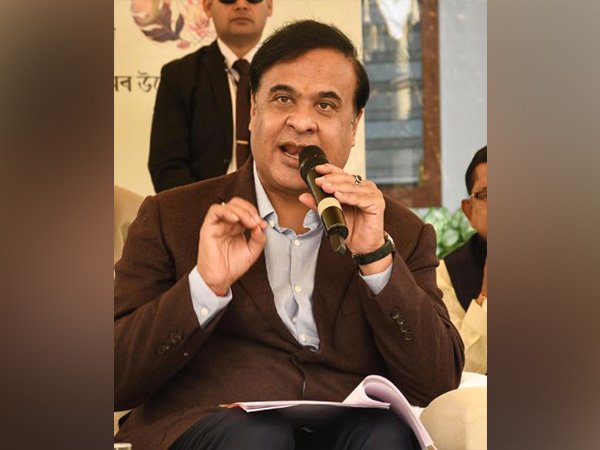
by admin | Apr 1, 2025 | business, female empowerment, government, politics, women
Biswanath
(Assam), India, April 1 (ANI): The Chief Minister of Assam
Himanta Biswa Sarma
On Tuesday, the ‘Lakhpati Baideo’ initiative commenced with the launch of Assam’s largest women entrepreneur support program. During this event, he presented the initial batch of checks to 23,375 female business owners as part of the Mukhyamatri Mahila Udyamita Abhiyan at the newly established Kettala Playground in Borgang, Behali.
Biswanath
district.
Through this launch, 2,704,161 SHG members will reap benefits as Assam progresses toward a new epoch of female financial autonomy.
Under the Abhiyan initiative, Chief Minister Sarma distributed the initial installment of Rs 10,000 as startup funds to female recipients with the aim of enhancing self-employment prospects.
During his address, Chief Minister Sarma stated, “For empowering our state in Assam, we are implementing a multifaceted approach.”
Nari Shakti
from young students to senior citizens. Open access for all, tuition-free education, and living assistance via Orunodoi,
Chief Minister Women Entrepreneurship Scheme
(MMMUA), senior citizen pensions, and complimentary food grains—in each phase, we remain steadfast in our support.
Nari Shakti
.”
CM Sarma stated that according to MMMUA, if the beneficiaries effectively utilize their initial grant of Rs. 10,000 during the second year, they will qualify for an additional amount of Rs 25,000, with Rs 12,500 being a subsidy.
bank loan
, with the remaining ₹12,500 coming as a state grant.
He further mentioned that the state government would cover the interest charges.
bank loan
The Chief Minister stated that women who succeed in their businesses through this initiative will receive an entitlement of Rs 50,000 during the third year.
Chief Minister Sarma stated that the women’s self-help groups (SHGs) would keep receiving all the benefits, since the state government allocated Rs 1,090 crores to 2.17 lakh women SHGs through various programs.
He mentioned that an e-commerce platform was developed and reinforced to assist these women with their business endeavors.
The Chief Minister further stated that for the students from underprivileged backgrounds who are preparing for their matriculation exam, the government will provide a monthly deposit of Rs 300. This financial assistance aims to support these students in accessing tutoring services and improving their performance in the examinations.
He further mentioned that starting today, the government will decrease the price per unit of electricity by Rs 1, and it will purchase each quintal of rice for Rs 2,550 and each quintal of mustard for Rs 6,450.
The Panchayat and Rural Development Minister Ranjeet Kumar Dass, along with Health and Family Welfare Minister Ashok Singhal, Food and Civil Supplies Minister Kaushik Rai, Member of Parliament Ranjit Dutta, Members of Legislative Assembly Diganta Ghatowar, Pramod Borthakur, Utpal Bora, Krishna Kamal Tanti, Amiya Kumar Bhuyan, and numerous other esteemed officials attended the event.
Previously, Chief Minister Sarma launched a specialized health clinic at Rupjyoti Kala Parishad Field in Pabhoi.
Biswanath
.
The specialized health camp aims to make high-quality medical care accessible and budget-friendly for everyone. In an effort to enhance public well-being, the state administration has initiated these health programs throughout each Gram Panchayat, Village Cooperative Development Committee, and city region. These initiatives offer complimentary examinations, medications, as well as guidance on maintaining a healthy lifestyle and proper nutrition.
The health camps will offer free consultations along with diagnostic care. Additionally, the Chief Minister presented Rs 2 lakh as timely aid to 10 former ASHA workers in recognition of their significant contributions.
The Chief Minister, during the inauguration of the Circuit House, also
Biswanath
, planted an Ajar seedling. (ANI)
Provided by SyndiGate Media Inc.
Syndigate.info
).

by admin | Mar 28, 2025 | female empowerment, social issues, women, women's rights, women's sports
We are the ones demonstrating to the world what women can achieve. We are the ones showing that power isn’t determined by one’s gender.
A powerful declaration made by Achrissa Maw from the University of the Philippines (UP) women’s basketball team during the Third Sunflower Run-Walk-Parade event held on March 22, 2025, at the UP Diliman campus academic oval.
“Recognition of Women, Hope for Youth” is the theme of the event during Women’s Month, which also honored UP women athletes.
READ:
The ‘aswangs’ in Duterte’s drug war
‘Kisapmata’: Story of Domestic Abuse, Incest, and the Fight for Liberation
#HerStory: Women Transforming Society
The member institutions of the University Athletic Association of the Philippines (UAAP) go head-to-head in 20 different sporting events. These competitions include both Men’s and Women’s categories across most sports; however, exceptions apply to certain games. Baseball involves only male athletes, whereas softball is exclusively played by female participants.
From 1938 onwards, the University of the Philippines’ female squads emerged as champions across various sports: they won 21 titles in swimming, 12 in judo, 9 in badminton, 8 in volleyball, 7 in basketball, 6 in table tennis, 5 in fencing, 3 each in softball and chess, 2 in taekwondo gyeorugi, along with one title each in football and taekwondo poomsae.
Softball competition takes place exclusively in the women’s division, which began in 1953. The University of the Philippines claimed the title four times: during Season 58 (1995–96), Season 59 (1996–97), Season 64 (2001–02), and Season 70 (2007–08).
In women’s basketball, the University of the Philippines (UP) clinched the championship title seven times: during Season 39 ([1976–77]), Season 40 (1977–78), Season 41 (1978–79), Season 43 (1980–81), Season 44 (1981–82), Season 45 (1982–83), and Season 46 (1983–84). For men’s basketball, UP secured their championship victories in 1939, 1986, 2022, and 2024.
In women’s swimming, UP claimed the championship 21 times: during Season 2 (1939–40), Season 3 (1940–41), Season 10 (1947–48), Season 27 (1964–65), Season 28 (1965–66), Season 29 (1966–67), Season 51 (1988–89), Season 54 (1991–92), Season 56 (1993–94), Season 57 (1994–95), Season 58 (1995–96), Season 60 (1997–98), Season 61 (1998–99), Season 62 (1999–00), Season 72 (2009–10), Season 73 (2010–11), Season 74 (2011–12), Season 75 (2012–13), Season 76 (2013–14), Season 79 (2016–17), and Season 86 (2023–24).
In women’s volleyball, UP claimed the championship title eight times: during Season 1 (1938–39), Season 10 (1947–48), Season 12 (1949–50), Season 14 (1951–52), Season 25 (1962–63), Season 40 (1977–78), Season 42 (1979–80), and Season 45 (1982–83).
During the inaugural season of 1938-39, female teams made their debut in volleyball, whereas male squads took to the court for the first time eight seasons later in 1946-47. The University of the Philippines emerged as victors in that initial campaign.
In basketball, female teams made their debut during Season 13 (1950-51), with University of the Philippines securing their initial victory in Season 39 (1976–77).
The UP women athletes achieved a series of wins in badminton over six seasons from 1995 to 2000, in swimming across five seasons from 2009 to 2013, in fencing during five seasons spanning 2000 to 2004, in basketball throughout four seasons between 1980 and 1983, in judo through two separate periods each covering four seasons: first from 1999 to 2002 and then from 2006 to 2009, and also in table tennis consistently over four seasons ranging from 1997 to 2000.
In Season 87, hosted by UP, the ladies’ squad has secured first place in badminton, second place in swimming, and third place in track and field so far.
The United Nations officially acknowledged International Women’s Day in 1977, which is observed annually on March 8. This day celebrates the accomplishments of women across all boundaries, including nationalities, ethnic backgrounds, languages, cultures, economics, and politics.
In March, it was proclaimed as Women’s Month following President Cory Aquino signing Proclamation Number 288 on March 17, 1988. This proclamation highlighted the significant contributions of Filipino women in various fields such as society, culture, economy, and politics over our nation’s history.
We aren’t merely typical athletes; we serve as role models and leaders,” Maw stated. “We motivate the next cohort of young women to pursue their aspirations, stand firm without backing down, and recognize their true value.
The parade participants consist of female University of the Philippines athletes from sports such as basketball, chess, fencing, judo, softball, swimming, table tennis, and track and field. Additionally, groups like the Filipiniana dancers, street dance ensemble, and varsity pep drummers will also join in.
Sunflower serves as an emblem of female empowerment during the suffrage movement.
Women in Kansas adorned themselves with sunflower pins when advocating for their voting rights back in 1867. Despite the failure of the Kansas referendum, the color yellow stayed symbolic within the suffragette movement throughout the 20th century.
Sunflowers have also turned into the emblem of the final milestones in college life.
Sunflowers represent dedication and commitment as residents cleared all academic hurdles with sleepless and turbulent days and nights.
Just like how a single sunflower within the schoolyard requires ample sunlight to thrive, each student should view every encounter at the university as essential for their personal development.
The event was spearheaded by several female-led organizations from the University of the Philippines (UP), including UP Delta Lambda Sigma Sorority, UP Portia Sorority, UP Women in Law, Women Lawyers Circle, along with UP Concert Chorus and their corresponding alumni associations such as IBP Quezon City, UP Law Class of 1985, Kontra GaPi, Maritime Law Association of the Philippines, and Celebrity Club.
We aren’t merely engaged in a game; we’re transforming the rules of engagement. We’re altering how stories get told and making an impact on society at large,” declared Maw. “We won’t remain unheard, pushed aside, or dismissed. Instead, we’ll keep expanding limits, shattering stereotypes, and etching ourselves into historical memory.
(Pey ups serves as the moniker for the University of the Philippines. Atty. Dennis R. Gorecho leads the Seafarers’ Division at the Sapalo Velez Bundang Bulilan Law Offices. For feedback, send an email.)
info@sapalovelez.com
, or call 0917-502-5808 or 0908-866-5786.)

by admin | Mar 28, 2025 | sports, women, women's sports
It makes sense why Karyll Miranda has spent much of her first year with Far Eastern mostly as a reserve player. She backs up Tin Ubaldo, who is among the nation’s leading amateur setters.
The Lady Tamaraws currently stand at second place in the elimination round of the UAAP Season 87 women’s volleyball tournament, largely due to Ubaldo orchestrating the plays effectively. However, praise must also be shared with Miranda, who stepped up admirably when Far Eastern University’s primary setter struggled during their match on Wednesday.
In terms of skills, Miranda has nothing to be concerned about, and she can gain valuable knowledge from Lady Tamaraws’ coach, Tina Salak, one of the nation’s most distinguished setters of all time, who provided the newcomer with an opportunity during the match against University of the East.
After securing a 25-20, 25-20, 25-23 triumph against the Lady Red Warriors, Salak stated, “In every match, I inform my players that they have a chance to compete.” In this game, Miranda delivered 17 outstanding sets, guiding the Tamaraws to their sixth success out of nine matches.
“It’s their choice whether they’ll deliver or not,” stated Salak, who naturally places greater emphasis on her setters.
Taking wheel
It doesn’t imply that Miranda can unwind just because she’s the secondary setter,” Salak stated about her newcomer. “She still holds an important position since my setters carry significant responsibilities. Naturally, I push both of them quite hard.
With the break she got, Miranda has just assured Salak that she could one day be trusted to run the Morayta squad’s offense.
Out of 49 tries, Ubaldo managed only five outstanding sets before handing over the reins to Miranda, who effectively steered the Far Eastern attack.
“The chance is huge since I rarely get to play,” stated the rookie setter. “I’m excited about our potential to improve in upcoming matches.”
“I’m excited to learn more from both of them since Coach Tina mentioned that we have the opportunity to lead the team. As long as there’s still time, Tin (Ubaldo) and I assist each other with whatever we need to accomplish,” she stated.
Far Eastern anticipates continued improvement as they have five more matches ahead before reaching the Final Four stage. Securing a 1-2 standing could provide them with the benefit of advancing with just one victory.
However, the defending champions from National University await them next, and Far Eastern must remain highly cautious when facing the sharp-minded Lady Bulldogs, who will enter the match eager after suffering their initial defeat of the season.
This will be high-pressure competition, with a fierce battle since the Tamaraws are determined to stay at number two at minimum.
“Playing under pressure is inevitable since it will constantly be present,” Miranda stated. “The choice is yours to figure out how to conquer it.”
by admin | Mar 24, 2025 | female empowerment, gender pay gap, women, women leaders, women's rights
By Dr Maame Afua Nikabs
In March, the world comes together to celebrate and stress the importance of gender equality, with International Women’s Day highlighting both our achievements and the efforts yet required.
But gender equality must go beyond just one month of conversations; it must translate into action that ensures women’s voices are valued in every aspect of the workplace.
In numerous work environments across Ghana and various regions of the Global South, women’s contributions often go unnoticed, ignored, or limited due to prevailing cultural practices, company frameworks, and deep-seated gender prejudices.
Although significant attention has been paid to gender diversity in leadership roles, discussions around workplace gender equality should not stop with having women hold positions of power and participate in decision-making processes. It is equally important for their perspectives and contributions to be genuinely acknowledged and respected.
Hidden Obstacles: The Reason Behind Women’s Difficulty Speaking Up Professionally
A recent scholarly investigation titled “Seen but Not Heard: The Voice of Women at Work and the Mediating Role of Culture” by Toyin Ajibade Adisa, Chidiebere Ogbonnaya, Chima Mordi, Hakeem Ajonbadian, and Olatunji David Adekoya (2024) underscores how cultural norms function as potent suppressors of female voices in African work environments, particularly in countries like Ghana.
The research highlights two main elements:
• A high-power distance orientation—a hierarchical workplace environment where less senior staff members, particularly women, are anticipated to show respect to those in higher positions, thereby restricting their opportunities to voice concerns or share insights.
• Patriarchal workplace norms – the expectation that women should be reserved, deferential, and not challenge male authority, reinforcing the perception that assertiveness is a masculine trait.
These insights strike a chord strongly with the dynamics present in the Ghanaian work setting. According to data from the Ghana Statistical Service (GSS), although women constitute 39% of the formal sector employees, they hold fewer than 14.5% of seats on boards, highlighting significant imbalances in authority and strategic decision-making roles.
Nevertheless, leadership constitutes merely a portion of the overall scenario; women across various tiers find it challenging to get their opinions acknowledged in workplace dialogues, group conferences, and regulatory choices.
The Price of Quiet: The Consequences of Muting Women’s voices
The silencing of women’s voices in Ghanaian workplaces carries significant repercussions—not only for individual employees but also for companies and the broader economy.
Lost Opportunities for Innovation & Business Expansion – If only half of the employees feel discouraged from sharing ideas or questioning inefficient procedures, businesses can falter. According to research conducted by McKinsey & Company, firms with greater diversity in terms of gender tend to exceed industry standards in financial performance by up to 25%.
Gender Pay Disparities and Career Plateauing – Women who refrain from speaking out find it challenging to negotiate wages, advancements, and leadership roles. Research shows that Ghanaian women typically receive approximately 30% lower earnings compared to men, largely because of reduced chances to champion improved compensation and working environments.
Women who stay quiet about workplace discrimination, harassment, or unjust treatment frequently endure these issues alone. Such silence can impede personal professional growth and allow harmful work environments to continue unchallenged.
The Part Played by Culture: Religious Beliefs, Gender Roles, and Social Norms
Frequently, cultural and religious standards uphold the belief that women ought to exhibit modesty, avoid confrontation, and display submissiveness in their careers as well as within their private lives.
Spiritual Guidelines and Office Structure:
Many religious interpretations promote female humility and silence, which can discourage women from expressing themselves openly, especially in male-dominated industries. In some workplaces, men justify gender imbalances using religious rhetoric, reinforcing the expectation that women should listen rather than lead.
Gender Roles & Rearing: From a young age, numerous Ghanaian females are taught to be amiable, courteous, and more reserved compared to males. This foundational conditioning often manifests in professional settings as these women tend to avoid confronting superiors, requesting raises, or expressing their viewpoints during predominantly masculine conversations.
The Fear of Stigma: Whenever women voice their opinions, they commonly encounter pushback. Women who exhibit assertiveness tend to be branded as ‘overly aggressive,’ ‘challenging,’ or ’emotional.’ This often causes them to refrain from speaking out to sidestep adverse outcomes.
Ways Ghanaian Workplaces Can Encourage Women’s Voices
To develop a genuinely inclusive work environment, Ghanaian entities should progress past mere symbolic acts of gender diversity and proactively establish settings where females feel encouraged to voice their opinions.
✅ Implement Voice-Inclusive Policies – Companies should establish structured feedback mechanisms where all employees, regardless of gender, feel encouraged to contribute ideas and concerns without fear of retaliation.
✅ Advocate for Sponsorship & Mentoring of Women — Actively having high-ranking professionals support women’s participation in key decision-making environments can lead to substantial benefits. Studies indicate that women who have mentors in executive positions tend to advance more frequently.
✅ Offer Gender Bias and Inclusive Communication Training – Unconscious gender biases can be prevalent. Companies ought to educate their executive committees on promoting inclusive dialogues, preventing interruptions of female colleagues during conferences, and intentionally soliciting input from women.
✅ Acknowledge and Celebrate Women’s Contributions – Whenever women contribute ideas, these suggestions should be recognized, attributed properly, and adopted when beneficial. Work environments that often credit women’s efforts to their male counterparts tend to deter them from participating further.
✅ Combat Workplace Harassment & Discrimination – Numerous women stay quiet regarding abusive treatment at work due to their fears. Establishing robust complaint systems and adopting zero-tolerance stances against workplace discrimination can foster an environment where women feel more empowered to speak up.
Concluding Reflections: Ending the Chain of Silence
It is essential to amplify women’s voices across all tiers of the corporate world, not merely in top management positions. Striving for gender equality goes beyond having females in high-ranking jobs; it also involves making sure that their viewpoints, issues, and suggestions are considered valuable contributors to discussions in every level of the organization.
Ghanaian enterprises face a significant question: Should they persist with hierarchical structures marked by substantial power imbalances that impede advancement? Alternatively, should they adopt more egalitarian work environments where female contributions are actively solicited, valued, and implemented?
To initiate change, one must begin by listening. For Ghana to achieve genuine economic and professional development, it needs to foster work environments where each woman’s perspective is valued.
The individual serves as a communications and inclusion specialist, public speaker, and social impact activist committed to assisting both people and organizations in managing challenging discussions and fostering inclusive work environments. As the creator of “Speak Up! Speak Out!”, she also conducts workshops focused on self-assertion, leadership communication, and equitable practices in the workplace.
Provided by Syndigate Media Inc. (
Syndigate.info
).


