
oleh admin | Apr 19, 2025 | diet and nutrition, eating habits, food and drink, health and exercise, nutrition
Have you ever felt extremely fatigued or drowsy right after eating a meal? This phenomenon, often referred to as a food coma, is quite common, particularly following a hearty feast. If you’re curious about the reason behind this sensation, here’s an explanation for what causes it.
As you consume food, your body prioritizes digestive processes. Increased blood flow to your stomach and intestines aids in breaking down the consumed meals, consequently reducing the amount of blood available for maintaining high levels of alertness. This change can result in feelings of lethargy or sleepiness, particularly after eating sizable or rich dishes.
Certain kinds of cuisine tend to induce drowsiness post-consumption. Foods rich in carbs such as rice, bread, pasta, and potatoes can elevate your blood glucose rapidly, leading to an initial surge of vigor followed by a plunge into fatigue.
ALSO READ:
Understanding blood sugar fluctuations can assist in avoiding tiredness after eating.
Additionally, consuming foods high in tryptophan—an amino acid present in items like turkey, chicken, dairy products, nuts, and seeds—can stimulate the body’s production of serotonin and melatonin. These hormones aid in relaxation and promote better sleep.
When you consume a larger meal, your digestive system must exert more effort. A big serving filled with fats or sugars can actually decelerate the process of digestion and leave you feeling heavy and sluggish. This is simply your body’s method of slowing things down for rest.
EXPLORE:
Below are 3 causes for your post-meal drowsiness:
If you’re already exhausted or haven’t had sufficient rest the previous night, a well-filled stomach could be the last factor that sends you drifting off to sleep. Bad sleeping patterns can raise the likelihood of feeling sleepy following a meal, regardless of whether it was particularly hefty or not.
To prevent drowsiness right after your meal, consider consuming smaller servings, maintaining a well-balanced diet, going for a stroll post-eating, keeping yourself properly hydrated, and ensuring you get quality rest at night.
RECOMMENDED:
5 activities to try when you’re bored of having rice

oleh admin | Apr 14, 2025 | diet and nutrition, health, health advice, health tips, healthy living
Individuals with diabetes ought to restrict their consumption of brown rice to about 100 grams per meal, pairing it with items rich in fiber and protein.
For individuals with diabetes, brown rice is preferable over white rice because of its lower Glycemic Index (GI). This characteristic aids in avoiding sharp increases in blood glucose. Nonetheless, it’s crucial to eat it in limited quantities, accompanied by dishes high in fiber and protein, and participate in some gentle exercise post-meals to keep your blood sugar stable.
Dr. Tran Thi Tra Phuong from the Department of Dietary Management at Tam Anh General Hospital in Hanoi explains that brown rice has a lower glycemic index (under 55 versus 76 for white rice). This means it gets digested more slowly, aiding in stable blood glucose levels. Additionally, brown rice includes bran and germ, rich sources of fiber, vitamins, minerals, antioxidants, and proteins essential for decreasing inflammation, enhancing insulin response, and promoting general well-being.
Adding brown rice to your meals can enhance feelings of fullness, aid in managing body weight, improve cholesterol profiles, and lower the chances of developing heart disease and certain cancers. Furthermore, the B vitamins found in brown rice assist in generating red blood cells and boosting metabolic processes for energy.
|
|
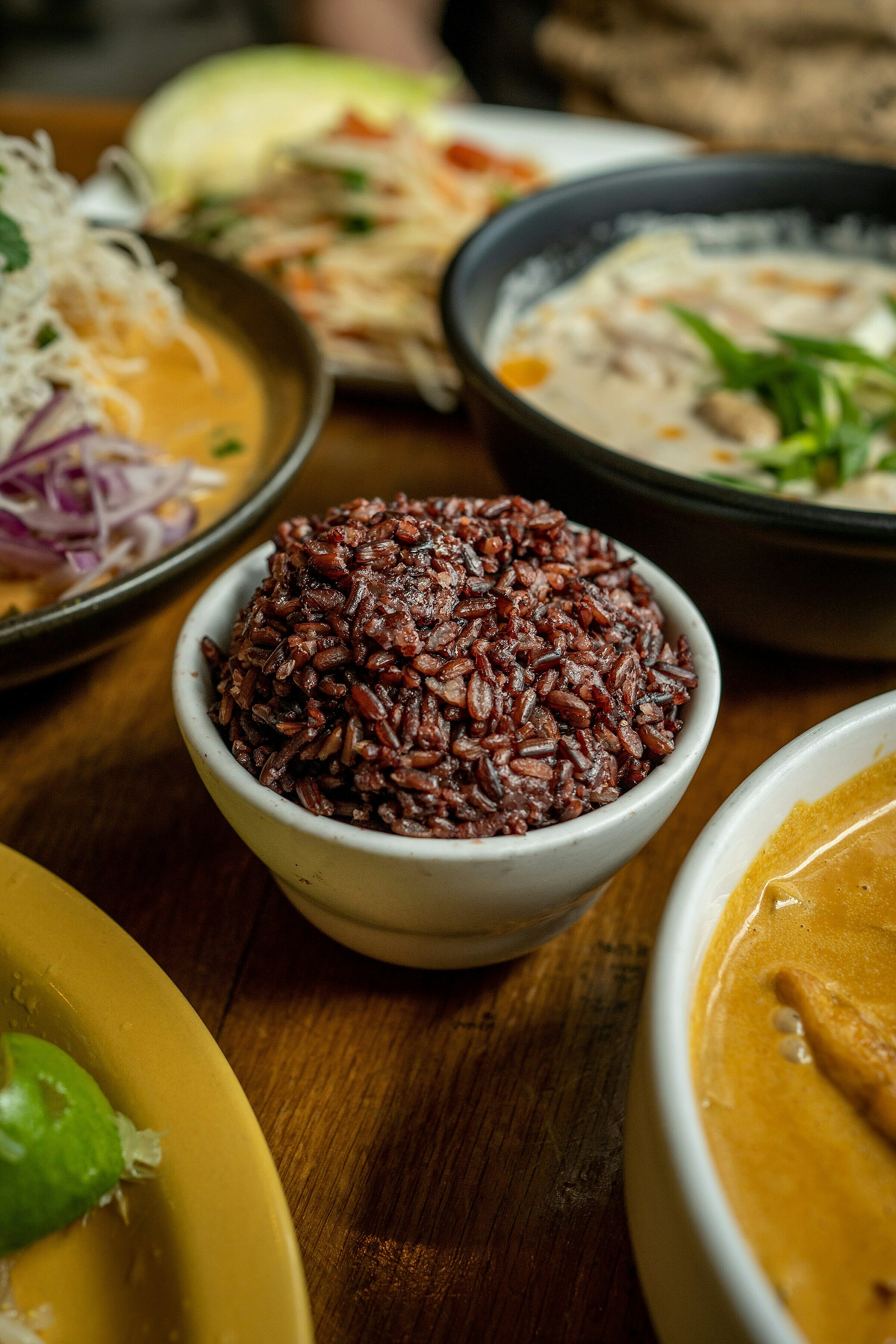
A serving of brown rice accompanied by various side dishes. Stock image courtesy of Unsplash.
|
Advice from Dr. Phuong regarding brown rice intake for individuals with diabetes:
1. Opt for unpolished brown rice over white varieties.
2. Monitor portion sizes carefully as even healthy grains can affect blood sugar levels.
3. Incorporate into meals balanced with vegetables and lean proteins.
4. Cook properly to enhance digestibility without compromising nutritional value.
5. Consume mindfully considering individual responses and glycemic index sensitivity.
1. Select low glycemic index rice
There are several varieties of brown rice, including those with
lower GI
Choose brown rice with its bran layer intact for increased fiber and vitamin content, since refined varieties offer fewer nutrients.
2. Control the amount
Although brown rice is beneficial for individuals with diabetes due to its nutritional profile, it remains a type of carbohydrate that can elevate blood glucose levels when consumed excessively. Diabetic patients ought to restrict their daily carbohydrate consumption to approximately 55% of their total caloric intake.
The acceptable quantity of brown rice can differ depending on one’s activity levels, bodyweight, and personal tolerance for carbs; therefore, it’s crucial to seek advice from a healthcare provider or dietitian.
3. Blend with other healthy food options
Steer clear of serving brown rice with sugary or refined starch dishes. Opt instead for combining it with veggies.
fresh fruits
Include legumes and lean proteins to aid in balancing nutrition and slowing down sugar absorption.
The American Diabetes Association suggests using a proportional approach for meals: fill 25% of your plate with foods like brown rice or other carbohydrates, allocate 50% for non-starchy vegetables, and dedicate another 25% to lean proteins.
4. Proper preparation
The glycemic index of brown rice is influenced by different cooking techniques. High-heat exposure causes the starch within brown rice to break down into a gelled state, which may elevate its glycemic index. To maintain a lower glycemic index, steaming is recommended as the optimal method; however, boiling or using either a pressure cooker or a rice cooker still aids in keeping the GI relatively low.
Stay away from frying or stir-frying brown rice since doing so adds extra oils and sugars, making it less healthy.
5. Avoid frequent consumption
Brown rice includes phytic acid or phytates, potentially hindering the absorption of minerals such as calcium, iron, and zinc. Individuals managing diabetes ought to vary their intake of brown rice with alternatives like potatoes, oats, quinoa, or legumes to ensure a well-rounded diet.
6. Regularly check your blood glucose levels
Every person responds uniquely to brown rice, hence it’s crucial to keep an eye on
blood sugar levels
Following meals, if your blood glucose increases considerably, modify the serving sizes or alter how you prepare the food.
Dr. Phuong additionally points out that the substantial fiber content in brown rice could lead to gastrointestinal problems for individuals with preexisting digestive conditions, indigestion, or those recovering from recent digestive surgeries. Continual assessment and modification of dietary habits are essential for sustaining good health.
oleh admin | Apr 14, 2025 | dental care, dentistry, diet and nutrition, health, teeth
By Elizabeth Larkwor Baah
On April 11, GNA reported from Tema that Dr. Kakra Bonsu Appiah, who leads the Dental and Oral Surgery Department at Tema General Hospital, stated that tooth decay is now the prevalent oral issue among Tema’s inhabitants.
Dr. Appiah mentioned that they’ve seen an increase in patients experiencing cavities, toothaches, and various issues related to inadequate dental care.
In an interview with the Ghana News Agency, he stated that tooth decay occurs when the tooth’s structure breaks down because of acids generated by mouth bacteria. These microorganisms flourish on sugar-rich foods and inadequate brushing routines, highlighting the importance of maintaining proper dental care to avoid this condition.
“The primary reason for tooth decay is inadequate oral care. Upon examining the development of dental caries, one can see that bad oral habits are the main factor behind them; this involves allowing food particles to remain between the teeth,” he explained.
Dr. Appiah pointed out that numerous cases seen at the hospital might have been prevented with consistent brushing, a healthy diet, and routine dental exams. She highlighted that keeping up your oral hygiene isn’t solely about achieving sparkling teeth; it’s fundamentally important for your general health as well.
He recommended that residents should scrub their teeth at minimum two times each day using fluoride-based toothpaste, use dental floss frequently to clear out bits of food stuck between teeth, cut down on sweet treats and beverages, along with scheduling visits to the dentist biannually.
The dentist likewise voiced worry that individuals only went to the hospital once the discomfort had become intolerable, encouraging Ghanaians to make regular dental visits to avoid crises.
Dr. Appiah additionally urged parents to teach their children proper dental care habits at a young age and to cut down on consuming sweets.
GNA
LS/KOA
Provided by Syndigate Media Inc. (
Syndigate.info
).

oleh admin | Mar 27, 2025 | diet and nutrition, health, health risks, lifestyle, nutrition
-
EXPLORE FURTHER: Researchers Identify Diet That Protects Against Brain Damage in Old Age
Retired prison officer Donald Gorske has devoured an enormous quantity of Big Macs throughout his life, consuming approximately 600 annually since 1972.
Once upon a time, when the current 71-year-old was hailing from Fond du Lac,
Wisconsin
, was consuming nine of the 580-calorie burgers daily but has since cut back to only two.
His impressive feat has secured his spot in the Guinness World Records for consuming the most Big Macs over a lifetime, totaling 35,000 as of this month.
However, what toll has his multi-decade fast-food regimen taken on his well-being?
To his surprise, there was nothing, but he believes there must be fascinating explanations for this.
Sharing in an excerpt on
YouTube
, Mr Gorske’s wife Mary mentioned that doctors had declared her husband fit and healthy.
‘”His blood glucose levels have been within the normal range, and his cholesterol has been remarkably low,” she mentioned.”
As for himself, Mr Gorske acknowledges that ‘a lot of people believed I would have passed away by this point’.

However, he attributes his robust good health to his routine six-mile strolls and his habit of not ordering fries with his meals.
“I’ve maintained my fitness level quite well since, among other things, I tend to be somewhat hyperactive,” he mentioned.
I log a lot of steps by walking. I often jest with folks, saying I “go for a walk around the block,” yet they remain unaware that our block circles about six miles.
He informed Guinness World Records that he feels ‘fortunate to have a fast metabolism’ and has advised others against attempting to surpass his record.
“I could be the sole individual still living who can consume Big Macs daily without experiencing adverse consequences,” he stated.
Mr Gorske said he intends to continue increasing his present tally of 35,000 burgers consumed until either his demise or tooth loss occurs, with his spouse prohibiting him from blending a burger.
“If I consume Big Macs daily and eventually face the consequences, then my children could jot down the number of Big Macs I had and inform others, ‘This is how many Big Macs it takes to be fatal,'” he stated.
Mr Gorske initially consumed McDonald’s signature burger on May 17, 1972.

On that particular occasion, as well as with every subsequent Big Mac he consumed, Mr. Gorske has saved the receipt along with the packaging of the burger to validate his record-breaking accomplishment.
Health experts warn that eating excessive amounts of fast food, usually high in fats and salts, can significantly raise the likelihood of various severe medical issues.
Fatty and salty diets boost the likelihood of developing heart disease and hypertension, conditions that elevate the risk of experiencing a heart attack or stroke.
An individual American Big Mac includes 11 grams of saturated fat, which is slightly more than one-third of the suggested maximum of 30 grams for men.
The burger includes approximately 2.7 grams of salt, which is almost half of an adult’s suggested daily maximum intake of 6 grams.
For comparison, a Big Mac served in the UK has 8.8g of saturated fat and 2g of salt.
Read more

oleh admin | Mar 21, 2025 | diet and nutrition, food and drink, food culture, foodies, popular culture
-
EXPLORE FURTHER: Some traditional British dinners might vanish within half a decade.
They are some of the tastiest snacks ever enjoyed during tea time in Britain.
However, treats like Victoria sponge, iced buns, custard slices, and even the iconic scone might soon become obsolete.
Experts from British Lion Eggs polled 2,000 British adults to explore how our tea-time habits are evolving.
Classic treats now deemed ‘obsolete and unhealthful’ encompass chocolate cake, Victoria sponge, iced buns, cream buns, custard slices, and sweetened tea.
Rather than opting for unhealthy choices, adults are now leaning towards more nutritious alternatives during their tea breaks, like Greek yogurt, hard-boiled eggs, and carrot sticks paired with hummus.
And fitness influencers on social networking sites such as
TikTok
could be accountable for the change.
As evidenced by the research, health-aware Brits aim to shake up their snacking habits,” stated a spokesperson for British Lion Eggs.
‘Britons aim to boost their daily protein intake to remain satiated for extended periods, control their weight, and maintain strength.’
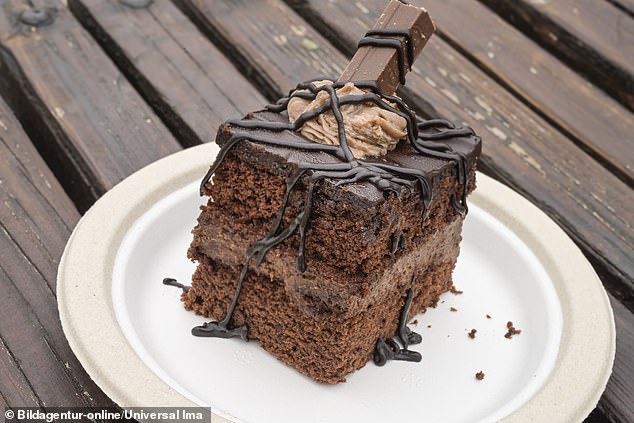
Experts from British Lion Eggs polled 2,000 British individuals aged 18 to 40—known as Generation Z and millennials.
They were queried about which of the subsequent sugary treats they wouldn’t contemplate consuming during tea time or elevenses due to their unhealthiness.
Surprisingly, 31 percent stated they would refuse chocolate cake, which makes it the least favored among all traditional desserts.
Overall, 30 percent stated they would not consume Victoria sponge, 30 percent were against having iced buns, and 29 percent would decline cream buns.
A traditional fixture in British bakeries, the iced bun features a finger-shaped or round bread roll topped with either white or pink icing.
In the meantime, the cream bun tends to be a favorite in upscale tearooms, consisting of soft milk bread with vanilla whipped cream injected into the middle.
Following that was the custard slice – rejected by 27 percent – featuring jiggly yellow custard nestled between sheets of flaky pastry.
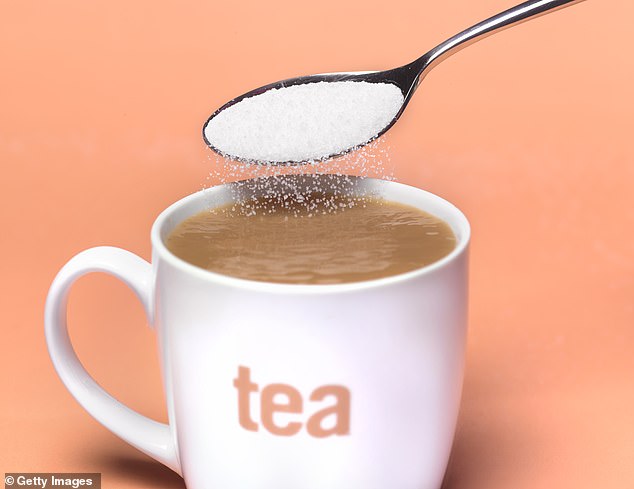
Additionally, 25 percent would absolutely not consume tea with both milk and sugar, suggesting that the traditional “cup of tea” featuring “milk and two sugars” might become obsolete in just one generation.


Afternoon tea favorites that younger Brits believe are old-fashioned and not good for their health.
-
Chocolate cake – 31%
-
Victoria sponge – 30%
-
Iced bun – 30%
-
Cream bun – 29%
-
Custard slice – 27%
-
A cup of tea with cow’s milk and sugar – 25%
-
Scone served with cream and jam – 23%
-
Chocolate biscuit – 16%
-
Toasted teacake – 15%
-
Flapjack – 13%
Completing the list were scones served with cream and jam (rejected by 23 percent), chocolate biscuits (shunned by 16 percent), toasted teacakes (dismissed by 15 percent), and flapjacks (refused by 13 percent).
The survey revealed that Greeks’ preferred teatime snack is actually Greek yogurt, chosen by 35 percent of those surveyed.
Boiled eggs were preferred by 32 percent of people, followed by protein bars (26 percent), avocados (24 percent), and protein shakes (21 percent).
Overall, 20 percent would opt for salmon, 19 percent would pick a handful of nuts, and 16 percent would go for carrots with hummus.
Finally, 14 percent would opt for a hard-boiled egg with spinach, and 12 percent would instead choose slices of ham or chicken.
The reasons British people choose high-protein snacks are because they make you feel full for an extended period (55 percent), aid in muscle construction and recovery (30 percent), and assist in maintaining a healthy weight (23 percent).
It may not be surprising that 49 percent of the surveyed individuals aged between 18 and 30 claimed to be health-conscious, whereas 48 percent mentioned they try their best to steer clear of cakes and biscuits at work.

TikTok and Instagram Reels are brimming with swift and nutritious recipe suggestions, potentially driving their widespread appeal.
Among all participants, 27 percent mentioned that they frequently share pictures of their nutritious snacks on platforms like Instagram and TikTok. They use various hashtags such as #healthy (33 percent), #healthysnacking (19 percent), and #protein (16 percent).
This echoes a study released earlier this month by kitchen appliance manufacturer Ninja, which revealed that dishes like pan haggerty, Glamorgan sausages, and even the beloved shepherd’s pie might soon become rare choices for dinners.
In the meantime, British desserts facing potential disappearance include Chelsea buns, rock cakes, gypsy tart, scones, and rhubarb crumble, as Ninja discovered – aligning with certain recent discoveries made by British Lion Eggs.
Read more

oleh admin | Mar 13, 2025 | diet and nutrition, eating habits, food and drink, nutrition, psychology of everyday life
I see myself as a friendly, sensible, empathetic, and well-balanced individual… except
when I am hungry
At that moment, my patience disappears, my tolerance weakens, and every inconvenience feels like a direct attack on me. When my stomach growls with hunger, shortly after, I transform into my most basic form.
The only reason I exist is to place a piece of pizza into my mouth.
Anything that obstructs that becomes an obstacle.
cause for anger
And I’m not alone in this. This has also occurred for you. To my mom, to your significant other, to that colleague who unexpectedly turns grouchy during the day’s hustle.
It’s funny
How hunger causes anger in people
That’s indeed true. However, there are explanations just as astonishing yet inevitable for this phenomenon. So, let us explore what is truly happening within our bodies.
How can hunger influence our emotions?
so drastically?
Decrease in blood glucose
The brain relies nearly completely on glucose as its energy source. Think of it as the ‘fuel’ required for proper functioning. If we go without
for a considerable duration without food
, our glucose levels drop and the brain suffers. This hypoglycemia causes the brain to not function at 100%. You have probably felt more clumsy, tired, confused and, of course, more irritable when you have not eaten for a long time.
Stress hormone is triggered
When blood sugar levels drop, the brain triggers signals that prompt various organs into action.
secrete and discharge hormones that help increase glucose levels in the bloodstream
Within the body, several of these hormones include
epinephrine
and
cortisol
, also launched during these periods
stress
, which prepares the body to handle challenging circumstances, heightening tension and making us more likely to respond with aggression. This physiological process clarifies why we experience greater stress and discomfort when we’re hungry.
The brain prioritizes foraging
From an evolutionary perspective,
Hunger triggers a survival mode within the brain.
This state compels us to concentrate on acquiring sustenance, pushing other pursuits into the backdrop. Such concentration may result in
decreased patience and increased annoyance
In reaction to stimuli unrelated to food, this response serves as an adaptive mechanism to guarantee the intake needed for survival.
Unfavorable view of the surroundings
Hunger not only impacts our bodily processes but also alters how we perceive our surroundings. As stated
a study
In a study published in the journal PLOS ONE in 2022, researchers discovered that individuals tend to be more prone to certain behaviors when they feel hunger.
interpret external cues negatively
, leading to heightened irritability and anger. Furthermore, it was discovered that reduced blood sugar levels correlate with intensified sensations of frustration and agitation.
reduced capacity for managing feelings
These results indicate that hunger might alter how we assess circumstances and individuals, exacerbating emotional responses.
Has this ever occurred to you?
Next time you sense hunger transforming you into an unfriendlier persona, keep in mind that this is happening.
biological and psychological underpinnings
Behind that response. Grasping these processes can assist us in handling our feelings more effectively and preventing unwarranted disputes.
You might also like:
Stop Snacking Now! Find Easy Tips to Stay In Control Between Meals!

The concealed truth behind neurodegenerative disorders unveiled: could your utensil hold the answer?
6 Low Glycemic Index Foods: Discover Their Health Benefits and Where to Locate Them!
read more on en.SANGGRALOKA


