
oleh admin | Apr 14, 2025 | diet and nutrition, health, health advice, health tips, healthy living
Individuals with diabetes ought to restrict their consumption of brown rice to about 100 grams per meal, pairing it with items rich in fiber and protein.
For individuals with diabetes, brown rice is preferable over white rice because of its lower Glycemic Index (GI). This characteristic aids in avoiding sharp increases in blood glucose. Nonetheless, it’s crucial to eat it in limited quantities, accompanied by dishes high in fiber and protein, and participate in some gentle exercise post-meals to keep your blood sugar stable.
Dr. Tran Thi Tra Phuong from the Department of Dietary Management at Tam Anh General Hospital in Hanoi explains that brown rice has a lower glycemic index (under 55 versus 76 for white rice). This means it gets digested more slowly, aiding in stable blood glucose levels. Additionally, brown rice includes bran and germ, rich sources of fiber, vitamins, minerals, antioxidants, and proteins essential for decreasing inflammation, enhancing insulin response, and promoting general well-being.
Adding brown rice to your meals can enhance feelings of fullness, aid in managing body weight, improve cholesterol profiles, and lower the chances of developing heart disease and certain cancers. Furthermore, the B vitamins found in brown rice assist in generating red blood cells and boosting metabolic processes for energy.
|
|
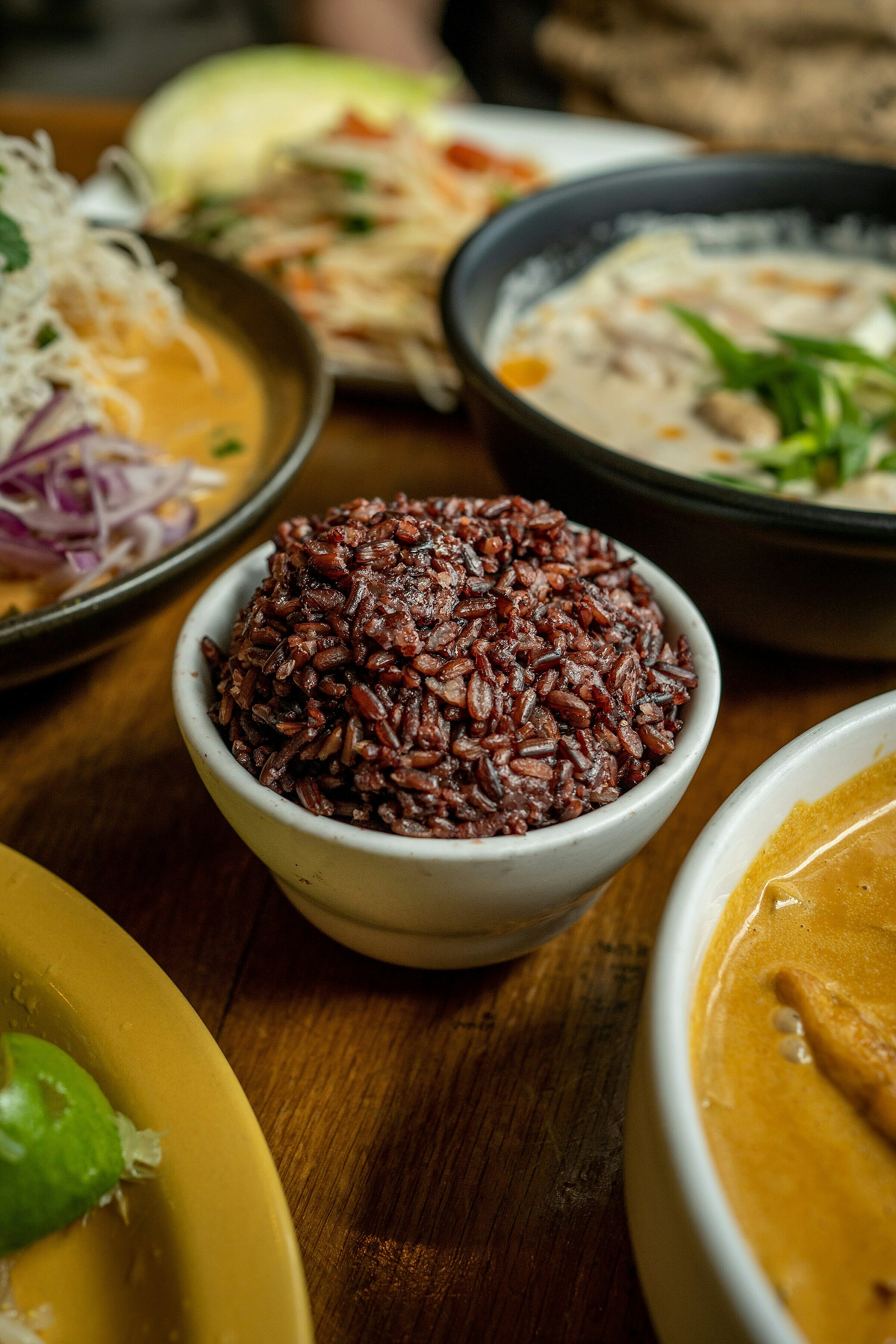
A serving of brown rice accompanied by various side dishes. Stock image courtesy of Unsplash.
|
Advice from Dr. Phuong regarding brown rice intake for individuals with diabetes:
1. Opt for unpolished brown rice over white varieties.
2. Monitor portion sizes carefully as even healthy grains can affect blood sugar levels.
3. Incorporate into meals balanced with vegetables and lean proteins.
4. Cook properly to enhance digestibility without compromising nutritional value.
5. Consume mindfully considering individual responses and glycemic index sensitivity.
1. Select low glycemic index rice
There are several varieties of brown rice, including those with
lower GI
Choose brown rice with its bran layer intact for increased fiber and vitamin content, since refined varieties offer fewer nutrients.
2. Control the amount
Although brown rice is beneficial for individuals with diabetes due to its nutritional profile, it remains a type of carbohydrate that can elevate blood glucose levels when consumed excessively. Diabetic patients ought to restrict their daily carbohydrate consumption to approximately 55% of their total caloric intake.
The acceptable quantity of brown rice can differ depending on one’s activity levels, bodyweight, and personal tolerance for carbs; therefore, it’s crucial to seek advice from a healthcare provider or dietitian.
3. Blend with other healthy food options
Steer clear of serving brown rice with sugary or refined starch dishes. Opt instead for combining it with veggies.
fresh fruits
Include legumes and lean proteins to aid in balancing nutrition and slowing down sugar absorption.
The American Diabetes Association suggests using a proportional approach for meals: fill 25% of your plate with foods like brown rice or other carbohydrates, allocate 50% for non-starchy vegetables, and dedicate another 25% to lean proteins.
4. Proper preparation
The glycemic index of brown rice is influenced by different cooking techniques. High-heat exposure causes the starch within brown rice to break down into a gelled state, which may elevate its glycemic index. To maintain a lower glycemic index, steaming is recommended as the optimal method; however, boiling or using either a pressure cooker or a rice cooker still aids in keeping the GI relatively low.
Stay away from frying or stir-frying brown rice since doing so adds extra oils and sugars, making it less healthy.
5. Avoid frequent consumption
Brown rice includes phytic acid or phytates, potentially hindering the absorption of minerals such as calcium, iron, and zinc. Individuals managing diabetes ought to vary their intake of brown rice with alternatives like potatoes, oats, quinoa, or legumes to ensure a well-rounded diet.
6. Regularly check your blood glucose levels
Every person responds uniquely to brown rice, hence it’s crucial to keep an eye on
blood sugar levels
Following meals, if your blood glucose increases considerably, modify the serving sizes or alter how you prepare the food.
Dr. Phuong additionally points out that the substantial fiber content in brown rice could lead to gastrointestinal problems for individuals with preexisting digestive conditions, indigestion, or those recovering from recent digestive surgeries. Continual assessment and modification of dietary habits are essential for sustaining good health.

oleh admin | Mar 30, 2025 | health benefits, health tips, healthy eating, nutrition, nutritionists
Packed with beneficial fats, proteins, vitamins, and antioxidants, hazelnuts promote cardiovascular well-being, might lower the chance of developing certain cancers, and could aid in regulating blood glucose levels when eaten regularly.
According to
Healthline
Hazelnuts boast an impressive nutritional composition. In each one-ounce (28 grams, approximately 20 pieces) serving, you’ll find around 176 calories, with 17 grams of fat, 4.2 grams of protein, 4.7 grams of carbohydrates, and 2.7 grams of fiber.
This portion offers 21% of the suggested daily amount of vitamin E, 12% for thiamine, 12% for magnesium, 24% for copper, and an impressive 87% for manganese.
Moreover, hazelnuts are abundant in omega-6 and omega-9 fatty acids and offer significant quantities of vitamin B6, folate, phosphorus, potassium, and zinc.
Thanks to their strong nutritional profile, hazelnuts provide these significant health advantages:
1. Preventing aging
Research suggests that eating hazelnuts, whether you consume them with or without their skins, can significantly decrease oxidative stress—an important contributor to aging—due to their high antioxidant content. For optimal antioxidant effects, it’s advisable to have raw, unhulled hazelnuts as opposed to roasted ones because the process of roasting may lower the level of antioxidants present.
2. Enhancing heart health
Consuming hazelnuts can enhance cardiovascular well-being due to their high content of antioxidants, beneficial fats, and dietary fibers. Studies indicate that regular intake of hazelnuts aids in reducing cholesterol and triglyceride levels. In an investigation, participants who ate hazelnuts every day experienced a notable decline in LDL (low-density lipoprotein) cholesterol, along with improvements in arterial function and reduced inflammation indicators.
The beneficial fats found in hazelnuts, particularly oleic acid, might also assist in managing blood pressure levels.

|
|
A heap of hazelnuts. Illustration photo by Pixabay
|
3. Reducing cancer risk
Hazelnuts include antioxidants and useful components that have been linked to various health benefits.
a reduced chance of developing specific types of cancer
Including proanthocyanidins and vitamin E, these compounds can shield cells from oxidative harm, which is closely associated with cancer progression. Preliminary studies indicate that hazelnut extracts might aid in preventing or managing different types of cancer, like those affecting the breasts, liver, and colon.
4. Reducing inflammation
Hazelnuts are rich in beneficial fats that possess anti-inflammatory characteristics. Consuming them regularly can lead to substantial reductions in inflammation indicators like C-reactive protein (CRP), particularly among those who are overweight or obese.
high cholesterol
.
Although hazelnuts cannot completely eradicate inflammation on their own, incorporating them into a well-balanced diet may assist in managing persistent inflammatory conditions.
5. Assisting in reducing glucose levels in the blood
The main fatty acid found in hazelnuts, oleic acid, is linked to better blood sugar control, which makes these nuts a helpful food choice for people who have or are prone to developing type 2 diabetes.
Moreover, consistent consumption of nuts, such as hazelnuts, has been associated with reduced blood glucose levels.
6. Improving digestion
Hazelnuts offer a significant quantity of
dietary fiber
, supporting overall digestive health. As reported by Medical News Today, eating fiber-rich foods such as hazelnuts aids in maintaining regular bowel movements and helps prevent constipation.
7. Reducing weight gain
New studies suggest that eating nuts like hazelnuts frequently might aid in preventing excessive weight gain. In a 2018 report, people who included nuts in their diet regularly had a lower chance of becoming overweight or obese than those who seldom indulged in them.

oleh admin | Mar 29, 2025 | food and drink, health, health & fitness, health tips, Travel
-
The Gut Stuff duo is offering their best advice to MailOnline Travel.
-
Discover why you might experience constipation when traveling abroad.
-
EXPLORE FURTHER: Discover the globe’s most enchanting fairy tale locations revealed
Nothing compares to the disappointment of planning a relaxing seaside vacation for a week, only to find yourself stuck next to your hotel bathroom toilet instead.
A lot of individuals fall ill when traveling globally due to numerous factors such as dehydration and alterations in their eating habits.
However, do not worry, for twins Lisa and Alana McFarlane, the creators, have stepped in to handle this situation.
The Gut Stuff
, have experts available for guidance.
From the snacks you should include in your luggage to foods that help with constipation, here are Alana and Lisa’s suggestions for steering clear of frequent bathroom trips rather than heading to the all-inclusive buffet during your upcoming international journey.
If you’ve ever experienced some difficulty with digestion during vacations, know that you’re not the only one. Lisa explains: “This issue often arises due to alterations in your eating habits when traveling. If usually you stick to a fiber-rich diet that supports digestive health, yet upon landing you find yourself indulging in foods like gooey cheese bread instead, this shift might impact your digestive system. There’s no reason for embarrassment; these dishes are tempting! However, they have the potential to make you feel somewhat blocked up.”
Alana points out that long-haul flights exacerbate the problem, stating: “These trips often result in bloating and constipation because we tend not to consume enough water during the flight.”
Our digestive systems can likewise be influenced by geographical factors. “Inside and outside of our bodies reside various microorganisms,” clarifies Lisa. “These same tiny life forms are present all over the surroundings as well. Therefore, when traveling to a different nation, one might encounter previously unknown microbial entities, an experience that could prove beneficial.”
However, it can also bring in detrimental strains that were previously absent from your microbiome.


If you find yourself somewhat “blocked up and constipated” during your vacation, how should you address this issue?
Lisa says: ‘Try having a few kiwis from the breakfast buffet; they should take care of it. Kiwis can aid digestion and relieve constipation. It’s what some people refer to as a “natural exit.”’
The selections available at the buffet might have a significant impact.
Lisa clarifies: “Both Alana and I really enjoy an all-inclusive buffet. It’s important for us to feel we’re getting good value for our money, but still maintaining a balanced approach.”
Add nuts and seeds to your soup. If you’re enjoying a large cooked breakfast, consider serving a small portion of fruits on the side. Fiber plays a crucial role.
If possible, choose brown rice instead of white rice, and brown pasta over white,” suggests Alana. “These minor adjustments can help increase your fiber intake in a positive way.
Additionally, there’s an essential food item that the sisters recommend including in your luggage.
Alana states: “Including fiber in your routine is essential. You might opt for high-fiber bars and beverages, or simply include a packet of chia seeds in your luggage. They’re quite lightweight.”


GUT STUFF’S BEST ADVICE FOR STEERING CLEAR OF TRAVEL TUMMIES
-
Carry your fiber easily with lightweight and convenient snacks.
-
Include packets of chia seeds for your morning meal or to prepare your homemade chia pudding.
-
Carry a large water bottle with you during your flight.
-
Wear comfortable clothes and steer clear of snug waistbands while flying.
-
Pack rehydration salts
-
If you’re experiencing constipation, choose kiwis from the breakfast buffet.
Source: The Gut Stuff
Adding chia seeds to your morning meal or yogurt can provide a fiber boost that might prevent digestive issues during your vacation.
Staying hydrated is crucial for preventing stomach issues. Lisa advises: “Get yourself a large water bottle, particularly when traveling to warmer climates. Maintain your fluid intake throughout your trip.”
And there’s a simple method to determine if you should replenish your fluids.
Alana clarifies: “Observe the color of your urine; this will provide a clear indicator if you need to increase your water intake.”
Urine ranging from medium to dark yellow typically indicates a need for hydration.
Read more

oleh admin | Mar 16, 2025 | blood sugar, diabetes, health, health advice, health tips
Lifehack My ID
Memahami tanda-tanda diabetes amat krusial agar kondisinya tidak bertambah serius.
Diabetes muncul apabila tingkat glukosa dalam darah saat puasa melebihi 126 miligram per desiliter (mg/dl).
Jika sudah menderita diabetes, Anda bisa mengalami gejala, seperti mudah lapar, kelelahan, haus berlebihan, dan lainnya.
Bukan hanya itu, apabila diabetes tidak dideteksi tepat waktu atau pengobatan yang memadai tidak diberikan, maka risiko Anda untuk menghadapi sejumlah komplikasi seperti penyakit jantung, kerusakan pada sistem saraf, serta masalah-masalah lainnya akan meningkat.
Karenanya, diabetes dijuluki sebagai ”
mother of all diseases
“.
Sayangnya, diabetes merupakan salah satu penyakit tidak menular kronis yang meningkat setiap tahunnya.
Menurut data dari
International Diabete Federation
(IDF), Indonesia menduduki peringkat kelima negara dengan jumlah penderita diabetes terbanyak dengan 19,5 juta penderita pada 2021 dan diprediksi akan menjadi 28,6 juta pada 2045.
Selanjutnya, artikel ini akan menunjukkan berbagai gejala diabetes yang sering kali muncul, sehingga Anda bisa mewaspadainya.
Apa saja gejala diabetes?
Dikutip dari
WebMD
, berikut tanda-tanda diabetes yang sering kali muncul:
Tubuh merubah makanan yang Anda konsumsi menjadi glukosa (yaitu zat gula paling sederhana).
Insulin berfungsi mengangkut glukosa sehingga dapat diserap oleh sel-sel dalam tubuh dan kemudian diubah menjadi sumber energi.
Penderita diabetes biasanya tidak memproduksi insulin dalam jumlah yang cukup, sama sekali tidak memproduksinya, atau sel-sel dalam tubuh menolak insulin.
Sehingga, rasa lapar berlebihan timbul sebagai tanda diabetes.
Kelebihan gula darah akibat kekurangan insulin bisa menyebabkan perasaan letih yang melebihi batas normal.
Orang pada umumnya memerlukan kamar mandi kecil antara empat sampai tujuh kali selama 24 jam.
Pada penderita diabetes, kebutuhan buang air kecil akan lebih sering.
Itu terjadi karena tubuh mencoba menghilangkan sisa glukosa yang melebihi batas normal dalam darah.
Ini adalah gejala diabetes yang sangat umum selanjutnya.
Sering merasa haus bisa disebabkan oleh kebutuhan tubuh akan cairan yang meningkat untuk menghasilkan lebih banyak urin.
Sebab tubuh Anda mengonsumsi cairan guna menciptakan urin, maka ketersediaan cairan untuk keperluan lain menjadi berkurang.
Sehingga, Anda mungkin menunjukkan tanda-tanda diabetes seperti dehidrasi yang membuat mulut menjadi kering.
Kekurangan cairan dalam tubuh dapat menyebabkan kulit menjadi kering.
Kulit yang kering dapat menyebabkan timbulnya sensasi gatal.
Fluktuasi konsentrasi cairan dan glukosa di dalam tubuh bisa membuat lensa mata mengalami pembengkakan.
Gaya lensa bermasalah dan tak bisa mengkonsentrasikan objek dengan baik.
-
Penurunan berat badan yang terjadi tanpa sengaja
Apabila tubuh Anda tak dapat mengambil tenaga dari makanan, maka tubuh akan memulai proses pembakaran pada otot dan lemak sebagai alternatifnya.
Sehingga, penderita diabetes bisa kehilangan berat badan, meskipun tidak diet.
Jika Anda menderita diabetes, Anda bisa juga mengalami gejala berupa sakit kepala.
Gejala diabetes ini sering kali terjadi ketika penderita diabetes memiliki kadar gula darah rendah atau hipoglikemia.
Demikianlah sejumlah gejala diabetes yang perlu Anda waspadai.
Apabila mengalami tanda-tanda tersebut, sebaiknya konsultasikan diri ke dokter dan lakukan pemeriksaan tingkat gula darah.
oleh admin | Mar 14, 2025 | food and drink, food culture, health, health tips, nutrition
Banyak individu menyukai konsumsi hidangan mentah seperti sushi, sashimi, atau sayuran segar karena cita rasa yang fresh serta dianggap memiliki manfaat kesehatan. Akan tetapi, bukanlah hal yang bijak untuk mengonsumsi sembarang jenis makanan dalam keadaan mentah tanpa pemeriksaan terlebih dahulu. Terdapat potensi bahaya dari adanya kontaminasi bakteri, cacing, ataupun senyawa merugikan lainnya yang dapat mencidera tubuh Anda.
Melakukan proses memasak pada temperatur yang sesuai sangat krusial guna menghilangkan bakteri serta mencegah penyakit yang disebabkan oleh konsumsi makanan setengah matang.
Berikutnya, makanan apakah yang memiliki risiko menyebabkan penyakit bila dimakan dalam keadaan mentah? Berikut adalah beberapa contohnya:
Lifehack My ID
rangkum dari berbagai sumber.
Daging Unggas

Konsumsi daging unggas seperti ayam atau kalkun dalam keadaan setengah matang bisa mengancam kesehatan akibat risiko kontaminasi oleh bakteri Salmonella. Infeksi tersebut mampu mempengaruhi sistem pencernaan dan menciptakan tanda-tanda seperti nyeri perut, panas badan, kram sampai buang air besar cair.
Agar terhindar dari ancaman tersebut, daging ayam perlu dimasak pada temperatur yang sesuai sehingga organisme berbahaya di dalamnya akan musnah. Di samping itu, mencuci daging ayam menggunakan air sebelum proses memasak disarankan untuk tidak dilakukan karena bisa menambah peluang pencemaran silang.
Telur

Telur yang belum masak sepenuhnya atau hanya setengah matang bisa jadi mengandung bakteri Salmonella berbahaya. Oleh karena itu, penting sekali memastikan telur tersebut dimasak hingga aman sebelum disantap. USDA menyarankan bahwa telur harus diproses pada suhu paling rendah 160 °F (71,1 °C) guna mencegah potensi penyebaran bakteri patogen ini.
Kentang

Kentang segar memiliki zat tepung yang susah untuk diolah oleh tubuh. Apabila dimakan dalam keadaan belum matang, hal ini mungkin menimbulkan perut buncit serta masalah pada sistem pencernaan. Sebab itu, sebaiknya kentang diproses terlebih dahulu supaya zat tepung sulit dicerna tersebut pecah dan menjadi lebih aman untuk disantap.
Susu yang Tidak Dipasteurisasi

Pasteronisasi merupakan tahap krusial pada saat memproses susu dengan tujuan melenyapkan mikroorganisme berbahaya. Apabila tidak ada pasteronisasi, susu segar memiliki potensi tinggi terkontaminasi oleh bakteri jahat, misalnya Escherichia coli atau yang biasa disebut E. Coli, Listeria, serta Campylobacter. Dengan demikian, melakukan pasteronisasi sangat dibutuhkan supaya susu menjadi lebih higienis dan aman bagi konsumen.
Demi menjaga keselamatan, pilihlah susu atau hasil olahan dari susu yang telah melewati proses pasteurisasi dan disimpan dalam kulkas untuk meminimalisir perkembangan bakteri.
Kacang Merah
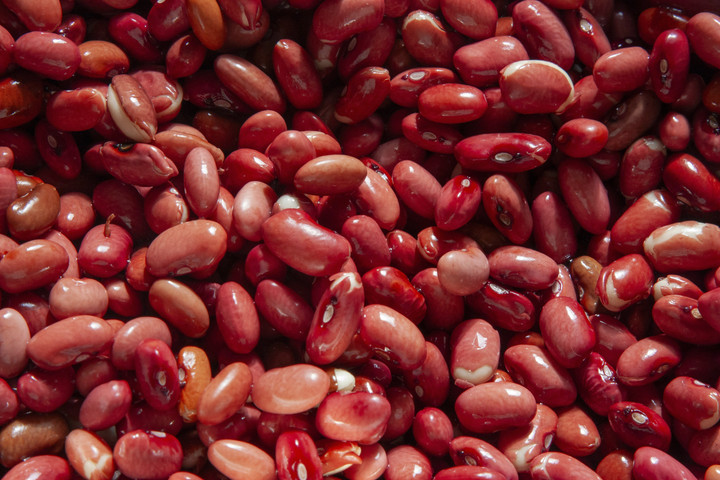
Kacang merah segar memiliki kandungan zat phytohemagglutinin, yaitu sejenis protein alami berbahaya yang bisa menimbulkan masalah pada sistem pencernaan. Senyawa tersebut dapat membawa gejala serupa sindrom influenza gastrointestinal dalam tubuh, termasuk rasa mual, muntahan, serta diare.
Kecambah
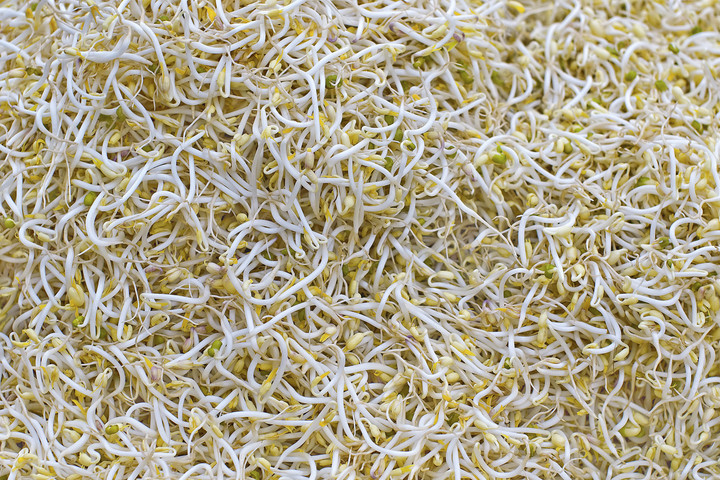
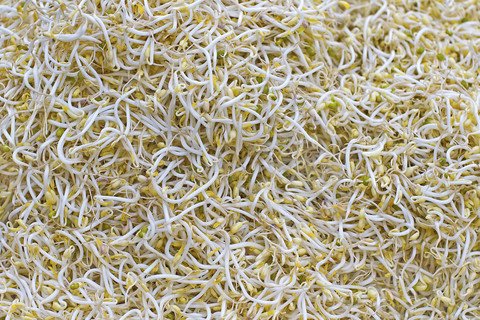
Jenis sayuran kecambah banyak dimanfaatkan untuk menambah isi dari sandwich ataupun hidangan salad. Akan tetapi, konsumsi kecambah yang belum matang disarankan harus dihindari dikarenakan lebih rawan akan kontaminasi oleh jenis bakteri berbahaya contohnya adalah Salmonella, E. coli, serta Listeria.
Kondisi lingkungan yang panas dan berair di mana kecambah bertunas memungkinkan pertumbuhan bakteria secara cepat. Untuk menghindari hal tersebut, sebaiknya anda menumis kecambah terlebih dulu guna melenyapkan bakteri sehingga menjadikan mereka lebih aman untuk dimakan.
Walaupun sebagian besar makanan enak dinikmati dalam keadaan mentah, belum tentu semua jenisnya baik untuk kesehatan tubuh. Penting sekali memastikan pangan diolah secara tepat supaya kita bisa mengelakkan diri dari ancaman berbagai macam penyakit.
Reporter Salsha Okta Fairuz

oleh admin | Mar 4, 2025 | diet and nutrition, health, health tips, nutrition, oil
Cooking oils
serve as crucial components in numerous dishes, yet
Not all of these are in good condition.
or suitable for regular use. Certain types of oils
may pose risks to your well-being
due to the high
amount of inflammatory fats
, intense refinement procedures or
thermal instability
, which may produce harmful chemicals. Below are the three least desirable cooking oils likely found in your kitchen that you should limit or steer clear from.
1. Soybean oil
Soybean oil
is one of the
most problematic
It is abundant in
omega-6
, a type of
polyunsaturated fat
When taken in large amounts, this can lead to increased inflammation within the body. Furthermore, soybean oil goes through refinement using substances like hexane, which is an industrial solvent. An additional issue is its tendency to oxidize readily at elevated temperatures, producing compounds detrimental to health.
2. Corn oil
Like soybean oil,
corn oil
It is extensively utilized and additionally possesses a
high omega-6 content
. An
disparity between omega-6 and omega-3 levels
dietary choices can help lead to
persistent inflammatory conditions like diabetes and heart ailments
Furthermore, this oil undergoes an extraction method using industrial processes with high temperatures and chemical solvents, which diminishes its nutritional content and promotes the creation of free radicals.
3. Sunflower oil
Many people believe that
sunflower oil
is a healthier choice, yet it surprisingly falls into the same category.
minimum suggested oils for cooking fries
This occurs due to its high content of polyunsaturated fats, which are highly susceptible to heat. Upon heating, sunflower oil generates significant amounts of harmful aldehydes, compounds linked to conditions like Alzheimer’s disease and cancer.
Healthier alternatives
The top choices for cooking oils vary based on their intended usage (such as frying, sautéing, or seasoning) and the health advantages they offer. Below are some of the highly suggested options:
For frying (high temperatures)
-
Avocado oil
– Excellent heat tolerance, abundant in beneficial fatty acids.
-
Coconut oil
– Remains stable even when exposed to high heat, yet boasts a robust taste.
-
Extra virgin olive oil
– Even though it is ideally enjoyed chilled, it can also be utilized for mild cooking.
For stir-frying and moderately cooked dishes
-
Extra virgin olive oil
– Packed with antioxidants and beneficial fatty acids.
-
Sesame oil
– Strong taste, perfect for dishes from Asia.
-
Peanut oil
– Excellent heat tolerance and a mild taste.
For seasoning and chilly consumption
-
Extra virgin olive oil
– Ideal for salads and dressings.
-
Linseed oil
– High in omega-3, but shouldn’t be cooked.
-
Walnut oil
– Refined taste, perfect for salads and chilled recipes.
Sources of information:
-
fpcardiologia.pt
-
scielo.br
-
WHO (World Health Organization)
-
American Heart Association
You might also want to check out:
Why heating this oil can be problematic!
10 astonishing truths about olive oil you were unaware of!
Coconut oil: the misunderstood superfood posing as a secret threat to your well-being
Butter versus Oil: Which Should You Pick for Cooking?
read more on en.SANGGRALOKA


