by admin | Mar 31, 2025 | africa, armed forces, military, news, united states armed forces
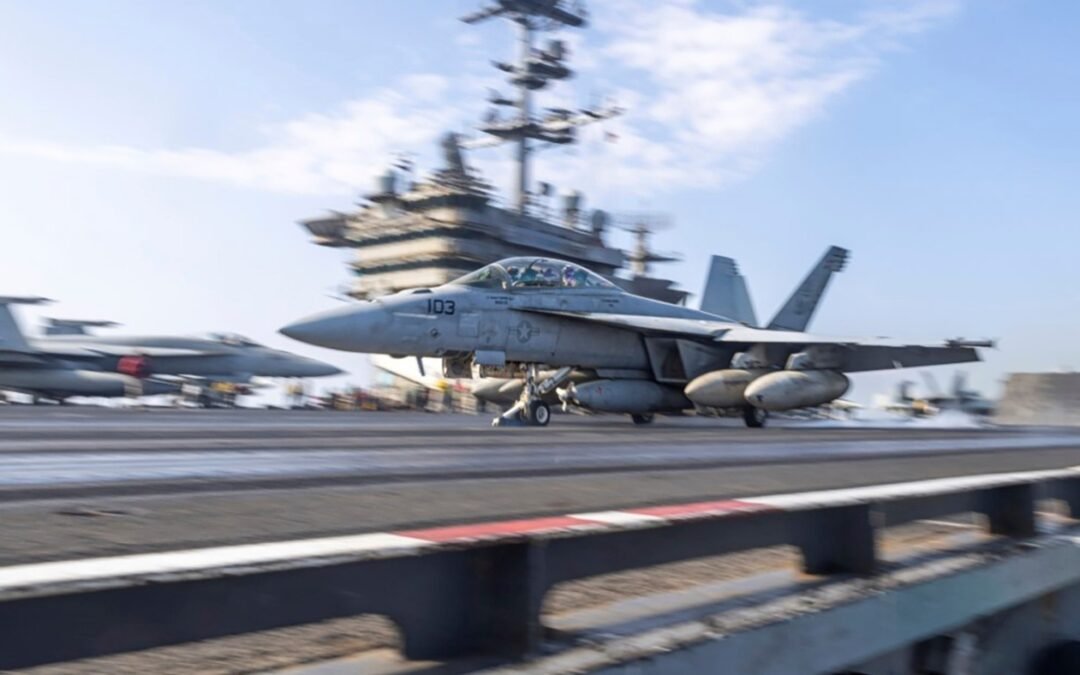
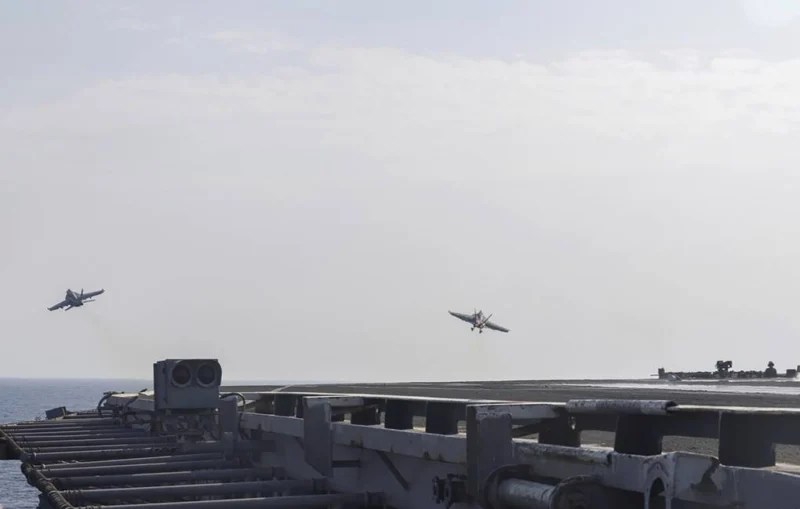
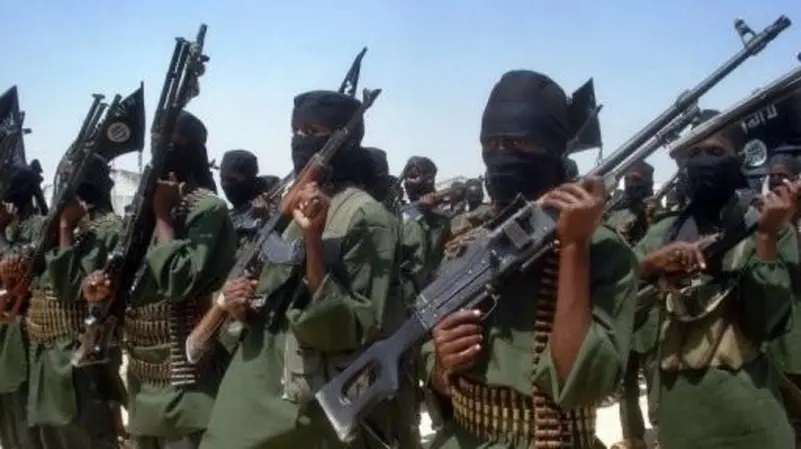
On March 30, 2025, Addis Ababa — According to an official announcement, US Africa Command (AFRICOM) conducted airstrikes targeting locations affiliated with the Islamic State in Somalia.
The AFRICOM website stated that the operation took place on March 29, in conjunction with the Somali government.
The attacks were directed at ISIS locations southeast of Bosaso in Somalia’s Puntland region, according to reports.
“According to the statement, AFRICOM’s preliminary evaluation indicates that several ISIS-Somalia operatives were reportedly killed, with no harm reported to civilian individuals,” it was disclosed.
The military announcement stated that the extremists presented a risk to American troops. Further information regarding the mission was not disclosed.
The statement from AFRICOM also highlighted that ISIS-Somalia has demonstrated both its intent and ability to target American and allied forces. Additionally, they warned that these hostile actions pose a threat to U.S. security interests.
“AFRICOM, alongside the Federal Government of Somalia and Somali Armed Forces, continues to take action to degrade ISIS-Somalia’s ability to plan and conduct attacks that threaten the U.S. homeland, our forces, and our civilians abroad,” according to the statement.
Provided by Syndigate Media Inc. (
Syndigate.info
).
by admin | Mar 30, 2025 | africa, controversies, foreign policy, government, politics
President Félix Tshisekedi has deftly characterized the M23 insurgency as an assault on the Democratic Republic of Congo’s sovereignty, suggesting that members are outsiders without legitimate concerns. Some global figures have bought into this view, yet the situation is much subtler. Comprised primarily of native Congolese individuals advocating for their civil liberties and urging adherence to previous accords disregarded by the state, the M23 presents itself differently.
Despite periodic shifts in official positions regarding talks, President Tshisekedi persistently brands the M23 as external foes unworthy of discussion, deflecting responsibility onto Rwanda to mask deficiencies within his own army. Nevertheless, leading African statesmen such as Julius Nyerere from Tanzania, Nelson Mandela and Thabo Mbeki from South Africa, Paul Kagame of Rwanda, and William Ruto now serving as Kenya’s president, along with others, recognize the M23 as essentially domestic actors—an assertion at odds with Tshisekedi’s inconsistent statements wherein he concedes their national character but declines engagement, blaming Rwanda for infringing upon DR Congo’s borders.
The complexity intensifies when one considers the UN-designated genocidal faction known as FDLR operating inside eastern DRC since 2001. Curiously, President Tshisekedi collaborates with this outside entity to counteract the M23, acknowledging their indigenous status intermittently. Such alliances raise questions about which party genuinely breaches DR Congo’s territory.
For upwards of thirty years, eastern regions of DRC have grappled with over two hundred militant organizations, both local and foreign entities like the Ugandan-origin ADF included. Although ongoing unrest persists, minimal action has been taken towards dismantling these groups or securing long-term solutions internationally. Yet, once renewed hostilities began in 2021 due to broken pledges, governmental integration occurred rapidly—transforming assorted paramilitary units under new patriotic designations regardless of prior abuses committed.
Kinyarwanda speakers in Congo, notably ethnic Tutsis, endure chronic peril largely unnoticed globally. Decades-long exposure to insurgent attacks frequently supported covertly or overtly by authorities adds urgency to their plight. As a result, the M23 emerges distinctively as adversaries resisting institutional injustices imposed collectively by Kinshasa and allied powers. Consequently, they become prime targets of state enmity amidst multiple active rebel contingents locally.
Through strategic manipulation of worldwide press outlets, Tshisekedi portrays the M23 as proxies bolstered externally by Rwanda whilst neglecting involvement by the FDLR. Thus, public attention diverts from failures in resolving disputes directly via dialogues involving the M23. Blaming Rwanda exacerbates turmoil risks adverse repercussions domestically too. False narratives spread widely thanks to backing from Tshisekedi administration alongside select agents amplify pressure compelling Western nations to sanction Rwanda arbitrarily. Paradoxically, listings pairing Rwandan officials and M23 leadership lack substantiation undermining collective problem-solving attempts fundamentally.
Selective reporting further marginalizes refugee experiences across borderlands encompassing Rwanda, Burundi, Uganda, and Kenya stemming from conflicts raging throughout eastern DRC areas typically oversimplified focusing solely economic drivers rather than underlying socio-political dynamics comprehensively. Misrepresentation of the M23’s defiance versus entrenched inequities juxtaposed against convenient omissions concerning partnerships between the regime and extraterritorial fighters complicates understanding thoroughly.
In summary, tensions surrounding the M23 extend beyond mere resource exploitation or boundary preservation—they reflect broader contests challenging oppressive structures systemically embedded historically politically speaking. Refusal by Congolese authority bodies collaborating extensively with overseas irregulars coupled with reluctance engaging constructively with M23 underscore fundamental inadequacies confronting resolution prospects holistically. Unless comprehensive acknowledgment occurs universally holding each stakeholder culpable realistically, cycles perpetuating bloodshed risk enduring unabated within eastern parts of DR Congo predominantly.
Provided by Syndigate Media Inc. (
Syndigate.info
).
by admin | Mar 28, 2025 | africa, olympics, south africa, sports, world
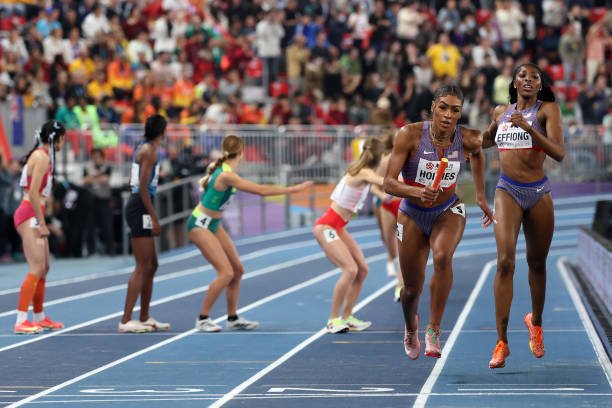
On March 27, 2025, Addis Ababa — Botswana’s Minister of Sports and Culture, Jacob Kelebeng, has voiced his enthusiasm after Botswana secured the hosting privileges for the 2026 World Athletics Relays.
The global athletics organization, World Athletics, has announced that Botswana, an African country, will be hosting the 2026 World Athletics Relays. This event is set for May 2nd and 3rd, 2026.
Kelebeng announced on his social media platform, celebrating the Botswana Athletics Association (BAA) for achieving this significant milestone.
It will mark the first occasion for Botswana to stage a major global sporting event at an advanced level across all sports, as well as being the inaugural hosting of the World Athletics Relays in African territory.
The positive announcement came from World Athletics President Sebastian Coe during the conclusion of the two-day council meeting held on Tuesday in Nanjing, China.
According to the World Athletics press release, the event is set to take place in Gaborone, the capital city of Botswana, from May 2 to May 3.
Hosting the global event signifies a significant milestone in Botswana’s rise to prominence in athletics and aligns with the nation’s 60th anniversary of independence in 2026.
Botswana’s men’s 4×400-meter relay squad stands out as a formidable presence in this discipline. They currently hold the title of world relays champions after claiming gold at the 2024 competition staged in the Bahamas. Following their victory, they secured an Olympic silver medal to conclude their competitive run. This team boasts three global relay awards: one bronze, one silver, and one gold.
Furthermore, the Botswana squad has initiated their preparation to retain their gold medal at the forthcoming 2025 World Athletics Relays scheduled for May in Guangzhou, China. The reigning Olympic 200m champion, Letsile Tebogo, is anticipated to continue as an integral member of the team.
Provided by Syndigate Media Inc. (
Syndigate.info
).
by admin | Mar 27, 2025 | africa, football players, politics, soccer, sports
Mohamed Salah and Achraf Hakimi, prominent figures in African football, seem poised to compete in the 2026 World Cup, with both Egypt and Morocco holding strong advantages in their respective qualification groups.
Nevertheless, current CAF Footballer of the Year Ademola Lookman and his compatriot Nigerian Victor Osimhen are battling to secure their places in the upcoming 48-nation worldwide tournament.
Drawing inspiration from Paris Saint-Germain defender Achraf Hakimi, Morocco leads Group E with a nine-point advantage over Niger, which is the largest gap within the nine groups.
The Liverpool player Salah has netted six goals in six qualifying matches, leading Egypt to secure the top spot in Group A, ahead of Burkina Faso by five points.
As the competition continues with four more rounds scheduled for September and October, dramatic upsets would be required to prevent Egypt and Morocco from securing one of the automatic berths as part of the nine African teams qualifying for the event in the United States, Canada, and Mexico.
The nine teams that finish first in their groups have secured their spots, while the victors from a smaller competition among the top-four second-place teams will compete for additional final berths through cross-continent playoff matches.
Nigeria ranks fourth in Group C after securing victory in just one out of their six games.
AFP Sports examines every group as the battle for qualification heats up.
Group A
Salah and Mahmoud Trezeghet have accounted for 11 out of 14 goals as Egypt appears poised to secure their third qualification. The nation was invited to participate in the 1934 World Cup, later securing spots in both the 1990 and 2018 championships.
Compared to their performance in World Cup qualifiers, Egypt has had more success in AFCON qualifying rounds, having won the Africa Cup of Nations a record seven times.
Group B
The leaders from the Democratic Republic of Congo, runner-up Senegal, and third-place Sudan are locked in a tight competition for first place, with only one point distinguishing their positions.
The Congolese are yet to face their two opponents. In the meantime, this situation might put Sudan at a disadvantage; being from a nation devastated by civil war, having three out of four matches played away from home presents significant challenges.
Group C
If South Africa is penalized by FIFA for playing ineligible player Teboho Mokoena during their recent victory against Lesotho, their current five-point advantage might be reduced to merely one point.
As South Africa contemplates the potential shift from a 2-0 win to a 3-0 defeat, they maintain that Lesotho failed to submit their formal complaint within the required 24 hours after the match.
Group D
Cape Verde leads Cameroon by just one point, with Cameroon set to travel to Praia in September.
Should the unexpected team referred to as the Blue Sharks manage to secure victory against Mauritius, followed by defeating the eight-time World Cup qualifying veterans Cameroon on their home turf, they would position themselves for a groundbreaking first appearance in history.
Group E
The timing of Morocco’s qualification seems more uncertain than whether they will qualify at all, as the North African nation’s representatives exhibit far superior skill compared to their competitors from Niger, Tanzania, and Zambia.
If Congo’s suspension for governmental intervention turns into disqualification, Morocco only needs one point from their next two games. However, should Congo be reinstated, Morocco would require four points from their remaining three matches.
Group F
A single point separates African champions Ivory Coast from Gabon, led by Pierre-Emerick Aubameyang, in their competition to top the group; they will face each other in September in Franceville.
The nation that comes in second place is expected to have another opportunity to secure qualification by ranking within the top four of the secondary positions.
Group G
Apart from a single setback—a defeat at home against Guinea—Algeria has thrived under the guidance of their Bosnian coach, Vladimir Petkovic.
So far, Mozambique has been the standout team among the also-rans and they remain in contention for one of the four playoff spots.
Group H
It’s difficult to picture Tunisia failing to secure first place and qualify for the seventh time, yet all eyes are on fourth-ranked Equatorial Guinea.
After FIFA overturned the ban on their key striker Emilio Nsue, the Equatorial Guinean team is pushing for the reinstatement of the six points they lost due to victories against Namibia and Liberia. This adjustment would elevate them to the second position.
Group I
Ghana bounced back from their surprising elimination for the 2025 AFCON by securing victories in five qualifier matches, which has put them ahead of Comoros with a three-point advantage.
The top-seeded Mali team showed significant improvement under the guidance of their Belgian coach, Tom Saintfiet. However, they unexpectedly drew with the Central African Republic recently, placing them six points behind.
Provided by Syndigate Media Inc. (
Syndigate.info
).

by admin | Mar 25, 2025 | africa, cities and towns, politics, public policy, urban and regional planning
On March 24, 2025, ENA reported from Addis Ababa that this year, the United Nations Economic Commission for Africa (ECA) plans to gather key players in Ethiopia, Ghana, Kenya, and Zimbabwe. The aim is to enhance urban living standards via UN-Habitat’s Quality of Life Initiative.
With rapid growth of African cities, guaranteeing that this urban expansion improves living conditions continues to be a critical issue, as stated in ECA’s communication to ENA.
The Quality of Life Initiative provides local governments with the necessary data and knowledge to guarantee that growth in cities enhances the well-being of all inhabitants.
At the heart of the Initiative lies the Quality of Life Index, providing local administrations with an overview of urban living conditions across nine key areas such as accessibility to essential services, housing quality, and economic prospects.
The Index merges worldwide metrics from the Sustainable Development Goals (SDGs) with specific goals set by city stakeholders, allowing every municipality to create a customized index that mirrors its distinct circumstances, beliefs, and preferences.
This method, grounded in evidence, allows local authorities to make focused decisions and assess their exact impact, as ECA explained further.
In response to requests from participating nations, ECA plans to gather various stakeholders such as policymakers, urban planners, representatives from national statistics offices, and community leaders over the next few months. The aim is to explore key aspects of a high-quality standard of living and pinpoint areas needing enhancement.
Atkeyelsh Persson, Head of ECA’s Urbanization and Development Section, stated that Ethiopia, Ghana, Kenya, and Zimbabwe are leading the way in Africa’s urban transformation,
The Quality of Life Initiative, spearheaded by UN-Habitat and supported by the Quality of Life Program, is an international endeavor aimed at revolutionizing city approaches to enhancing urban well-being. This initiative utilizes human-centric data to better grasp what individuals genuinely prioritize, thereby improving their quality of life.
It has been mentioned that The Initiative encourages cities to conduct an evaluation of their inhabitants’ standard of living with the aim of pinpointing crucial sectors for observation and enhancement.
Provided by Syndigate Media Inc. (
Syndigate.info
).
by admin | Mar 24, 2025 | africa, democracy, politics, politics and government, politics and law
Ex-President Chief Olusegun Obasanjo reiterated his doubts regarding the applicability of the Western democratic framework in Africa, asserting that such models do not align with the continent’s ethos.
However, he faced criticism from Catholic Bishop of Sokoto Diocese, Matthew Kukah, as well as former Secretary-General of the Commonwealth, Chief Emeka Anyaoku.
The conversation occurred during a colloquium convened to honor the 60th birthday of ex-Deputy Speaker of the House of Representatives, Honorable Emeka Ihedioha. This gathering was hosted at the Ladi Kwali Hall within the Abuja Intercontinental Hotel.
Chief Obasanjo contended that what is often called democracy mainly advantages a select few influential elites, thereby keeping most people on the periphery.
He stated: “Democracy was intended as a form of governance that serves all citizens, not merely a select group of individuals. However, where are we now? In my view, ever since we moved beyond Athenian democracy—where everyone had an equal voice and stake in decisions affecting them—the concept has evolved into representative democracy. Unfortunately, this new model hasn’t ensured equitable representation for every individual.”
Now, that kind of endurance isn’t what we’d call true democracy; thus, when discussing whether democracy can fail in Africa, one might say that African democracy has indeed faltered. But then, the question remains—why did it fail?
“It’s because it does not have any aspect of our culture, our way of life, what we stand for, what we believe: what sort of democracy brings you and you grab everything illegally, corruptly, and you say go to court? Even in the court, you cannot get justice.”
He advocated for a framework that would “incorporate Africa’s cultural and historical background to develop a governing system that genuinely benefits everyone.”
“It is, ‘I am because I can grab’ but what sort of democracy brings you and you grab everything and then illegally, corruptly and you say ‘go to court’ when you know that even in the court, you cannot get justice.
It’s not that democracy is failing; rather, it is fading away. If we want to prevent democracy from disappearing, we must consider it within the specific context and circumstances of Africa. I am hopeful that we can reach this point where the kind of democracy that brings tangible benefits will thrive here on our continent.
However, Kukah opposed this view, asserting that “democracy is an ongoing process; it provides you with the chance to attempt and, even if you falter, grants you a better opportunity to rectify past errors.”
Kukah additionally contended that democracy offers the chance to correct errors from previous times.
Democracy serves the welfare of the populace because it has dismantled the feudal form of governance.
The Catholic Bishop of Sokoto highlighted the importance of everyone striving to comprehend the political ideology of British philosopher John Locke, which is based on the concept of social contract.
The former Speaker of the House of Representatives and Senator, Aminu Tambuwal, stated that democracy is not faltering in Africa since it represents an evolving system.
When we adhere to the guidelines, democracy functions effectively; democracy is an ongoing endeavor.
Regarding the Senate resolution concerning the state of emergency in Rivers State, Senator Tambuwal reaffirmed his stance that the necessary two-thirds majority support from the Senate had not been achieved.
During President Olusegun Obasanjo’s tenure, when a state of emergency was imposed in certain states, the National Assembly validated these actions through the requisite two-thirds majority vote. Each member individually cast their ballot to endorse this measure.
The ex-Secretary General of the Commonwealth sounded an alert about the revival of military takeovers in Africa, emphasizing that this trend ought to concern everyone who backs democratic values.
The former Vice President Atiku characterized the honoree, Honorable Ihedioha, as a politician who is both concentrated and resolute.
Emeka and I have maintained this relationship, and up until now, he has proven to be exceptionally loyal, committed, and driven. Even though we occasionally found ourselves on opposing sides politically, we managed to sustain our connection, which speaks volumes about what kind of individual Emeka truly is.
When he informed me about this event, I nearly complained, saying ‘Emeka, it’s Ramadan, and these are the final ten nights when we typically stay awake at night instead of sleeping; we nap during the day.’ But he responded, ‘Boss, please try your best to attend,’ so I agreed, ‘Alright, I’ll manage it.’ And here we are now.
EXPLORE FURTHER ARTICLES FROM: NIGERIAN TRIBUNE
Get real-time news updates from Tribune Online! Follow us on WhatsApp for breaking news, exclusive stories and interviews, and much more. Join our WhatsApp Channel now
Provided by SyndiGate Media Inc.
Syndigate.info
).
Page 3 of 9«12345...»Last »


