by admin | Mar 24, 2025 | africa, government, international relations, politics, politics and government
Leaders from the East African Community (EAC) and the Southern African Development Community (SADC) will hold their second combined summit on Monday evening to discuss the security issues in eastern Democratic Republic of the Congo (DRC).
The virtual summit will be led jointly by President William Ruto, who holds the position of EAC Chairperson, and Zimbabwean President Emmerson Mnangagwa, who is the SADC Chairperson.
The leaders will discuss a report from the joint EAC-SADC ministerial meeting held on March 17 in Harare, Zimbabwe, as they look for answers to address the continuing unrest in the area.
The leaders from the East African Community (EAC) and the Southern African Development Community (SADC) will hold their second combined summit on March 24, 2025, to discuss the significant security issues in the Democratic Republic of the Congo (DRC), according to a portion of the announcement.
The Southern African Development Community (SADC) will be represented by its Double Troika consisting of Zimbabwe (the current chair), Angola (the previous chair), and Madagascar (the upcoming chair). Additionally, countries guiding the SADC Organ on Politics, Defence, and Security Affairs include Tanzania (current chair), Malawi (upcoming chair), and Zambia (previous chair).
South Africa, which contributes troops to the SADC mission in the DR Congo, will join the virtual meeting alongside the Democratic Republic of the Congo.
The gathering will be the second collaborative summit since President Ruto jointly chaired the first meeting in January, following an agreement made during the EAC Summit on January 26.
Although DRC President Félix Tshisekedi and Rwandan President Paul Kagame had both confirmed their presence at the gathering, Tshisekedi did not attend the meeting.
His spokesperson, Tina Salama, subsequently attributed the conflict to scheduling issues in her statement to the press.
Provided by Syndigate Media Inc. (
Syndigate.info
).
by admin | Mar 24, 2025 | africa, estate law and wills, estate planning, immigrants
Thousands of abandoned inheritances uncover hidden narratives of African immigration, prosperity, and familial connections forsaken.
Every year, thousands of individuals pass away in the UK without having a will or designating their closest relatives, including numerous Nigerians and other African nationals. As a result, their assets such as properties and savings often go unclaimed.
The United Kingdom government’s most recent update to their registry of abandoned estates lists more than 170 instances linked to people born in Africa, with Nigerian nationals representing a substantial number of these cases.
A Legacy Lost
For numerous immigrants, the UK transformed into a second homeland—an area brimming with opportunities enabling them to accumulate wealth, buy properties, and establish new lives.
Nevertheless, when someone passes away without a will, their possessions typically get categorized as “bona vacantia” (unowned property). This then places these assets under the guardianship of the Crown.
Often, families in Africa are not aware of these estates, resulting in a perpetual loss of assets.
Instances such as those of Adenike Adebiyi, who passed away in Hackney, London, in 2004, or Solomon Adekanmibi, who died in Colchester, Essex, in 2021, underscore the ramifications of passing without a will.
Without any known relatives or lost paperwork, these individuals’ assets stay unclaimed, and their life stories might be overlooked.
Why It Matters
This observation highlights a significant problem: numerous African households remain uninformed about their family members’ monetary circumstances overseas.
Frequently, migration interrupts communication, and lacking proper documentation means the assets accumulated abroad stay unreachable.
The loss extends beyond finances; it also runs deep culturally and emotionally. Estates left unclaimed embody countless family stories, ties, and the challenges faced by immigrants who established new lives across lands.
The Challenges
Lack of Awareness:
Many households in Nigeria and various other African nations do not know about their family members’ assets overseas or the process for claiming them.
Genealogical Gaps:
The data offered in official documents frequently lacks completeness. Take for instance the UK’s unclaimed estates list; numerous listings here do not include comprehensive family backgrounds or details about close relatives.
Cultural Hesitations:
Across numerous African societies, talking about death and drafting wills is seen as taboo, causing people to hesitate when it comes to organizing how their assets should be distributed.
A Call to Action
Governments across Africa, along with community groups and legal experts, should work on increasing public understanding of this matter.
Here are some actions that can be taken:
Promoting Will Creation: It’s essential for migrants living abroad to receive education on the significance of writing wills to safeguard their possessions.
Genetic Assistance: African families may receive support in locating undiscovered inheritances via collaborations at either a local or an international level.
Public Education Initiatives: Both social and conventional media outlets can emphasize the significance of estate planning and provide families with accessible resources.
How to Verify the List
The British government keeps an Unclaimed Estates List available to the public, which gets refreshed every day.
Family members have the option to browse through the list using criteria such as surname, city of birth, or additional identifying details to explore possible claims.
Final Thoughts
To numerous Nigerians and African individuals residing in the UK, their abandoned estates signify not only financial assets but also narratives of migration, resilience, and self-identity.
By tackling this increasing concern, families can restore their traditions, ensuring that the legacy of those who moved as part of the diaspora will not be lost.
This is the most recent daily update for March 24, 2025. Please review the following list.
HERE
.
Provided by SyndiGate Media Inc.
Syndigate.info
).
by admin | Mar 24, 2025 | africa, climate, climatology, environmental science, environmentalism
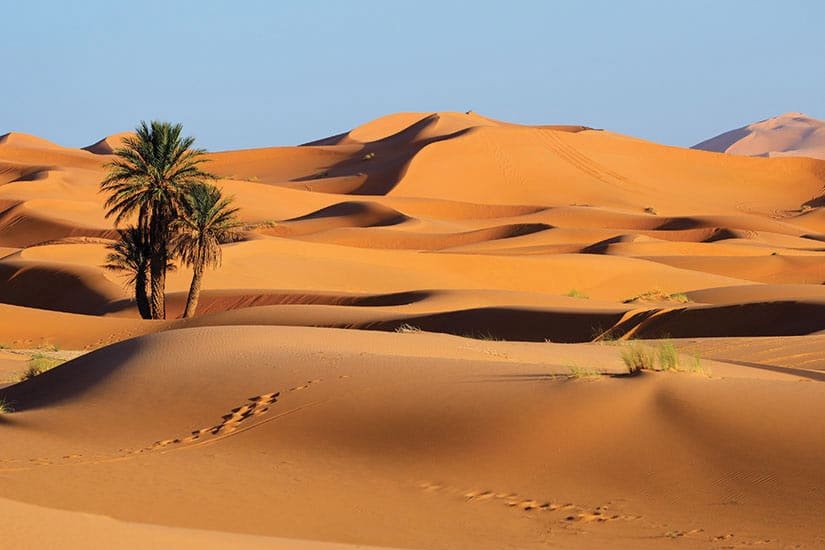
Research conducted on Lake Sebkha el Melah in Algeria associates the replenishment of old Sahara lakes with atmospheric patterns from Morocco, particularly storm systems originating over the Atlantic Ocean. This study emphasizes that intense rainfalls, not an overall rise in rainfall levels, primarily drive these refilling occurrences.
The Sahara Desert was not always as dry and barren as it is today. Experts suggest that in earlier times, it might have had more moisture and vegetation, including actual lake systems. To gain insights into this previously moister era, researchers have been examining ancient lakes in Algeria along with climate records from the west coast of Morocco.
In an earlier study released in March published in
Hydrology and Earth System Sciences
Researchers from Switzerland and Israel aimed to connect contemporary hydrological occurrences with historical climate conditions in the Sahara region.
The research team concentrated their efforts on Sebkha el Melah lake located in northwestern Algeria, which stands as proof of the Sahara’s formerly moister history. This investigation seeks to uncover additional details regarding the timing and reasons behind the filling of lakes within the Sahara Desert, with this particular body of water serving as a primary case study.
The research aimed at achieving this objective by analyzing both heavy precipitation events (HPEs) and lake-filling episodes (LFEs). Heavy precipitation events involve significant rainfall occurring over an area, whereas lake-filling episodes denote times when bodies of water become full due to inflow. To accomplish their analysis, scientists utilized satellite imagery to monitor changes in the lake’s water level. They then integrated these observations with meteorological information to identify the atmospheric circumstances responsible for intense rains and subsequent lake overflow.
Furthermore, they utilized information from weather models (“weather reanalysis”) to identify the origin of moisture in the precipitation and understand how these atmospheric systems evolve.
The research connects the refilling of old lakes to climatic patterns in Morocco. It shows that heavy rainfalls stemming from the Atlantic Ocean correlate with recent instances of lake replenishment in the northwestern part of the Sahara Desert. The study points out that low-level cyclones—big, swirling storms developing offshore near Morocco—are crucial elements in this process. Additionally, these cyclones interact with high-altitude air currents and tropical humidity as they travel across Morocco towards Algeria, leading to optimal circumstances for lakes to refill during periods of precipitation.
The research indicates that moisture movement includes the interplay between extratropical cyclones close to the North African Atlantic shoreline and high-altitude weather systems, leading to an environment favorable for intense precipitation. An essential aspect of these occurrences is what’s termed the “recycled domino effect,” wherein water vapor gets increasingly moved and intensified across the Sahara prior to arriving at the lake’s catchment area.
The research indicates that the accumulation of water in lakes within the Sahara is more strongly connected to the severity and occurrence of particular meteorological phenomena, such as intense downpours, rather than an overarching rise in general precipitation levels.
by admin | Mar 24, 2025 | africa, armed forces, diplomacy and diplomats, military, warfare
Upon arriving in Rwanda and feeling the warmth of the welcome he experienced, ‘Major’ Gilbert Ndayambaje stated that the genocidal group FDLR propagated falsehoods to control its members. Among the 14 former militia fighters surrendered to Rwandan officials by the AFC/M23 rebels were Major Ndayambaje and Brigadier General Ezechiel Gakwerere, a high-ranking leader within the DR Congo-based FDLR genocidal organization, on March 1st. Gakwerere played a significant role in orchestrating the Genocide against the Tutsis.
Operating in DR Congo for thirty years, the FDLR is a United Nations-designated militant faction established primarily by individuals responsible for the 1994 genocide targeting ethnic Tutsis.
“The hopelessness I carried disappeared once we crossed the border at La Corniche One-Stop Border Post due mainly to the reception provided by the government,” Ndayambaje explained. “I immediately sensed acceptance and tranquility upon seeing what an evolved nation this was compared to the tales spun by these groups.”
Ndayambaje disclosed during an interview with The New Times that he joined the genocidal force under duress in 1998 after fleeing from infiltration threats posed by the Abacengezi group which coerced him into service. Having endured hardship in the forests of DR Congo—where escaping meant almost certain peril—he confessed that starting circa 2010, he yearned intensely for repatriation. His spouse along with their five offspring relocated to Rwanda in 2012.
Following reports indicating that M23 seized Goma and caught up with Gakwerere, Ndayambaje conceived a plan to make it across the Rwandan frontier beginning from Sake area where he fought alongside FARDC troops until then. Unfamiliar with details regarding Goma town, Ndayambaje ventured into a local household seeking direction assistance; instead encountering three M23 personnel accompanied by kindly hosts offering respite indoors despite his current attire denoting allegiance elsewhere.
He highlighted instances illustrating maltreatment meted out towards FDLR recruits by superiors linked either directly or indirectly via collaboration networks extending beyond national borders initially set ablaze amidst conflict dynamics spanning decades prior.
In sharp juxtaposition however stands treatment afforded participants presently enrolled within rehabilitation programs administered by the RDFD commission located in Mutobo district, specifically designed aiding transition phases facilitating eventual social integration efforts following successful decommissioning processes concluded successfully thus far involving thousands beneficiaries since inception nearly twenty-two years ago.
“Life here couldn’t be better—we receive essential provisions like toiletries garments sustenance plus structured vocational instruction empowering readiness levels required transitioning smoothly back into civilian roles seamlessly integrated societies again.”
Provided by Syndigate Media Inc. (
Syndigate.info
).
by admin | Mar 24, 2025 | africa, journalism, news, news media, politics
The dismantling of Voice of America signals a concerning trend regarding press freedom. However, pro-democracy media initiatives throughout Africa initially experienced these challenges when the White House reduced USAID financing, causing numerous media organizations to struggle.
When the White House enacted an executive order aimed at dismantling pro-democracy media organizations such as Voice of America and Radio Free Europe/Radio Liberty, it sent shockwaves through regions ranging from Prague to Addis Ababa instead of broadcasting radio signals.
“Over the last four decades, VOA has served as a primary source of information regarding Ethiopia’s critical political and societal matters. Should the radio station cease operations, significant backlash is inevitable,” remarks Endalekachew Haile Michael, a U.S.-based media analyst, further stating that
Trump administration’s
A stance against media institutions erodes the United States’ “exemplary standing in terms of press freedom globally.”
For audiences such as Alemayehu Geberheywet, VOA served not only as a source for daily news but also as a platform broadcasting numerous educational programs. Ever since the start of the socialist regime in Ethiopia, VOA has been considered the voice of the people.
The Voice of America started broadcasting in 1942 primarily to combat Nazi propaganda. Later, during the Cold War, it shifted focus to oppose communist ideologies. It extended its reach into Eastern Europe, Asia, and Africa. In the period following the Cold War, VOA gained recognition for providing credible information in nations where media freedoms were limited.
In reaction to the reductions implemented by the US,
Broadcasters such as LIFEHACK from Europe and France Médias Monde (FMM)
There have been calls for initiatives to address the gap created by the diminishing U.S.-funded global radio and television communications.
U.S. cuts have already jolted Africa’s media scene.
But for African media, the gutting of the VOA, which operated across 13 African nations, came as just the latest blow to pro-democracy media.
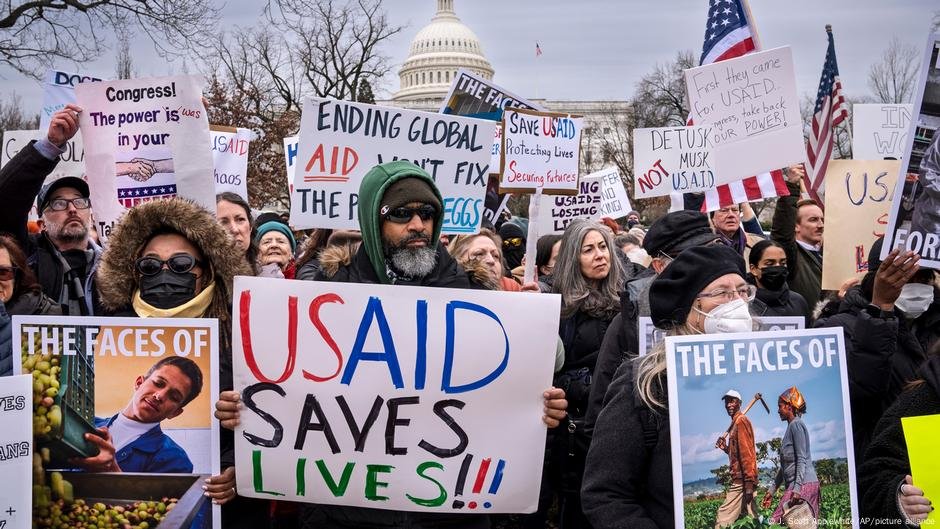
Earlier, reductions in funding to USAID (United States Agency for International Development) and other international aid initiatives—which operated across most African countries and extended their support beyond just humanitarian efforts—had indirect effects on various aspects of the media sector, including training programs, fact-checking units, and publishing activities. In total, in 2024, out of $41 billion allocated to Sub-Saharan Africa, the U.S. contributed $12.7 billion. Additionally, African countries received benefits from globally funded American programs aimed at combating diseases such as HIV/AIDS.
Nancy Booker, a journalism and media communications professor at the Nairobi campus of Aga Khan University, shared with LIFEHACK: “For an extended period, numerous community-driven or emerging African media outlets have depended significantly on financial support from donors. Currently, we are witnessing considerable instability.”
Simon Allison, from the South African independent outlet The Continent—which wasn’t impacted by the reduction in U.S. assistance—characterized the scenario as an “extinction-level event for numerous media organizations.”
“Even those that do not depend on U.S. assistance are finding it tough, particularly in South Africa. In my view, no media outlet is flourishing or generating substantial profits,” he stated to LIFEHACK.
Several media sector insiders talked to LIFEHACK anonymously due to the ongoing evaluation of their program financing. Nancy Booker highlighted that the funding reductions have had repercussions extending to initiatives outside the purview of the US government.
“Not just the national agencies, but also our bilateral cooperation efforts face increasing pressure to cease their activities,” she stated to LIFEHACK.
Not long ago, The Namibian, a local newspaper, received communication from the U.S. Embassy located in Windhoek concerning their ongoing advertisements within the paper. According to reports, the embassy reportedly reached out to inquire whether The Namibian has ties with organizations such as the Associated Press, The New York Times, and Reuters—publications that were once frequently condemned by former President Donald Trump.
The leader of a Tanzanian media outlet, requesting confidentiality, mentioned that financial support for media operations is merely part of a broader system supported by donors that has suddenly collapsed.
As it turns out, this isn’t an isolated incident,” they shared with LIFEHACK.
When the largest global financier announces that they are no longer concerned with issues related to climate or the environment, as well as topics like inclusivity, diversity, and equality, it establishes the priorities for other groups.
A significant concern has also been the loss of jobs for journalists, their families, and enterprises associated with NGOs funded by donors.
“Across many African nations, individuals who achieve prosperity within their communities often discover that they must support between 50 to 100 people. This can happen because organizations shut down and employees lose jobs thought to be stable,” they explained to LIFEHACK.
A strategic mistake?
The disbandment of the Voice of America along with reductions in funding for aid programs that backed independent media outlets has faced severe criticism both within the United States and across the continent. Regarding Ethiopian journalism, Endalekachew Haile Michael pointed out that the initial impact would be “the loss of fact-driven reporting.” He also highlighted another issue: the U.S. has willingly surrendered its soft power influence. As a result, nations like China, Russia, and those from the Middle East are now advancing their own media platforms.
Although the White House defended the action by stating that taxpayers were no longer footing the bill for extreme ideologies, internal opponents criticized the reductions as being perilous.
press freedom
, and a tactical error.
Democratic Congressman Raja Krishnamoorthi stated, “The only individuals celebrating this are opponents and autocrats globally, particularly those with non-existent press freedoms.”

The state-owned newspaper Global Times published in an opinion piece, “the exclusive control over information by certain conventional Western media outlets is crumbling.”
Trump frequently criticizes media reports about himself and has expressed doubt over financing the Voice of America due to its “firewall,” which guarantees its editorial autonomy. Nancy Booker from Nairobi warns that dismissing critical press outlets within the U.S. could set an example for authorities elsewhere who might disregard unfavorable news coverage in their own countries.
She stated to LIFEHACK, ‘The United States has served as an example for numerous aspects, including governance.’
A few of our leaders might believe that this is how we address the media and journalism.
The way forward
For many years, the availability of funds from donors contributed significantly to enhancing journalism capabilities in areas such as training, verification, and human rights coverage.
Allison from South Africa stated to LIFEHACK: “While it’s generally a positive notion for everyone to reduce dependency on donor funding, the abrupt nature of the U.S. decision surprised numerous media outlets.”
There isn’t much room for alternative solutions due to the urgent requirement for rapid adaptations, compounded by local and national governments lacking sufficient funds.
Allison stated that they are focusing on expanding local philanthropy efforts, putting more effort into persuading advertisers of the importance of maintaining their business relationships with independent media outlets and presenting them with ethical reasons for doing so.
Certain observers like Allison and Nancy Booker think that even though there might be present shocks, these reductions have the potential to ignite an initiative for African media financing that doesn’t depend on external donations.
“Allison suggests that if we can convince viewers we deserve financial support, we might achieve a far more stable future,” he states.
Author: Cai Nebe
by admin | Mar 24, 2025 | africa, kenya, nigeria, south africa, world
The continent of Africa boasts several of the planet’s quickest-expanding populations. Rich with varied cultures, economic systems, and terrains, certain countries within this region distinguish themselves due to their substantial population sizes. In this piece, we will delve into the ten most populated African countries as per data provided by Worldometer.
1. Nigeria
Leading this ranking is Nigeria, often referred to as the giant of Africa, which boasts a population of 235,926,762 people as of Q1 2025.
In 2025, Nigeria’s projected population for mid-year is around 237,527,782 individuals, which represents approximately 2.89% of the global populace.
2. Ethiopia
The next entry on the list is Ethiopia, an East African nation with a present population of 134,339,653 according to Worldometer’s analysis of recent UN statistics.
The projected population for Ethiopia in 2025 is approximately 135,472,051 people as of mid-year, representing 1.65% of the global population.
3. Egypt
The Arab Republic of Egypt boasts a current population of 117,765,537. Situated at the northeastern edge of Africa, this nation is anticipated to reach an estimated populace of around 118,365,995 individuals by mid-2025.
African countries should join forces for progress and food security, asserts Tunisian ambassador; meanwhile, Labor calls for building up industrial capabilities within Africa.
Egypt’s populace makes up 1.44% of the global population.
4. DR Congo
A highly populated African nation is the Democratic Republic of the Congo. As the second-largest country in Africa by land area, DR Congo currently boasts a population of 111,644,570.
The projected population for DR Congo in 2025 is anticipated to reach approximately 112,832,473 individuals by mid-year. This number represents about 1.37% of the global population.
5. Tanzania
Tanzania, which boasts some of the world’s most prized national parks and game reserves, has a populace of 69,884,870 inhabitants.
The projected population of Tanzania for mid-2025 is approximately 70,545,865 inhabitants.
Tanzania’s populace makes up 0.86% of the global population.
6. South Africa
In this ranking, South Africa holds the sixth position with a populace of 64,505,178 individuals. By mid-2025, it is projected that South Africa will have around 64,747,319 inhabitants, which constitutes roughly 0.79% of Earth’s total population.
7. Kenya
Kenya, a significant nation in Eastern Africa, boasts a population of 57,169,886 as per Worldometer data.
Kenya’s population was approximately 57,532,493 people as of mid-year and represents about 0.7% of the global population.
8. Sudan
Next up is Sudan, a country that boasts one of Africa’s earliest and most sophisticated civilizations—the ancient Nubian culture—boasting a present-day population of 51,260,250 inhabitants.
The population of Sudan, making up 0.63% of the global populace, is approximately 51,662,147 people midway through the year.
9. Uganda
Uganda, often referred to as the Pearl of Africa, takes the ninth spot on this ranking with a populace totaling 50,929,621 inhabitants.
It is anticipated that Uganda’s population will reach approximately 51,384,894 people by the end of the year. This number represents 0.62% of the global population.
10. Algeria
Finishing off the list is the People’s Democratic Republic of Algeria, which has a population of 47,231,794.
It is anticipated that Algeria’s population will increase to approximately 47,435,312 individuals by the year 2025, representing 0.58% of the global populace at present.
Morocco, Angola, Mozambique, Ghana, Madagascar, and Ivory Coast are additional heavily populated countries in Africa.
Get real-time news updates from Tribune Online! Follow us on WhatsApp for breaking news, exclusive stories and interviews, and much more. Join our WhatsApp Channel now
Tags: African Countries Supplied by SyndiGate Media Inc. (
Syndigate.info
).
Page 7 of 9« First«...56789»


