by admin | Apr 8, 2025 | disaster management, disaster preparedness, disasters, natural disasters, news
Thailand’s natural disaster early warning and alert system encounters significant hurdles following experts attributing a delayed reaction to the earthquake in Myanmar on March 28, which caused powerful shaking throughout Thailand, to inadequate coordination.
Seree Supratid, director of the Climate Change and Disaster Centre at Rangsit University, says he was appointed by the Interior Minister as an expert adviser at the National Disaster Warning Centre (NDWC) after the earthquake.
During an interview with the Bangkok Post, Mr. Seree mentioned that he had also been involved with the center back in 2005 when it was first established.
Bureaucratic loopholes
After coming back, I’ve already identified numerous gaps, especially within our operations involving collaborating organizations.
“Collectively, we function akin to a series circuit [where all elements are linked sequentially to create a solitary pathway for electrical current]… Data is transferred from one organization to the next as time progresses,” he stated.
He proposed that it might be more efficient if the agencies could function akin to contemporary computer circuits, operating concurrently without needing to await one another.
Specifically, the NDWC ought not to await information from other agencies. If flooding occurs, it shouldn’t rely on data from the Meteorological Department; similarly, during other natural events causing disorder, it shouldn’t depend on the DDPM.
Mr. Seree mentioned that the NDWS needs to seek out information independently and cross-reference it with other agencies prior to releasing warnings.
He stated that during the earthquake on March 28, the text messages alerting people about the quake were significantly delayed in being dispatched.
Passakorn Boonyalak, who serves as the director-general of the DDPM, mentioned earlier that the department had submitted the initial set of alerts to the National Broadcasting and Telecommunications Commission (NBTC) for distribution at 2:42 pm. This was shortly after an earthquake occurred at 1:20 pm on March 28.
The notification assured recipients that they were free to go back into structures to retrieve their possessions.
Trairat Wiriyasirikul, who serves as the interim secretary-general of the NBTC, mentioned that the notification was sent out at 2:44 pm to approximately 10 million mobile phone numbers. The distribution occurred gradually, with each batch containing 200,000 contacts, covering areas within Bangkok and its adjacent three provinces.
He further stated that the identical message was subsequently resent to recipients across all 76 provinces.
However, Prime Minister Paetongtarn Shinawatra stated during a gathering on March 29 that it was excessively time-consuming to disseminate the information. She instructed both the DDPM and NBTC to devise a method for surpassing the 200,000-per-send restriction as efforts commence to enhance the system.
She encouraged them to increase this capability to one million recipients per broadcast as they awaited the complete rollout of the NBTC’s cell broadcast technology.
Mr. Seree stated that the NDWC now has the legal duty to be the first entity to release official natural disaster alerts.
In case of another seismic event, the Meteorological Department will inform the NDWC, which will then utilize this data to release warnings and communicate the necessary steps individuals should follow along with safe locations to head towards.
He stated that during this timeframe, the Meteorological Department requires additional time to analyze more detailed aspects of the earthquake’s intensity and determine which areas might be impacted before they can forward this supplementary data to the NDWC.
Cell broadcast service system
“When the cell broadcast service [CBS] system is rolled out, it will enable the NDWC to issue warnings directly to individuals in impacted regions through cellular networks,” he explained, noting that full implementation of the CBS system is anticipated by August 1st.
The CBS system enables the distribution of urgent weather and natural disaster alerts through mobile phone notifications.
He mentioned that initially, the media might get details regarding the location and intensity of an earthquake from the Meteorological Department.
Nevertheless, it requires some time to compute and analyze the impact levels, after which the NDWC will release warnings through the CBS system and keep providing periodic updates until the situation improves, he stated.
He likewise highlighted the importance of enhancing the current disaster alert mechanism to guarantee a more rapid reaction during an emergency.
The NBTC plans to work together with television networks and radio stations to issue warnings through the TV Pool system, he stated, noting that no such alert was disseminated on March 28.
Free inspections
The president of the Thailand Structural Engineers Association, Amorn Pimanmas, stated that owners and inhabitants of tall buildings in Bangkok ought to request an inspection from structural engineers following the earthquake to alleviate their worries about safety.
As things stand, Bangkok boasts over 1,000 structures exceeding 23 meters or eight stories tall. Following the March 28 earthquake, numerous individuals have grown worried regarding the structural integrity of these buildings, he mentioned.
People can get assistance through Traffy Fondue, a complaint mechanism managed by the Bangkok Metropolitan Administration (BMA). Additionally, engineers who offer their services for free will inspect structures after an earthquake and provide guidance on making buildings more resistant to earthquakes at no cost.
Approximately 1,000 engineers are prepared to provide assistance at no cost; however, they do not have the authority to issue certifications for safety inspections.
“If property owners require certifications, they might need to engage private firms to examine their structures,” Mr Amorn stated.
He mentioned that a team of Thai investigators has created instruments for gauging structural movements. Currently, one such device is set up at the Thani Nopparat Building within City Hall’s Din Daeng district, while another is positioned at a facility in the Northern region.
Mr. Amorn stated that it is still not possible to accurately forecast precisely where and when an earthquake might strike beforehand. Additionally, issuing prompt alerts for shallow quakes similar to the one that hit Myanmar on March 28, which had a depth of merely 10 kilometers, continues to be challenging.
Scientists indicate that smaller earthquakes transmit rapidly and generally cause greater damage compared to those occurring at deeper depths. Waves generated by deep-seated seismic activities move slower through layers of rock, diminishing in intensity as they ascend towards the earth’s surface.
“Bangkok is approximately 1,000 kilometers distant from the epicenter located in Myanmar. However, vibrations were experienced in Thailand. Issuing prompt alerts was challenging because we required time to analyze the data,” Mr Amorn stated.
Itthaboon Onwongsa, the deputy secretary-general of the Thailand Consumers’ Council (TCC), stated that the organization has been advocating for the adoption of the CBS system ever since the tragic event at Siam Paragon in October 2023. This incident involved a troubled 14-year-old student who took the lives of three individuals and wounded multiple others.
He stated that delaying the installation of the system any longer would be unwise, and emphasized that it should also be tailored to meet the requirements of visually impaired and hearing-impaired individuals.
He stated that during natural disasters, the government must not abandon individuals to fend for themselves. Instead, it has an obligation to offer citizens essential information and prompt guidance.
Provided by Syndigate Media Inc. (
Syndigate.info
).
by admin | Apr 7, 2025 | disasters, earthquakes, emergency management, natural disasters, news
A strong 7.7-magnitude quake hit central Myanmar on Friday, leading to considerable disturbances in local transport. This disruption impacted air travel as well as railway services not only within Myanmar but also extending into Thailand.
The number of fatalities resulting from the large earthquake in Myanmar has exceeded 1,000, as reported by the governing military regime on Saturday. Additionally, over 2,000 people have been recorded as injured.
AFP.
Here are five points travelers should keep in mind:
Thailand airports are operational
Thailand’s major airports are operating normally, with most arriving and departing flights facing only slight disruptions, as reported.
The Independent.
|
|
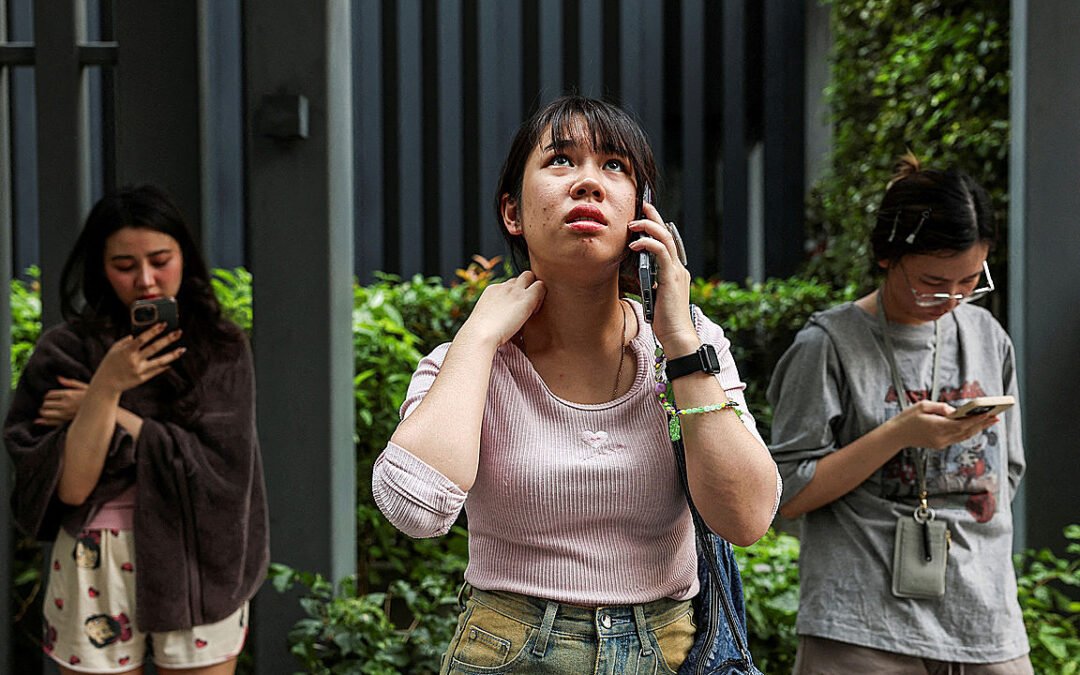
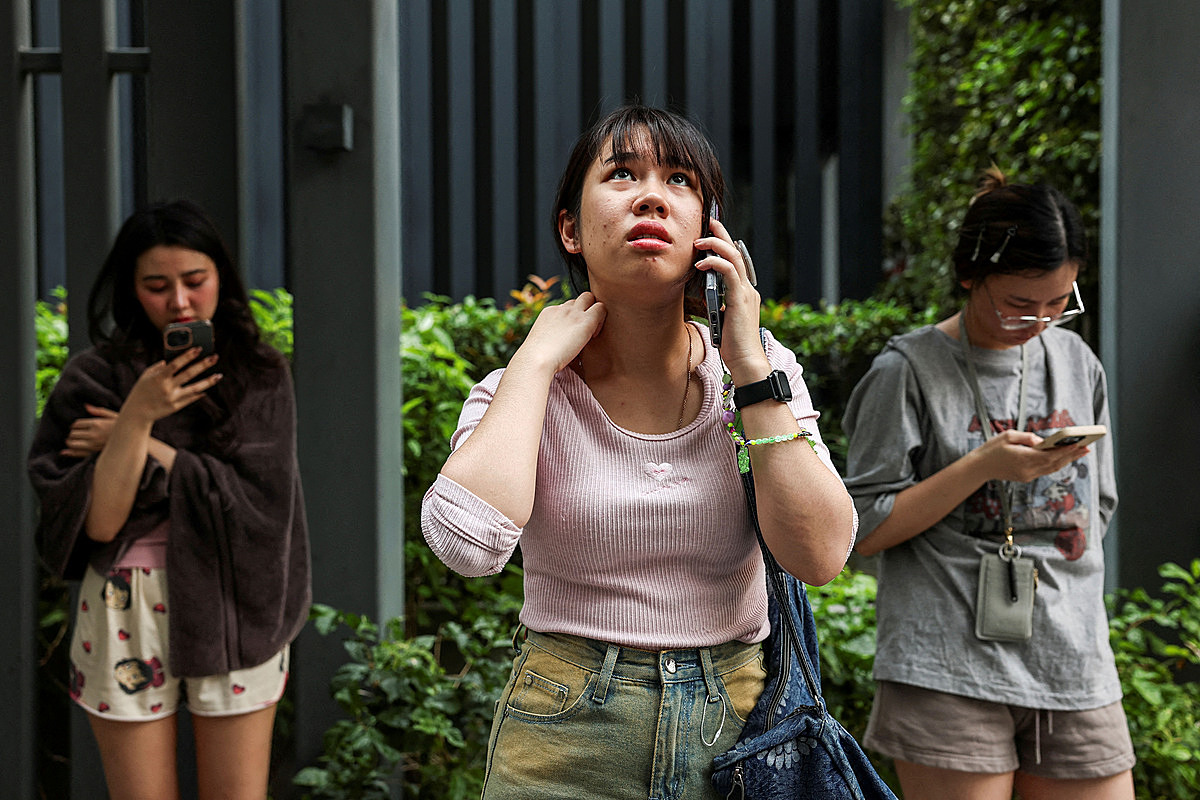
In Bangkok, women were seen using their phones as thousands of individuals emerged from structures following the quakes. The image was captured by Reuters.
|
On Friday, Airports of Thailand, which manages the nation’s airports, stated that they have finished inspecting six of these facilities.
This ensured that the constructional robustness of their structures and air transport facilities complies with safety regulations.
By 2:30 p.m., all airports had resumed normal operations.
The inspection covered Suvarnabhumi Airport, Don Mueang Airport, Chiang Mai Airport, Mae Fah Luang Chiang Rai Airport, Phuket Airport, as well as Hat Yai Airport.
According to FlightRadar’s flight monitoring information, most arrivals at Suvarnabhumi Airport, which serves as Bangkok’s main gateway, occur on time. Delays are infrequent, and cancellations or diversions happen quite rarely too.
Concerning departures, the majority of flights have already taken off; however, a few have experienced delays lasting more than a couple of hours.
Suvarnabhumai Airport informed travelers about the recent earthquake and recommended checking for traffic updates prior to departure. They also suggested allowing extra travel time to avoid missing their flights.
The airport recommends getting there at least three hours ahead of international flights and two hours in advance for domestic ones.
Railway connections in Bangkok have been halted.
All metropolitan railway services were halted, and traffic jammed the streets in Thailand’s main city of Bangkok, as reported.
Reuters
.
Worapa Angkhisirisap, who leads the Tourism Authority of Thailand office in London, stated: “The MRT Blue Line and Purple Line services are currently halted.”
The BTS Skytrain has also been halted temporarily as per the emergency procedures.
Moreover, the railway service heading towards Rangsit located in the north of Bangkok might face some delays because of continuous inspections being carried out on the raised sections of track.
Mandalay Airport in Myanmar has been closed down.
Mandalay International Airport, located near the earthquake’s epicenter, has been closed after suffering structural damage.
It is reported that the airport’s air traffic control tower has fallen down, resulting in at least five fatalities.
Videos from social media showed travelers at Mandalay Airport crouching and looking for cover on the runway as an earthquake struck.
|
|
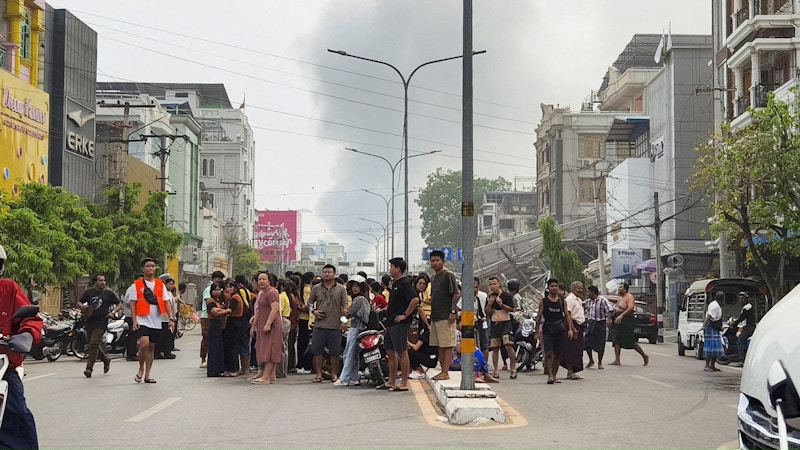
Following a powerful earthquake, people congregate on the street in Mandalay, Myanmar, on March 28, 2025. The image was captured by Reuters.
|
Aftershock warnings
Following the earthquake, the U.K.’s Foreign, Commonwealth and Development Office (FCDO) has updated its travel advice for Thailand.
“There may be aftershocks. If you are in the area or planning to travel there, follow the advice of the local authorities or your tour operator and monitor local media,” its advice states.
Regarding Myanmar, the FCDO mentioned that the earthquake’s epicenter is located in the Sagaing region close to Mandalay City; however, effects could reach other areas as well.
The Mandalay airport is said to be closed, with several significant aftershocks possible. Should you be in the region or considering travel there, adhere to guidance from local authorities and stay updated through local news sources.
Refunds not guaranteed
As the Foreign Office hasn’t issued guidance against unnecessary travel because of the demonstrations, there aren’t specific arrangements allowing you to get a complete refund if you decide to cancel your trip.
The cancellation terms will depend on the policy of each respective holiday supplier.
Simon Calder,
The Independent’s
The travel correspondent clarified: “When the Foreign Office issues a warning against traveling to certain areas, it mandates tour operators such as Tui, Jet2, and easyJet Holidays to promptly repatriate vacationers. This is why an outright ‘do-not-travel’ recommendation is extremely uncommon.”
There is no obligation for companies to refund bookings even if customers cancel, and customers will not be able to claim travel insurance due to safety concerns unless the Foreign Office advice changes.
by admin | Apr 2, 2025 | architecture, buildings, disasters, safety, seismology
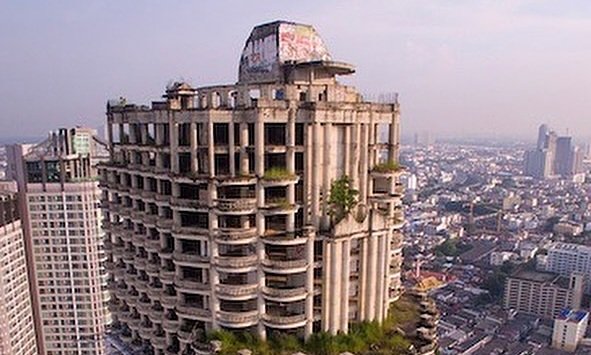
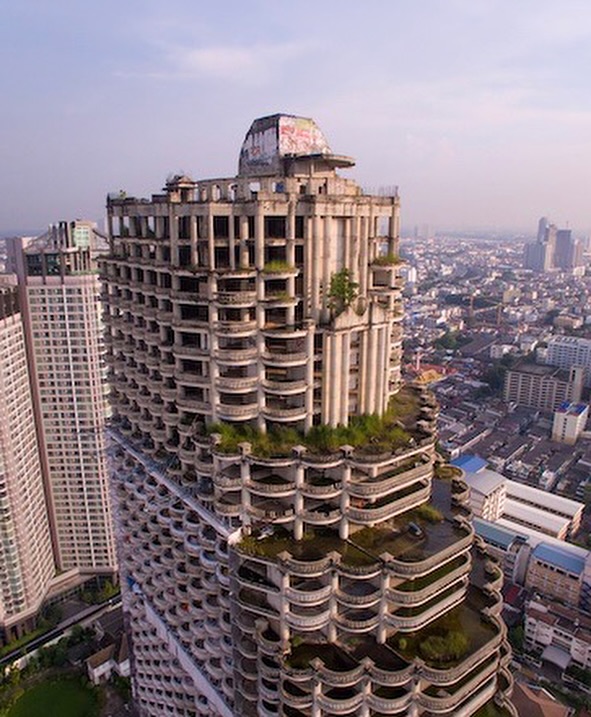
The 49-story Sathorn Unique Tower, an abandoned structure in Bangkok, Thailand, gained widespread attention online when it surprisingly withstood a massive 7.7 magnitude earthquake in Myanmar, which rattled much of Southeast Asia.
The most powerful earthquake Myanmar had experienced in a century hit on March 28, causing vibrations felt all the way in Bangkok, which was approximately 1,000 kilometers away from the epicenter. This seismic event led to the collapse of an unfinished high-rise structure and jolted numerous buildings across the city.
Nonetheless, the Sathorn Unique Tower, situated in Bangkok’s Sathon District and deserted for over three decades, continued to stand tall, baffling numerous people.
Many people on social media posted pictures of the edifice, raising doubts about how this derelict construction managed to survive the intense seismic event.
|
|
An image posted online depicts a sight of the Sathorn Unique Tower, a 49-story structure located in Bangkok.
|
A user posted on Reddit about their recent visit to Bangkok with their partner over the past few weeks. They expressed being captivated upon their initial sightseeing experience, stating they were very interested in learning more,
I was curious about that particular building. It seems as though they might consider retrofitting it before putting it up for sale. Hasn’t anything been done with it yet?
Initially envisioned in the 1990s as an upscale mixed-use development, the building was intended to stand at 49 stories tall with spectacular vistas of the Chao Phraya River. Nonetheless, when construction reached approximately half-way point, the Asian financial crisis struck in 1997, severely impacting Thailand’s economy.
The Telegraph
reported.
Numerous property developments, such as the tower, were left unfinished because of insufficient financial backing.
In its unfinished condition and ghostly, skeletal look, the structure earned the nickname “Ghost Tower.” Its haunting charm makes it a perfect spot for adventurous travelers seeking thrills.
A tourist shared on
Travelfreak
He paid 200 baht (US$5.84) to a security guard for permission to enter for 15 minutes.
Travel vlogger Jack Morris, boasting an impressive following of 2.4 million on Instagram, explored the highest level of the Sathorn tower back in 2015.
He penned, “Each time I visit Bangkok, I find myself scaling this deserted 49-story structure. To me, it offers the finest vista of the metropolis. The sense of liberation I experience here is unparalleled; it’s an emotion absent from those observatories atop skyscrapers filled with bars. It goes by the nickname ‘Ghost Tower’ among locals due to rumors suggesting it might be cursed.”

by admin | Apr 2, 2025 | boats and ships, cruises, disasters, incident, news
Travelers on a cruise ship faced enormous 40-foot waves while navigating the turbulent seas of the infamous region.
Drake
Passage.
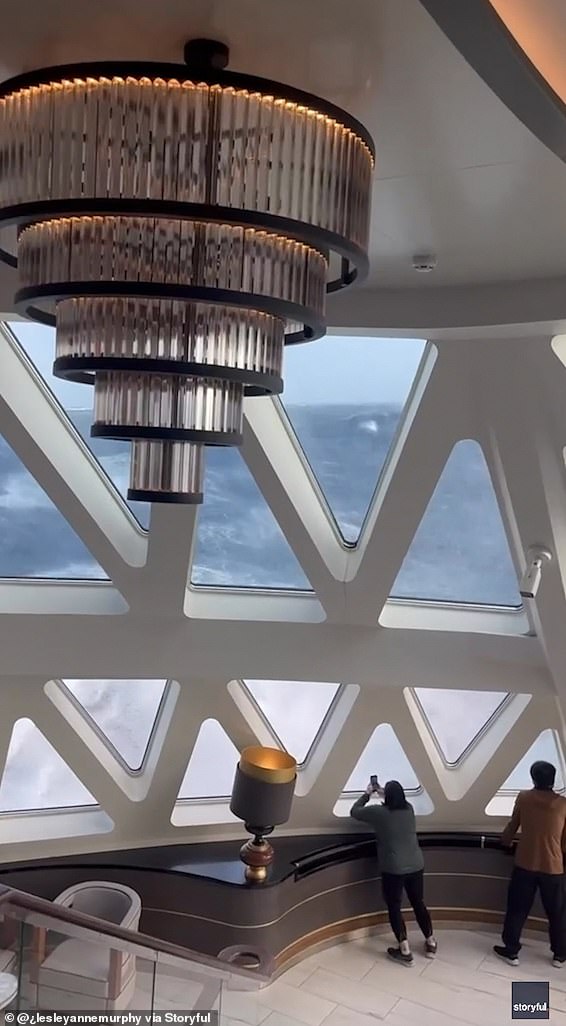
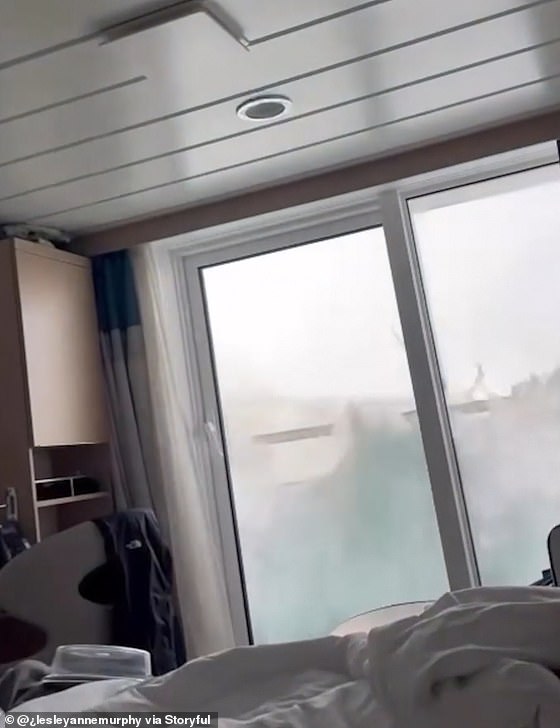
Lesley Ann Murphy, a travel blogger who was onboard Quark Expeditions’ Ocean Explorer cruise ship, recorded breathtaking video of the ship navigating through massive waves and surging waters.
Murphy gauged that some of the waves reached heights of 30 to 40 feet, with her footage capturing their immense size as they loomed high above the vessel and crashed against the glazed windows.
In her video, which was uploaded to
Instagram
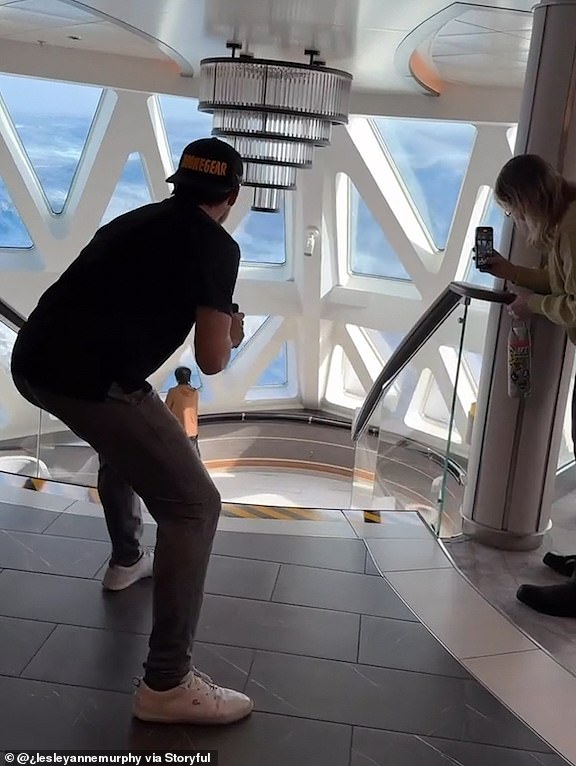
, multiple passengers were spotted congregating at the big windows as the azure waves surged upward before harshly colliding with the observation deck.
The frothy white waves slammed into the sides, causing the vessel to sway violently from side to side as passengers stumbled and toppled over.
At once, a cluster of travelers appeared to dash back and forth as the vessel rocked with the currents, while a television could be observed swinging from the wall because of the wave impacts.
A single individual confronted the daunting waves and tried to maintain his equilibrium on the deck of the ship akin to surfing as a massive wave loomed ahead of the vessel.
In her video description, Murphy characterized the journey through the seas situated between the southernmost point of the South American continent and Antarctica as a ’48-hour thrill ride.’
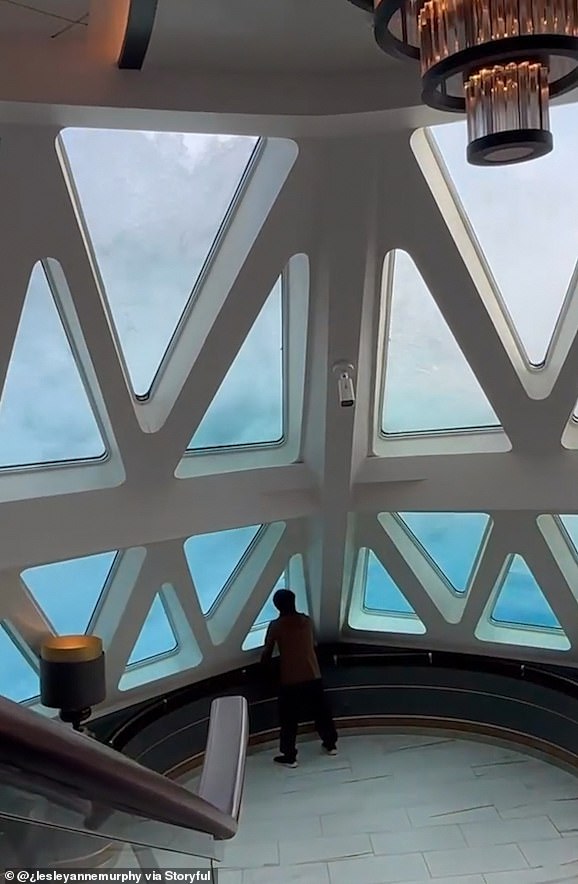


“I’m delighted to share that we made it through not just one but two challenging Drake shakes! To explain, the Drake Passage is located between the southernmost point of Argentina and Antarctica. This stretch of ocean is well-known for its incredibly turbulent waters,” she explained.
If luck is on your side, you might encounter the serene Drake Lake. But if you’re like us, prepare for the thrilling Drake Shake complete with massive 35-foot waves.
“Indeed, we were secure and it felt absolutely crazy—and at moments, quite enjoyable?! Totally worth it for this once-in-a-lifetime adventure!” she remarked.
We were instructed to remain in our cabins all afternoon yesterday, but there were certainly positive aspects to be found amidst this situation… We had some free time, we shared many laughs, I reflected on this incredible journey, I video chatted with my friends, and surprisingly enough, I discovered that I don’t feel queasy at sea!
However, Murphy is not the first person to confront the frightening ocean swells.
Footage from last year showed a luxurious cruise ship navigating through a fierce storm near Antarctica, depicting the exact moment
Waves nearly reaching 100 feet crashed into the vessel.
and drenched the deck with icy seawater.
The Atlas World Voyager cruise ship was navigating through the Drake Passage when it encountered a severe storm.
Gale-force winds reaching speeds of 115 mph transformed the ocean surface into chaos, generating massive 30-meter (93-foot) waves that crashed against the luxurious yacht throughout this treacherous voyage.
The thrilling footage captured from the deck illustrates how the yacht was raised up onto towering waves and then tilted, dropping dramatically downwards as if falling several stories.

Tables, chairs, sunbeds, and various other debris could be spotted drifting around as the deck was engulfed by the floodwaters.
Luckily, the team successfully navigated the challenging waters, and the yacht arrived at its destination—Ushuaia in southern Argentina—without significant harm.
Even though the conditions were harsh, the yacht managed to navigate through the Drake Passage without any problems.
What happened to MS Maud, a Norwegian cruise liner, cannot be said of other vessels. The incident occurred just days prior to Christmas 2023 as the ship navigated through the North Sea. A sudden monstrous wave struck the vessel so violently that it caused a loss of power, leaving the ship at drift.
When MS Maud was approximately 162 nautical miles from Denmark’s western coastline and around 217 nautical miles from Britain’s eastern coastline, a colossal wave struck the ship, smashing the windows on the navigation deck.
The vessel, transporting 400 individuals including passengers and crew members, embarked on a 14-day voyage to see the Northern Lights, departing from Tilbury on December 9 and scheduled to arrive back at the Essex port on December 23.
Video footage acquired by MailOnline captures the precise instant when the rogue wave struck, rendering the vessel unable to steer properly and necessitating a towing operation to Germany.
The passenger who captured the video remarked: “I had the bridge view displayed on the TV to help prevent motion sickness and spontaneously chose to record it!”
The moment the wave hit, the television turned off abruptly, and the ship’s emergency alarm blared, signaling that something had gone awry.
Read more
by admin | Apr 2, 2025 | disaster management, disasters, news, politics, tourists
The Ministry of Tourism and Sports intends to revamp its approach for the latter part of this year in response to the declining Chinese market and diminished trust after the recent earthquake. The aim is to set up a fresh crisis management group.
The ministry plans to engage in discussions with a strategic advisory group to guide the Tourism Authority of Thailand as they implement this initiative, stated Natthriya Thaweevong, who serves as the permanent secretary of the ministry.
Thailand has encountered several issues this year impacting tourist confidence, such as the earthquakes that struck both Myanmar and Thailand recently, along with worldwide economic difficulties, according to Ms. Natthriya.
She mentioned that the nation can no longer depend on the Chinese market as heavily as it once did. Before the pandemic hit in 2019, Thailand saw an all-time high of 11 million tourists arriving from mainland China. However, the comeback after the pandemic has been sluggish, with visitor counts failing to recover fully so far. The previous year witnessed approximately 6.7 million Chinese travelers visiting the country, and projections for this year anticipate about 7 million arrivals.
The Tourism and Sports Minister, Sorawong Thienthong, announced the establishment of a Tourism Risk and Crisis Management team aimed at supporting the sector. This team will include members representing various organizations within the tourism supply chain, including entities like the Interior Ministry and the Department of Land Transport.
Based on early responses from businesses, he mentioned that the ministry intends to work alongside the Bangkok Metropolitan Administration to provide certification for hotels that successfully pass a security inspection post-earthquake.
“We aim to concentrate on conveying one key message: Thailand remains a secure destination for travelers,” he stated.
Mr. Sorawong mentioned that the Chinese market is particularly reactive to information about the earthquake, and the ministry intends to talk with the Chinese ambassador to try and rebuild trust.
He mentioned his intention to bring influential figures from China’s media landscape to showcase that every province across the nation is safe for tourism, along with Bangkok, which faced the biggest impact.
In light of the approaching Songkran festivities, all events are scheduled to proceed without changes. The ministry has requested that the Tourist Police collaborate with local law enforcement agencies to guarantee tourist safety across key regions.
It also motivates visitors to install the Thailand Tourist Police app, enabling them to get direct warnings from the Tourist Police in case of any unforeseen incidents.
Mr. Sorawong expressed his belief that the slow-down in booking activities wouldn’t persist, since officials have been diligently addressing the problem.
The president of the Thai Hotels Association, Thienprasit Chaiyapatranun, stated that the government ought to implement the domestic co-payment tourism promotion program at the earliest opportunity.
He projected that the typical hotel occupancy rate for April and the Songkran holiday season would stay at approximately 60%, which is below the previous year’s figure of 65%.
In the meantime, a spokesperson for the Thai Airlines Association mentioned that flight reservations experienced a decline of 40-60% over the two days following the earthquake. Notably, there was an exceptionally steep reduction in bookings from China, which fell by 60%.
Provided by Syndigate Media Inc. (
Syndigate.info
).
by admin | Apr 1, 2025 | business, disasters, news, tourists, Travel
The earthquake that hit Thailand on Friday has dealt a blow to the country’s tourism sector, resulting in sluggish reservations for the forthcoming Songkran festival. Meanwhile, airlines have begun processing requests for reimbursements and annulments.
Yesterday, Tourism and Sports Minister Sorawong Thienthong met with the tourism industry to discuss how the recent earthquake has affected tourist activities. Meanwhile, the Tourism Authority of Thailand (TAT) intends to release a roster of approved accommodations that have passed stringent safety checks for international visitors.
Chaiyapatranun Thienprasit, who leads the Thai Hotels Association (THA), stated that the majority of Bangkok’s hotels are secure and have undergone inspections by engineers.
The Provincial Administration Department has requested hotel operators to assess the structural integrity and adherence to safety norms in their establishments as mandated by hotel regulations, and subsequently submit a report to the department. This directive stems from the fact that hotels are classified as public structures and serve numerous residents and visitors alike.
If damage occurred at a hotel, the operator needed to inform the department’s registrar within 15 days following the event.
He expressed his worry regarding the security of travelers who have reserved unauthorized lodging, should unforeseen incidents happen down the line.
These unauthorized accommodations may fail to register visitors’ information, and the buildings could be non-compliant with safety regulations because of unpermitted alterations, as he pointed out.
Furthermore, images of the State Audit Office building collapsing have circulated extensively through social media platforms and international news channels, affecting perceptions regarding the safety of tourists in Thailand.
Mr. Thienprasit stated that the government ought to promptly look into the incident’s origins and inform the public since the majority of structures in Bangkok haven’t suffered significant damage.
It should also improve the real-time disaster alert system with a hub platform which provides vital information.
Paisarn Sukjarean, who leads the THA’s upper northern division, stated that despite Chiang Mai being close to the quake’s center in Myanmar, local hotels haven’t experienced significant harm. This includes about 15 skyscrapers with over ten floors each in the province.
Mr. Paisarn mentioned that currently, there are about three structures in Chiang Mai that remain inaccessible, including one school and two residential buildings.
The Chiang Mai Municipality has promptly addressed building inspections within the city limits, particularly focusing on the main tourist hub where significant structures are located.
Even though the effects may not be visible until the end of the week regarding the Songkran festivities, hotels have experienced lower reservation numbers than anticipated since the weekend.
Siripakorn Cheawsamoot, TAT deputy governor for Europe, Africa, the Middle East, and the Americas, stated that the organization will assist hotel operators in collaborating with the Tourism Ministry to promote a list of accommodations deemed safe after undergoing evaluations.
Mr. Siripakorn mentioned that the tourism minister is contemplating allocating additional funds specifically aimed at supporting property checks.
Nuntaporn Komonsittivate, who leads the commercial division at Thai Lion Air, stated that the airline continues to operate all flights routinely. However, she admitted that declaring a state of emergency in Bangkok has noticeably affected the travel enthusiasm of incoming visitors.
Mrs Nuntaporn emphasized that it is essential for the government to guarantee safe travel in Thailand, offering official reports from accredited specialists to rebuild trust in anticipation of the Songkran festival.
Several international travelers asked about the airline’s rules regarding canceled flights and reimbursement procedures.
In the meantime, SET-listed Asset World Corp declared a 50% reduction in room rates at all of its nine Bangkok hotels until April 6 for individuals affected by the earthquake.
Provided by Syndigate Media Inc. (
Syndigate.info
).


