by admin | Apr 1, 2025 | children and families, culture, education, educational systems, school children
In Takasaki, Gunma Prefecture, despite the chilly and rainy weather in early October, the interior of the second-grade classroom at Takasaki Municipal Seibu Elementary School buzzes with warmth and enthusiasm. The lesson revolves around building vocabulary related to rivers and aquatic life; names of various water bodies decorate the chalkboard. Students enthusiastically raise their hands hoping to respond to the instructor’s queries. Among them sits 7-year-old Lulu Eiren Belle Masuda from the Philippines—a child who occasionally seeks assistance from her neighbor during these sessions. Beside her is 54-year-old Ayako Suga, serving as a language assistant.
“Eiren mentions that it’s challenging to converse with others since her main mode of communication is in English.” Although English is predominant at home, the dynamics shift in the classroom as she is the sole non-native Japanese speaker. She admits, “I sometimes require additional assistance,” particularly noting that speaking in front of the entire class makes her feel extremely uneasy.
Inherent difficulties encountered by students who are not native speakers at schools
Eiren’s experience mirrors an increasing trend in Japanese schools due to the rising number of foreign residents. By the close of 2024, this demographic saw a significant increase of 10.5%, reaching a total of 3.7 million individuals—the highest recorded figure so far. The government has set targets to attract approximately 820,000 additional overseas workers between 2024 and 2028 through various policies designed not only for labor but also facilitating easier pathways to permanent residency. This enables skilled workers to integrate their families into society seamlessly.
In Gunma Prefecture, where Eiren resides, the population of foreign inhabitants increased by 10.7% within a single year, totaling more than 72,000 individuals by December 2023. This growth necessitates that schools such as Seibu Elementary adapt to accommodate their increasingly varied student populations and find methods to assist students like Eiren, who do not have native proficiency in Japanese. Nonetheless, significant obstacles remain when trying to offer adequate help.
According to Professor Hiromi Saito from the Graduate School of Education at Tokyo Gakugei University, one of the core issues behind these problems is Japan’s lack of full recognition of immigrants. These children are effectively treated as immigrants, but the educational system does not acknowledge this fact. Consequently, schools—especially public ones—have failed to create a coherent structure to tackle the long-term, crucial challenge of educating these students systematically.
The insufficient acknowledgment is further exacerbated by minimal financial backing from the central government. As she highlights, although MEXT has developed materials such as textbooks and instructional videos, along with compiling locally generated resources available online, this constitutes nearly all their direct assistance beyond select locations like Yokohama. Additionally, they have set standards recommending one language tutor for every eighteen pupils requiring additional help with Japanese and encourage using technological aids for distance education. However, she notes that actual provision of linguistic tuition for kids with immigrant backgrounds typically amounts to around seventy to eighty hours annually—scarcely sufficient time to impart even rudimentary conversation abilities.
“Without financial support, local governments and municipalities cannot establish systems, employ staff members, or offer training,” says Saito. “While MEXT is suggesting various measures, the conditions necessary for their implementation—be it through established procedures, adequate staffing, or suitable facilities—are not present across the country. This issue affects every region.”
At the Takasaki Municipal Board of Education, the recurring response echoed similarly. In response to inquiries about what assistance they primarily required from the national government to cater to non-native speaking students, a high-ranking official succinctly answered “Funding.” Despite Takasaki’s efforts to address the linguistic needs of each student who requires additional support—deploying their 30 language aides wherever requested—they barely manage to satisfy all demands.
Moreover, the support for language assistants is generally limited to two years per child, according to guidelines. However, Eiren’s language assistant, Suga, cautions that this timeframe might prove insufficient if the count of children requiring assistance keeps increasing.
“I would appreciate it if measures were implemented to provide adequate support so that we can address the requirements of the children and achieve the academic standards set by the schools. It is my sincere wish that both the Takasaki Municipal Government and the Board of Education create a robust system for comprehensive assistance as the population of foreign students increases. Currently, there isn’t an ample supply of teaching aides; however, despite this limited availability, we manage with what little resources we have and make the current system function effectively. Nonetheless, situations may arise where some children do not receive the necessary help,” she states.
The endeavors of language aides
Language aides such as Suga and Mika Senzaki Novaes, who was also spoken to by Mainichi, play crucial roles in assisting children from multicultural backgrounds to understand the Japanese curriculum found in their lessons and textbooks. Nonetheless, these aids aren’t JSL educators, and their interaction with pupils usually caps at two sessions each lasting about two hours per week. Consequently, this often leaves an unbridgeable gap between the assistance provided and what the students truly require.
Senzaki Novaes, who assists an 8-year-old Brazilian student named Shizuka (a pseudonym) at Takasaki Municipal Sakurayama Elementary School, emphasizes, “It’s crucial to understand that mastering Japanese and understanding academic subjects are two distinct challenges. While I aim to support her with Japanese practice, my limited session time doesn’t allow me to delve into broader educational content.” Outside of her regular job duties, she dedicates numerous hours to developing custom teaching tools since suitable commercial options are hard to come by.
“I find many terms unfamiliar to these children. I put considerable effort into assisting them so they can adapt to their Japanese schooling and everyday routines, as well as manage the classroom activities effectively,” says Suga.
Even though these obstacles persist, the work of language assistants is proving impactful. According to Shigeko Yajima, who teaches Eiren’s homeroom class, “In regular conversations, Eiren speaks Japanese quite well; her vocabulary size is nearly identical to that of her peers.” Nonetheless, Yajima recognizes that Eiren requires assistance with academic content, highlighting the importance of Suga. As Yajima points out, “Whenever she struggles to comprehend certain topics, Suga steps in to provide support.”
Similarly, Shizuka has advanced thanks to Senzaki Novaes’ assistance. Despite finding kanji and kokugo challenging—classes designed for native Japanese speakers—she mentions, “I enjoy having her around; it makes learning more manageable.” When questioned about whether she believes her Japanese skills are getting better, she nods vigorously and breaks into a smile.
Senzaki Novaes, who runs the organization Vamos providing language help to children with foreign roots, notes that Shizuka understands about 70% of what’s being said in regular conversations at school but struggles with more complex exchanges and study materials. “She can do math calculations, but she doesn’t understand what’s being asked in word problems,” Senzaki Novaes explains. “In kokugo class, there are words she can enunciate or write but doesn’t know the meaning of, so she doesn’t understand the sentence. It’s the same for other subjects like social studies or science.”
The Takasaki School Board successfully addressed all language assistance requests for the academic year 2024, yet uncertainty looms ahead. While they have maintained their practice of limited school visit durations by these assistants, significant needs still persist—especially for students speaking less common languages such as Tagalog, Nepalese, and Uzbek, where adequately trained helpers are scarce. Often, interactions between assistants and pupils involve a mix of basic Japanese and occasionally another shared tongue whenever feasible.
Implications for the future
The difficulties encountered by children from abroad in Japan’s educational system are not individual cases but rather symptoms of broader social changes. Due to an increasing elderly populace and decreasing number of births, the nation has begun relying on foreign workers to address labor gaps and bolster economic growth. According to Professor Saito, under updated immigration policies facilitating family reunification for professional migrants, these kids “are expected to contribute to Japanese society down the line, and this understanding is slowly becoming more prevalent.”
The statistics highlight the challenges faced by these young individuals. The education ministry reports that high school students from foreign backgrounds needing Japanese lessons have a dropout rate of 6.7%, which is notably above the nationwide average of 1.0%. Of those who do manage to graduate, merely 51.8% proceed to further studies, whereas this figure stands at 73.4% for native-born students in Japan. Furthermore, among immigrant pupils entering employment, as many as 39.0% secure irregular or part-time positions, contrasted sharply with just 3.3% of overall high school leavers taking such roles.
Senzaki Novaes, Shizuka’s aide, cautions about the long-lasting effects of insufficient assistance. She states, “There might be an increase in individuals with international backgrounds who receive minimal Japanese education within Japan.” According to her, “Should these kids fail to acquire adequate proficiency in speaking Japanese for academic purposes, their career prospects will likely remain narrow. This situation can trap resident foreigners in lower societal positions.”
Tackling these inequalities necessitates an all-encompassing educational strategy, according to Saito. She states, “Education for immigrant children must not be confined solely to teaching them Japanese.” It ought to encompass assistance with cultural integration, personal growth, job placement, and professional advancement. In order for individuals to reside happily in Japan, view themselves as part of society, and perceive the nation as a place where they can construct their futures, Japan has to create an inclusive educational policy that nurtures feelings of inclusion and potential among immigrants.
(Robert Sakai-Irvine, staff writer for The Mainichi)
by admin | Apr 1, 2025 | broadcasting, german, news, world, world war ii
Charlotte “Betty” Webb worked at Bletchley Park, the famous British code-breaking center, where she was responsible for sorting intercepted German communications. She later paraphrased Japanese messages, too.
The Women’s Royal Army Corps Association (WRAC) announced on Tuesday that one of the UK’s longest-living World War II codebreakers has died at the age of 101.
Charlotte “Betty” Webb was employed at Bletchley Park, the renowned British facility for codebreaking located near London. There, her role involved sorting and cataloging German messages that had been captured and decoded.
What did Betty Webb do at Bletchley Park?
A German speaker, Webb’s job involved reordering decoded messages in such a way that, if re-intercepted during forwarding to Allied commanders, the enemy would not know that their own original transmissions were being deciphered.
As part of the Auxiliary Territorial Service (ATS), Webb later took on the role of deciphering intercepted Japanese communications at The Pentagon in the U.S., contributing to the Allied efforts in the Pacific theater.
In 2015, she received the title of Member of the Order of the British Empire (MBE), and in 2021, she was honored with an award.
Legion d’Honneur
, France’s most prestigious award, in acknowledgment of her contributions during World War II.
Betty Webb: “A advocate for women veterans”
A statement from the Women’sArmyAuxiliaryCorps highlighted Betty’s enduring inspirationforwomenintheArmyovertheyears,priding themselves inhercontributionsduringWWIIandthereafterasachampionoffemaleveterans,”readstheannouncementmarkingherpassing.
Webb maintained her work as confidential until 1975, at which point she started delivering lectures to schools and various groups. Additionally, she authored a book recounting her experiences, thereby contributing to the preservation of Bletchley Park’s history—a site featured in the 2014 film.
The Imitation Game
.
Bletchley Park stated in an official announcement that Betty was not just part of the remarkable team at Bletchley Park during World War II, but she also spent considerable time enhancing the visibility and reputation of Bletchley Park in later years.
Through her dedicated work in making the story of Bletchley Park accessible to more people by recounting the experiences of those who served there, she played a crucial part in acknowledging the park’s significant contribution during World War II and its effect on the war effort.
Coming from the village of Wythall, located just south of Birmingham in the English Midlands, Webb began her journey at Bletchley Park as a secretary. She described this role as “rather dull but necessary.”
However, once it became clear that she could handle message registration instantly without any training, she mentioned that she was directed to pledge adherence to the Official Secrets Act under the supervision of a “quite strict” army captain. After this, she was simply told to proceed and begin sorting through approximately 10,000 messages received daily.
In 2023, Webb received an invitation to attend King Charles III’s coronation and was granted a prime viewing spot. She later described this experience as “spectacular” when speaking with the BBC.
Edited by John Silk
Author: Matt Ford
by admin | Apr 1, 2025 | crime, immigration, politics, politics and government, politics and law
Government attorneys contend that even with the error, U.S. courts lack the authority to facilitate the release of Kilmar Abrego Garcia.
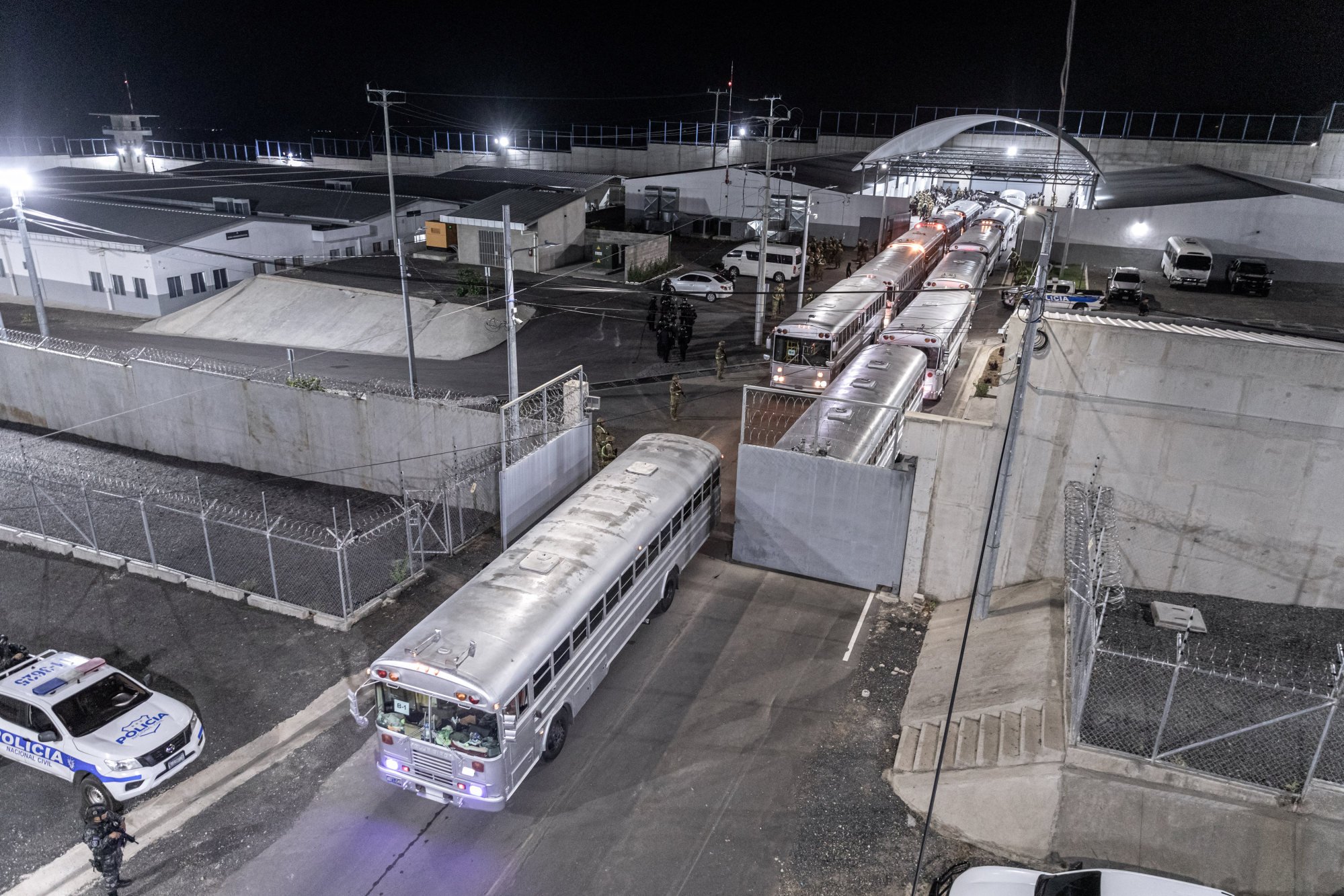
Donald Trump’s strict immigration policies came under renewed examination on Tuesday when authorities acknowledged that a “clerical mistake” during the hasty deportation procedures led to the wrongful transfer of an individual to a well-known detention facility in El Salvador.
The Trump administration promotes its extensive initiative against immigrants – a major campaign pledge – as an effort to target gang members and other violent offenders.
However, numerous assertions that several people with tenuous or no links to organized crime have been swiftly expelled have sparked outrage among human rights organizations, Democrats, and even certain Trump supporters, such as the prominent podcaster Joe Rogan.
A man from El Salvador resided in the U.S. state of Maryland under protected legal standing until he was transported to El Salvador along with several hundred other individuals accused of being gang members in mid-March, according to a court document released on Monday.
The aircraft arrived shortly following Trump’s invocation of a seldom-used wartime measure, the Alien Enemies Act of 1798, even though a judge had instructed to stop these deportations.
In 2019, Kilmar Abrego Garcia faced accusations of being part of a gang; however, he wasn’t found guilty of any offenses. A judge had earlier ruled against his deportation, fearing potential harm to him in El Salvador.
In the court documents submitted on Monday, attorneys for the government acknowledged that he was sent back due to an “administrative mistake,” yet they contended that U.S. courts currently lack the authority to ensure his liberation.
When pressed on the topic on Tuesday, the White House stood firm, asserting that undisclosed evidence indicated Abrego Garcia was actually a key figure in the vicious MS-13 gang.
The Salvadoran group along with others like Venezuela’s Tren de Aragua has been labeled as “foreign terrorist organizations” under President Trump’s administration.
“The United States of America no longer offers legal protection to foreign terrorists, and President has both the executive authority and power to remove these reprehensible individuals from our communities,” said White House Press Secretary Karoline Leavitt at a briefing.
A distinct instance of a gay barber who was deported has drawn attention from U.S. media outlets, and attorneys representing multiple individuals facing deportation claim that their clients were singled out solely due to their tattoos.
Rogan, who supported Trump during the 2024 election, stated on Saturday that it was “horrible” that individuals not involved in criminal activities might get caught up in the efforts to remove gang members from the country.
“The fear arises as even non-criminals are being apprehended, deported, and end up in El Salvador prisons,” stated the comedian and mixed martial arts analyst.
Let’s remove the gang members. Everyone is on board with this. However, we shouldn’t include innocent gay hairdressers with these groups.
The US Vice-President, J.D. Vance, addressed the topic on social media on Tuesday, subsequently making several corrections after noticing inaccuracies in his initial postings.
Initially referring to Abrego Garcia as a “convicted MS-13 gang member,” he subsequently stated that an immigration judge had “concluded” he was part of MS-13, adding that “any ‘due process’ he was owed, he got.”
The activation of the ancient AlienEnemiesAct has ignited intense discussions among legal experts regarding immigrants’ entitlement to fair procedures and the degree to which courts can scrutinize decisions made by government officials.
On Friday, the Trump administration requested the Supreme Court to reverse the federal judge’s suspension of deportations carried out under that specific authority.
Stephen Miller, Trump’s deputy chief of staff and a strong adversary of unlawful immigration, has consistently criticized the judge’s moves as a danger to democratic principles.
“A kind reminder: if you have unlawfully entered our nation, the sole ‘procedure’ you’re entitled to is deportation,” he stated on social media Tuesday.
More Articles from SCMP
Beijing shifts exercises nearer to Taiwan, researcher appeals to China via AI: SCMP daily roundup
During the tariff conflicts, Chinese automobile manufacturers are taking over the Russian market.
Could new US tariffs on China be ‘too significant to handle, too obvious to evade’?
“Jimmie Lau Lane”: U.S. urged to name D.C. street after imprisoned businessman for Hong Kong trade office location
The article initially appeared on the South China Morning Post (www.scmp.com), which is the premier source for news coverage of China and Asia.
Copyright © 2025. South China Morning Post Publishers Ltd. All rights reserved.

by admin | Apr 1, 2025 | automotive industry, autos, battery electric vehicles, cars, electric cars
Production ceased in 2023, however, some Bolt EVs and EUVs are only now being delivered from dealership inventories.
-
The Chevy Bolt and Bolt EUV ceased production back in December 2023, more than a year prior.
-
Nevertheless, there are still nine remaining available according to Autotrader.
-
GM announced today that Chevy managed to sell 13 Bolt EVs and Bolt EUVs combined in the first quarter of 2025, indicating a slow but steady pace of sales.
The
The Chevy Bolt EV and EUV ceased production in December 2023.
, but that doesn’t imply they have vanished. Firstly, they will endure eternally within our hearts. Secondly, a
The new version will be released later this year.
Thirdly, older models can still be found on certain lots. Chevrolet reportedly sold 13 Bolt vehicles in the previous quarter, as per data from General Motors.
Q1 2025 sales report.
The Bolt stood out as an under-the-radar champion among electric vehicles; it was one of the initial budget-friendly models capable of traveling more than 250 miles per charge. Although it launched before the Tesla Model 3, it lacked the latter’s allure and cutting-edge tech features. Instead, it offered straightforward, dependable mobility at a reasonable price point aimed squarely at functional utility and lower total costs. Predictably perhaps, U.S. consumers were unimpressed. There has been minimal demand for compact, economical cars overall, let alone those powered solely by electricity. People tend to favor oversized sport utility vehicles coupled with hefty loan amounts. Adding a somewhat lukewarm “Electric Utility Vehicle” concept—a sort of crossover variation—did marginally boost Bolt sales, yet it failed to fully capture America’s attention or enthusiasm.
The initial 2017 Chevy Bolt, which we tested fresh off the lot, retained much of its structure throughout its production run even as General Motors introduced updates like Super Cruise and additional technological advancements.
It won over numerous electric vehicle enthusiasts. For years, it stood as the sole viable competitor to Tesla and was the most budget-friendly option offering up to 250 miles of range, earning it an almost legendary status. I have suggested their cars to several individuals, and every person I know who owns one speaks highly of it. The Bolt holds a special place among early adopters of electric vehicles. Personally, I found the car somewhat underwhelming; driving it didn’t excite me much, nor did spending time inside it appeal greatly. However, I am pleased that such a model exists. Additionally, I’m delighted that General Motors plans to reintroduce it later this year, with
a completely new design grounded in the firm’s most recent technological advancements
I really enjoy the software.
my Blazer EV
, yet I dislike that it weighs 5,300 lbs, has poor fuel efficiency, and comes with an exorbitant base price.
Furthermore, due to significant advancements in both electric vehicle technology and production capacity over the past eight years since the initial release of the Bolt, General Motors ought to present a much more attractive and accessible electric option. This type of vehicle is precisely what we require at this moment, and I am hopeful that GM can meet our expectations. Additionally, incorporating genuine rapid charging capabilities would also make a substantial difference, considering the previous limitations.
Bolt wasn’t really suited for long car journeys.
.

Photo by: InsideEVs
Certainly, you can use a Supercharger for a Bolt; however, it will take some time.
Nevertheless, even though pre-owned models continue to be the standard choice for cost-sensitive purchasers who aren’t opting for Tesla, it’s enjoyable to observe that new Bolts are still available. Ultimately, after accounting for tax incentives, you might acquire one for less than $25,000 at the manufacturer’s suggested retail price.
Occasionally much below that.
Considering that Americans doubt the appeal of smaller electric vehicles and that leftover Bolts have been sitting unsold for at least 15 months, dealers who still have stock might offer you a more attractive price.
Based on Autotrader, there are currently seven Bolt EUVs and two Bolt EVs available as brand-new options in the American market. These vehicles tend to be scattered widely across different regions, frequently located far from key electric vehicle hubs. Therefore, purchasing one may require planning a leisurely cross-country journey. However, should you decide to proceed with your purchase, it’s advisable to move quickly. The initial versions of the Bolt and Bolt EUV are nearing depletion at dealerships, and uncertainty surrounds whether the production schedule for their successors will remain unchanged.
car market’s tariff chaos.
Contact the author:
Mack.Hogan@insideevs.com
.
More Bolt Stories
-
Pre-owned Chevrolet Bolt EVs Are More Affordable Than Expected
-
2026 Chevy Bolt: Similarly Affordable but Truly Profitable for GM
-
Charging a Chevrolet Bolt EV at a Tesla Supercharger: This Is What You Need to Know
-
In 2026, General Motors Claims the Chevy Bolt Will be the ‘Least Expensive’ Electric Vehicle Available
-
2026 Chevy Bolt EUV: All the Details Available
-
Certain Chevy Bolt Owners Require Dealership Assistance For Tesla Charging Capabilities (Updated)
by admin | Apr 1, 2025 | biotech & biomedical, drugs, healthcare and medicine, medicine and healthcare, news
Rwandan biotechnology firm Akagera Medicines recently reported encouraging outcomes following the conclusion of initial phases of preclinical testing for an antibiotic aimed at treating pulmonary tuberculosis (TB). On Tuesday, April 1st, the company disclosed that they have finished the preliminary stages of their preclinical tests on AKG-100—a newly developed antibiotic within the oxazolidinone category—specifically engineered to combat pulmonary TB.
In related news, Rwanda signed agreements earlier regarding hosting initiatives linked to African pharmaceutical foundations. Additionally, last month saw Akagera Medicines securing $1.5 million to enhance accessibility measures.
Based out of facilities in both Boston and San Francisco alongside owning a wholly-controlled affiliate based in Kigali where operations include production activities along with upcoming clinical studies, the enterprise concentrates on discovering and advancing innovative lipid nanoparticles used not only in antibiotics but also mRNA vaccinations intended to tackle various illnesses such as tuberculosis, bird influenza, respiratory syncytial virus (RSV), among others.
Dr. Daryl Drummond, who serves as the Chief Scientific Officer at Akagera Medicines, highlighted the significance of achieving key benchmarks during these developmental milestones towards introducing advanced long-term injectables tailored explicitly toward aiding individuals suffering from pulmonary TB conditions. According to him, “AKG-100 exhibits strong potential through favorable pre-clinical findings.”
Experts working under the umbrella of Akagera Medicines characterized AKG-100 using terms like ‘extremely stable’ when describing its modified version incorporating polyethylene glycol chains attached to phospholipid bilayers forming nanoscale structures known scientifically as pegylated liposomes.
These specially crafted carriers offer numerous advantages including improved therapeutic effectiveness due primarily to heightened chemical resilience coupled with enhanced aqueous compatibility thus minimizing adverse side effects typically associated with conventional therapies. Furthermore, owing to protective characteristics inherent in liposomal constructs, active substances remain shielded against enzymatic breakdown processes occurring naturally inside human bodies leading ultimately to extended periods wherein effective dosing levels can persist without necessitating frequent administration schedules.
Moreover, investigators involved confirmed that employing this particular approach facilitated more efficient cellular absorption rates accompanied by prolonged intracellular persistence thereby ensuring elevated localized concentration gradients directly impacting afflicted areas effectively. Overall, leveraging advancements made possible via modern nanoengineering techniques presents exciting prospects opening up possibilities hitherto unexplored avenues offering hope particularly amongst those battling severe forms resistant strains prevalent across different parts globally today.
Provided by Syndigate Media Inc. (
Syndigate.info
).
by admin | Apr 1, 2025 | business, electric power, local news, news, politics
Kenya Power has declared planned electricity outages in certain regions throughout the nation, impacting areas within six counties.
The power company outlined regions impacted in Nairobi, Kiambu, Kitui, Tharaka Nithi, Mombasa, and Kwale counties.
A public announcement released on Tuesday evening stated that interruptions would occur at various times.
between 8am and 5pm.
The electricity outage is occurring to enable system upkeep.
Nairobi
Sections of Nairobi will experience electricity outages between 9 am and 5 pm.
The regions include Githurai 45, Co-op Bank, Naivas, Kingdom Sacco, Mount Kenya, Kimbo, Mwana Mukia, Clanne Academy, Kassmatt, Fountain Junior, Kwa DO Mukinye, Army Barracks, Sukari B, Mwiki School, Kimbo Police Station, part of Mwihoko, Farmers Choice, part of Clay City, along with neighboring consumers.
Other zones include Section III of Eastleigh, portions of Yusuf Haji Road, Mega Wholesalers, the Eastleigh Equity Bank, the Huduma Centre in Eastleigh, parts of Eastleigh’s Second Avenue, sections of Eastleigh’s Third Avenue, and nearby clients.
Meanwhile, sections of Evergreen Runda, Flame Tree, Ruaka Road, Runda Meadows, Bombax Drive, and Tala Drive will experience electricity outages in Nairobi.
Kiambu
Sections of Kiambu will experience disruption in electricity supply between 9 AM and 5 PM.
The locations include Ruaka town, Slaughter Road, Kyuna Road, Gertrude, Kinuthia Drive, California, James Drive, a section of the Bypass, Delta, the Total Petrol Station, and nearby clients.
Kitui
Sections of Kitui will experience electricity outages between 9 am and 5 pm.
The locations include Kora Market, Kwa Gavana, Mivukoni, Tseikuru, Kaningo, Usueni, Mikauni, Ngungani Market, Kiambere Water Supply, and Wikithuki.
Mt Kenya region
Areas scheduled for power outages between 9 AM and 5 PM include Kiamuthanga Market, Kiamuthanga Village, Mbogo-Ini Village, Tumutumu Farm, Tumutumu Secondary School, Kiamubira Primary School, Tumutumu Hospital, Kiangoma Village, Karie Coffee Factory, Ikonju Village, Mungaria Coffee Factory, Mungaria Polytechnic, Wakamata Village, Mbari Ya Njora Village, as well as nearby clients using Safaricom and Airtel boosters.
Additional locations scheduled for power outages between 8 AM and 5 PM in the Mount Kenya area encompass Birithia Girls, Mahiga Girls, Gathtuthi Girls, Gathuthi Tea Factory, Ndugamano Market, Kagere Market, Kenyatta Mahiga High School, Gitugi Tea Factory, Ihithe Secondary, Gura Village, Hubuini Market, Mathenge Technical Training Institute, Mahiga Coffee Factory, Kina TBC, Gacami Market, Ndunyu Market, along with nearby consumers.
Tharaka Nithi
Regions within Tharaka Nithi will experience electricity outages between 8:30 AM and 4 PM.
The properties include Godka Hotel, Chuka KPLC office, Chuka Kenya Police station, and neighboring clients.
Mombasa
Sections of Mombasa will face electricity outages between 9 AM and 5 PM.
The list encompasses institutions such as the Technical University of Mombasa, Tudor Sub-County Hospital, locations like Tudor Nora, Rasini Road, areas including Tudor Kwa Mchele, Tudor Kiziwi, educational facilities such as St Joseph Catholic School, places named Tudor Mwisho, landmarks like Kaa Chonjo, residential complexes such as Nyumba ya Wazee, eateries like Kwa Amo Biriyani, recreational spots like Tudor Water Sports, along with nearby patrons.
Kwale
The areas of Kwale expected to experience power disruptions between 9 AM and 4 PM include Mshiu, Mwangwei, Majoreni, Lungalunga, Mwangulu, Mtumwa, Vanga, Horohoro, along with nearby consumers.
Provided by SyndiGate Media Inc.
Syndigate.info
).
by admin | Apr 1, 2025 | business, customs, government, government regulations, news
The Nigeria Customs Service has stated that the reported extension of tenure for the Comptroller General of Customs, Adewale Adeniyi, is untrue.
Abdullahi Maiwada, who serves as the National Public Relations Officer for the organization, issued a statement on Tuesday stating that these reports were incorrect and deceptive.
He stated that the President has exclusive authority over the appointment and extension of terms for members of the CGC, as per the guidelines set out in the NCS Act 2023 and other pertinent rules overseeing public sector appointments.
“The National Customs Service has noticed a fraudulent statement purportedly issued by the State House concerning an extension of the term for the CGC, Adewale Adeniyi. The NCS strongly wants to clarify that this information is incorrect and deceptive,” stated Maiwada.
He emphasized again that currently, no such instruction has been passed along to the NCS by the relevant bodies.
Maiwada insisted that the leadership of the organization continues to concentrate on achieving its legal responsibilities which include promoting trade, generating income, and ensuring border safety.
As per his statement, with the oversight of the present CGC, the organization has kept pushing forward significant changes designed to “update customs procedures, boost cooperation among different agencies, and foster the country’s economic development.”
The spokesperson for the NCS requested that both the general public and all involved parties refer solely to official sources for precise details about the organization.
He stressed that any updates about assignments or term decisions will be officially conveyed via the relevant governmental bodies.
“The service values the ongoing support from stakeholders and continues to be dedicated to maintaining transparency, demonstrating professionalism, and serving the nation,” he stated.
Provided by SyndiGate Media Inc.
Syndigate.info
).

by admin | Apr 1, 2025 | bicycles, electric bikes, electric cars, recreational vehicles, transportation
We’re testing additional electric bikes and city-friendly transportation options, beginning with this nut-colored cargo vehicle. Feel free to ask us anything.
Electric bikes and overall e-mobility are gaining popularity globally as well as throughout the United States. In 2024, the sale of electric bicycles in the U.S. amounted to almost $1.8 billion, as reported by PeopleForBikes.
survey data
If you broaden this to encompass electric scooters and similar devices, the total figure would likely be even greater. Even Rivian has decided to join this trend.
Also
, its misleadingly titled micro-mobility division.
As denser cities and their neighboring suburbs invest in cycling infrastructure to alleviate traffic congestion and enhance road safety, the shift towards alternative modes of transport for city and short-distance travel becomes logical. The costs associated with cars and related expenditures have surged significantly, making such options increasingly prohibitive.
one in five
first-time car purchasers facing a $1,000 monthly car payment prior to accounting for fuel or insurance costs.
25% tariffs
With new regulations on imported cars and components scheduled to come into play on April 2nd, it seems affordability won’t be improving shortly. For numerous households, an electric bike as an alternative to a second car is becoming increasingly appealing.
Photo by: Maddox Kay/InsideEVs
In other words:
InsideEVs
Is focused on exploring the future of transportation, which now extends beyond just automobiles. Therefore, we intend to use our strict evaluation methods and straightforward feedback for all things related to electric mobility—assisting you in determining which items deserve your attention and which might be unreliable choices.
We’re beginning with this: The Riese & Müller Load4 75 Rohloff HS,
borrowed from Propel Bikes
That sounds complex, so let me break it down. Riese & Müller is a well-established German bicycle manufacturer with over three decades of experience, specializing in premium electric bikes since 2009. The Load4 represents their fourth-generation model in the range of front-loading cargo bicycles, and the “75” denotes the size of the cargo area at 75 centimeters long. Another notable component comes from Rohloff, a different German firm recognized for manufacturing internal gear hubs offering 14 speeds; these systems utilize belts rather than chains and demand less upkeep. Lastly, “HS” stands for High Speed, as this pedelec is capable of reaching up to 28 miles per hour and features an additional Turbo assist setting.

Photo by: Maddox Kay/InsideEVs

Photo by: Maddox Kay/InsideEVs

Photo by: Maddox Kay/InsideEVs
The cost isn’t insignificant—at $14,419 for the model tested, it definitely makes you take notice. This places it at the high-end of the cargo electric bike spectrum, more suited to luxury pursuits rather than budget-conscious buyers. However, equipped with full suspension and featuring 1.45 kWh of battery capacity offering approximately 80 miles of practical range, it transforms into a versatile all-terrain vehicle capable of carrying substantial loads, akin to a small car. Considering its used-car-level pricing, these features become quite significant.
![]()
(To be completely transparent: The staff at the electric bike retailer
Propel Bikes
lent me the
Load4
For a few days for this review.)

Photo by: Maddox Kay/InsideEVs
This week, I’ll put my cargo bike through rigorous use: runs to Costco and the garden center, a 20-mile total commute spanning different boroughs, plus leading a “bike bus” for school drop-offs. I will share updates later, but tell me now—what would you like to learn about the Load4 75?
When it comes to initial impressions, this bicycle is remarkably comfortable and steady whether fully loaded or empty. Initially, I was concerned about maneuvering with a large cargo box extending beyond the handlebars, but I adapted swiftly to the bike’s size and impressive handling capabilities. Additionally, the suspension system ensures a smooth journey even across New York City’s rough streets and bumpy pavements. However, the bike can seem lengthy and cumbersome when trying to navigate the tight corridors of my apartment complex.
What do you want to see in our e-bike and micromobility reviews at InsideEVs? Let us hear your thoughts.
by admin | Apr 1, 2025 | banking, business, controversies, economics, money
Well-known Nigerian entertainer and movie producer Ayo Makun, widely recognized as AY, has voiced his worries about the high service fees charged by commercial banks in Nigeria.
On his X account (previously known as Twitter), AY raised doubts about how banks can consistently report trillions of Naira in quarterly profits amidst Nigeria’s faltering economy.
He contended that certain fees levied on customers are specific to Nigeria and ought to be contested.
He questioned, “How do banks manage to report trillions in profits each quarter despite a struggling economy? We should challenge the minor charges and deductions from our accounts. These fees often have a specific presence in Nigeria. What explains this?”
Provided by Syndigate Media Inc. (
Syndigate.info
).
by admin | Apr 1, 2025 | business, financial markets, financial services, investing company news, money
HFM has established a robust presence in Nigeria’s online trading sector. Could you discuss how trust and security have influenced your progress up until now?
Certainly. In Nigeria, trust and security have always formed the backbone of our expansion. Right from the start, we recognized that online trading, particularly with contracts for difference (CFDs), could be intricate and daunting for numerous individual investors. Therefore, we prioritized openness, adherence to regulations, and offering a safe environment. This approach helped establish our reliability. Additionally, we’ve made significant investments in customer education and tailored assistance, fostering confidence among many Nigerian traders who now rely on us.
As worries over fraud and financial scams in online trading continue to rise, what actions is HFM implementing to boost confidence and security, especially within CFD trading? Which particular safeguards have been put into effect to shield individual investors from dangers such as improper use of leverage, fraudulent activities, or weaknesses in the trading platforms?
At
HFM
At the heart of our operations lies client protection. We prioritize fraud prevention, ensure responsible leveraging, and safeguard funds with great seriousness. To achieve this, we’ve established several tiers of protective measures to foster a safe and open trading atmosphere.
From the outset of client engagement, we implement rigorous Know Your Customer/Anti-Money Laundering protocols to confirm identities and thwart illicit activities. Our platform features instantaneous trade surveillance mechanisms aimed at identifying and resolving dubious actions. Regarding leverage, clients have complete autonomy to modify it according to their personal risk appetite and trading approaches; additionally, we offer detailed risk data prior to initiating any trades.
To safeguard your funds, we keep all client deposits in isolated accounts at premier banks, distinct from our own operating capital. Consequently, regardless of market fluctuations, your money stays secure. Additionally, we collaborate with prominent liquidity suppliers to sustain a robust financial standing, which facilitates seamless and dependable trading experiences.
In terms of technological capabilities, we routinely evaluate our infrastructure through audits and stress tests, ensuring it remains secure with top-tier encryption methods. To further fortify user accounts, we provide two-factor authentication. Our leading-edge insurance scheme covers various threats such as fraud, human mistakes, and unexpected issues. Moreover, a specialized system continuously monitors potential risks round-the-clock to protect clients’ best interests.
Our aim is to create a secure and open setting where traders can concentrate on their tactics with complete assurance.
Protecting investors is essential, yet promoting innovation also holds significant value. Can you explain how HFM manages to uphold regulatory requirements while still encouraging development in CFD trading?
Achieving this delicate equilibrium has been successful for us. Instead of seeing compliance as an obligation, we regard it as the foundation that instills trust in our clientele when they engage in transactions. Concurrently, we persistently explore novel avenues such as advanced trading instruments, user-friendly designs, and accessible mobile platforms which make trading more inclusive. Both our product developers and compliance officers collaborate closely to guarantee each advancement adheres strictly to stringent regulatory guidelines while still providing customers with a smooth interaction.
In what ways is HFM working alongside regulatory bodies such as the SEC to guarantee adherence to regulations without compromising its competitive edge?
We take a highly proactive approach in this area and have maintained continuous discussions with the Nigerian Securities and Exchange Commission (SEC) regarding the critical necessity of regulating CFD trading in Nigeria.
HFM
, we see regulation not as a hurdle but as a competitive advantage, it filters out bad actors, raises industry standards, and builds long-term trust. As a global brand regulated in multiple jurisdictions, including South Africa, Kenya, Mauritius, Seychelles, Dubai, the United Kingdom, and Cyprus, we bring deep regulatory experience to the table.
Our interaction with the SEC aims at facilitating the creation of straightforward, actionable regulations for CFD trading. These rules should safeguard investors’ interests while also fostering innovation. We strive to maintain an environment where trades occur under a clear, organized structure ensuring secure assets, stringent performance criteria, and adherence to international best practices. An effectively regulated marketplace encourages greater involvement from various players, enhances reliability, and promotes steady expansion throughout the financial sector.
Given our substantial and expanding clientele in Nigeria, we understand the duty we bear. Therefore, instead of merely backing regulations, we are proactively collaborating with the SEC to develop equitable and robust rules that promote honesty, safeguard investors, and raise the bar for the CFD trading sector in Nigeria. We aspire ultimately to become the foremost transparent and reliable CFD brokerage within the nation.
What internal measures does HFM employ to identify and stop misconduct involving traders, third-party brokers, or malicious entities on the platform? In what ways do HFM’s security protocols concerning CFDs contribute to enhancing Nigeria’s standing as a secure and appealing market for international investors?
Internally, we maintain a specialized compliance and risk management team that keeps watch over activities round the clock. Additionally, we employ sophisticated algorithms designed to identify unusual trading behaviors or patterns, which could include instances of insider misuse or actions taken without authorization by external parties. Any detected problems are promptly elevated for comprehensive investigation. Such preventive measures ensure the security of our clients’ interests.
Given the tighter restrictions on CFDs, could this lead to traders moving to non-regulated venues instead? What strategies will HFM employ to keep their user base while maintaining regulatory adherence and safety?
This is indeed a legitimate worry. Certain traders might be drawn to non-regulated platforms that provide substantial rewards with minimal transparency. However, we think that many customers, particularly under current conditions, prioritize security and reliability more than quick profits. We aim to inform users regarding the hazards associated with unlicensed brokerages and keep delivering top-notch assistance, clear cost structures, and specialized regional knowledge. Ensuring adherence to regulations alongside maintaining customer loyalty becomes seamless when individuals recognize that their enduring prosperity is what matters most to us.
Does HFM require explicit risk warnings, leverage restrictions, or increased transparency measures for CFD traders? Are there intentions to reinforce these protective guidelines?
Certainly. All our CFD products require mandatory risk warnings, which we present in straightforward, jargon-free terms specifically designed for Nigerian users. Additionally, we have introduced adjustable leverage limits that consider both the user’s level of expertise and their account type. Our policies undergo regular reviews, particularly with changes in regulations. Furthermore, we plan to incorporate advanced AI-powered risk assessment tools to personalize trading restrictions and alert systems according to individual clients’ behaviors and risks they undertake.
Apart from CFDs, are there other high-risk financial products like cryptocurrency derivatives that HFM plans to subject to stricter regulation for better investor protection?
Yes, CFD regulation should cover all CFD products, including crypto CFDs. While they offer opportunities, they also carry significant risks, especially for retail investors who may not fully understand the volatility involved. We want to continue to make these products accessible, but only within a framework that puts investor protection first.
In what ways does HFM’s strategy for regulating Contract for Difference (CFD) align with Nigeria’s overarching objective of expanding capital markets and at the same time safeguarding financial stability?
We see ourselves as a bridge between retail traders and the broader capital market ecosystem. By championing safe, regulated CFD trading, we’re helping introduce new participants to financial markets, many of whom may eventually graduate to equities, ETFs, or even direct capital market investments. Our compliance-driven model aligns with Nigeria’s financial stability goals while expanding access to wealth-building tools. It’s about growing the market responsibly.
In the future, we plan to offer Contracts for Difference (CFDs) on selected Nigerian-listed company stocks. This move aims to provide local investors with an option to protect their conventional equity holdings through stock CFDs, which aren’t presently available locally. Introducing these instruments not only enhances the functionality of CFDs for Nigerian traders but also bolsters the broader financial ecosystem by providing advanced risk management options. We believe this aligns well with Nigeria’s goals of expanding capital markets and drawing in greater numbers of individual investors.
Thank you for dedicating your time. It’s evident why
HFM
leads in the field of financial trading.
I appreciate your time. It was nice talking with you.
Provided by Syndigate Media Inc. (
Syndigate.info
).


